
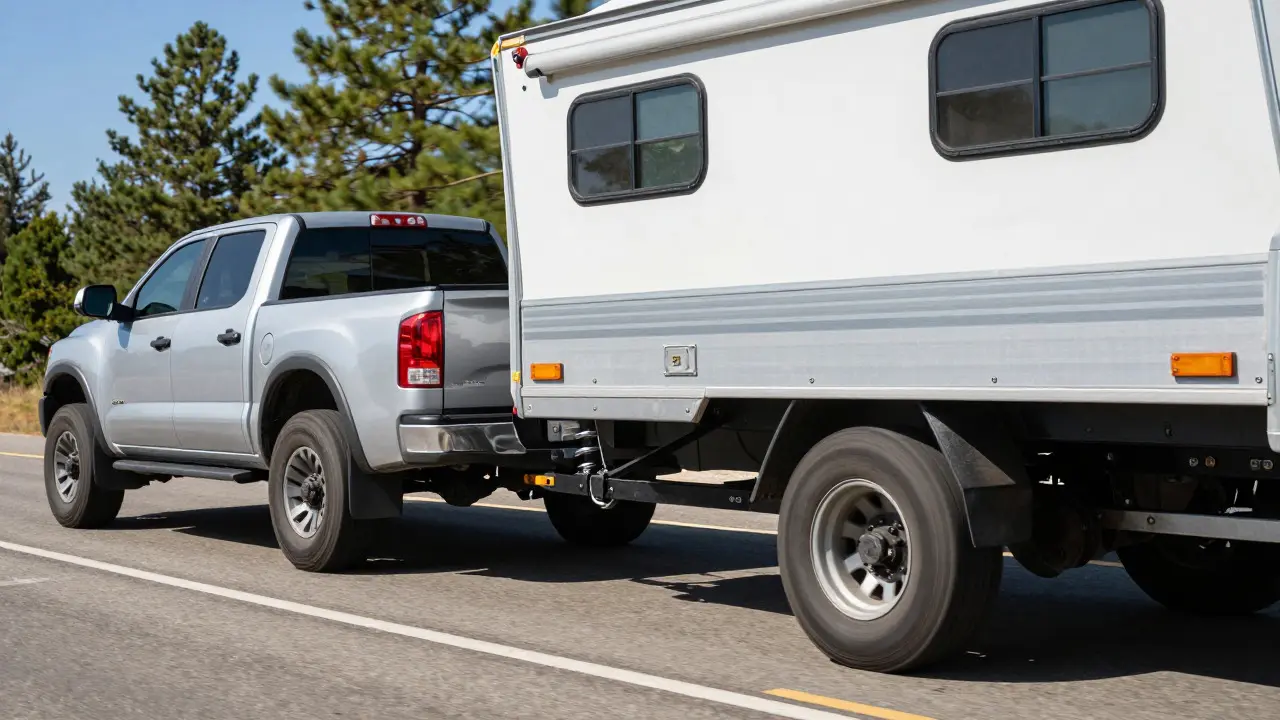
There is nothing quite as terrifying as feeling your pickup truck start to dance on the highway. One moment you are cruising along at 60 mph, and the next, the trailer behind you begins to weave like a drunken pendulum. If you do not react correctly, that gentle sway can turn into a violent snap that flips both your vehicle and your cargo. This phenomenon, known as trailer sway, is the number one fear for new tow drivers, but it is also entirely preventable with the right setup and driving habits.
You do not need to be a professional rigger to keep things stable. You just need to understand how physics works when you add a massive load to the back of your Pickup Truck is a versatile light-duty vehicle designed for hauling cargo and towing trailers.. The secret lies in three main areas: choosing the right hitch system, ensuring your braking systems are synchronized, and mastering specific driving techniques. Let’s break down exactly what you need to do to stop the wobble before it starts.
The Foundation: Choosing the Right Hitch System
Most people assume that if their truck says it can tow 7,000 pounds, they are good to go. That is a dangerous misconception. Your truck’s maximum capacity is only half the equation; the other half is how that weight is distributed. A standard receiver hitch is fine for small utility trailers, but once you cross the 5,000-pound threshold, you need more than just a ball mount.
The game-changer here is the Weight Distribution Hitch is a towing system that redistributes trailer tongue weight across all axles of the tow vehicle and trailer.. Think of a seesaw. When you put heavy weight on one side (the tongue of the trailer), the back of the truck dips, and the front lifts up. This reduces traction on your steering wheels and overloads your rear suspension. A weight distribution hitch uses spring bars to push the tongue weight forward onto the truck’s front axle and backward onto the trailer’s axles. This levels out the truck, keeping the headlights pointed straight ahead and maintaining proper tire contact with the road.
| Hitch Type | Max Tongue Weight | Best For | Sway Control Included? |
|---|---|---|---|
| Class III Receiver | Up to 600 lbs | Small Utes, Bike Racks | No |
| Weight Distribution | 600 - 1,500 lbs | Campers, Large Boat Trailers | Often Integrated |
| Fifth Wheel / Gooseneck | 3,000+ lbs | Heavy Equipment, Large RVs | Inherent Stability |
If you are towing a large travel trailer or a boat, look for a hitch that includes integrated friction-based sway control. These devices use pads that press against the trailer frame when lateral movement occurs, creating resistance. While they are not magic bullets, they provide crucial damping that helps correct minor sways before they escalate.
Braking Systems: Keeping Momentum in Check
A common mistake I see every time I hit the road is relying solely on the truck’s brakes. When you are pulling thousands of pounds, your pickup’s brake pads will overheat and fade long before you come to a stop. This is why trailer brakes are non-negotiable for anything over 3,000 pounds.
There are two main types of trailer brakes: electric and hydraulic surge. Electric brakes are controlled by a brake controller mounted inside your cab. This device sends an electrical signal to the trailer’s magnets based on how hard you press the pedal. Modern controllers often feature proportional sensing, which adjusts the brake force dynamically. Surge brakes, on the other hand, use the inertia of slowing down to push a piston that activates the brakes mechanically. While surge brakes are low-maintenance, they can sometimes activate unexpectedly during sharp turns or bumps, causing instability.
For the best stability, ensure your brake controller is calibrated correctly. Before every trip, perform a test stop in an empty parking lot. You want the trailer brakes to engage slightly before the truck’s brakes lock up. If the trailer pushes the truck from behind, you lose steering control. If the truck stops too abruptly, the trailer can jackknife. Finding that sweet spot takes practice, but it is essential for safe towing.
Driving Techniques to Prevent Sway
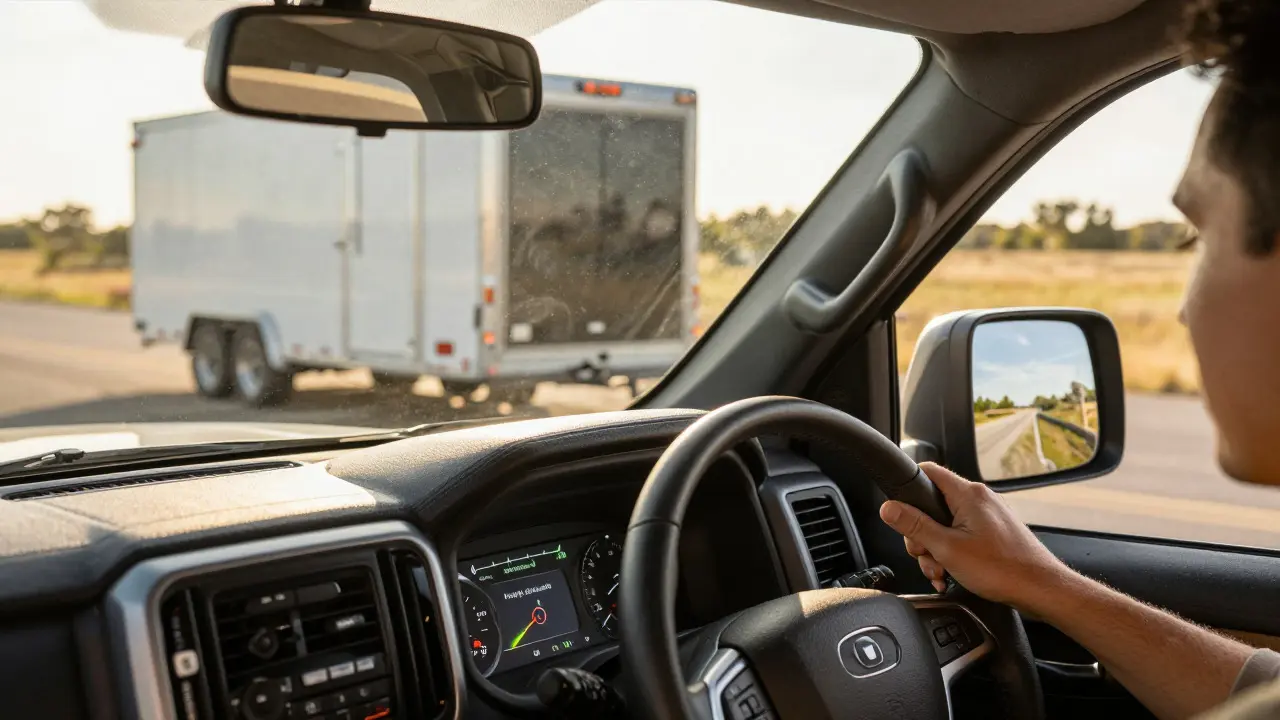
Even with the perfect hitch and brakes, bad driving habits can still cause sway. The biggest culprit is speed. Most people think that because they have a powerful V8 engine, they should tow at the same speed they drive alone. That is a recipe for disaster. Wind resistance increases exponentially with speed. At 70 mph, the air pushing against your trailer acts like a giant sail. Reduce your speed to 55-60 mph. It might take you an extra hour to reach your destination, but you will arrive safely.
Lane positioning is another critical factor. Always stay in the right lane unless you are passing. The left lane is where high-speed traffic and strong crosswinds gather. If you must pass, do it quickly and decisively. Do not linger in the fast lane. Also, watch out for large trucks passing you. As a semi-truck overtakes your rig, it creates a vacuum effect that can pull your trailer toward the truck. Give them plenty of room.
What happens if you feel the first signs of sway? Panic is your enemy. Your instinct will be to slam on the brakes, but this is exactly what you should avoid. Braking unevenly can worsen the oscillation. Instead, ease off the accelerator gently. Let the truck slow down naturally. If your truck has electronic trailer sway control, it will automatically apply individual brakes to stabilize the rig. If not, steer slightly in the direction of the sway to counteract it, then straighten out. Never jerk the steering wheel.
Loading and Weight Distribution
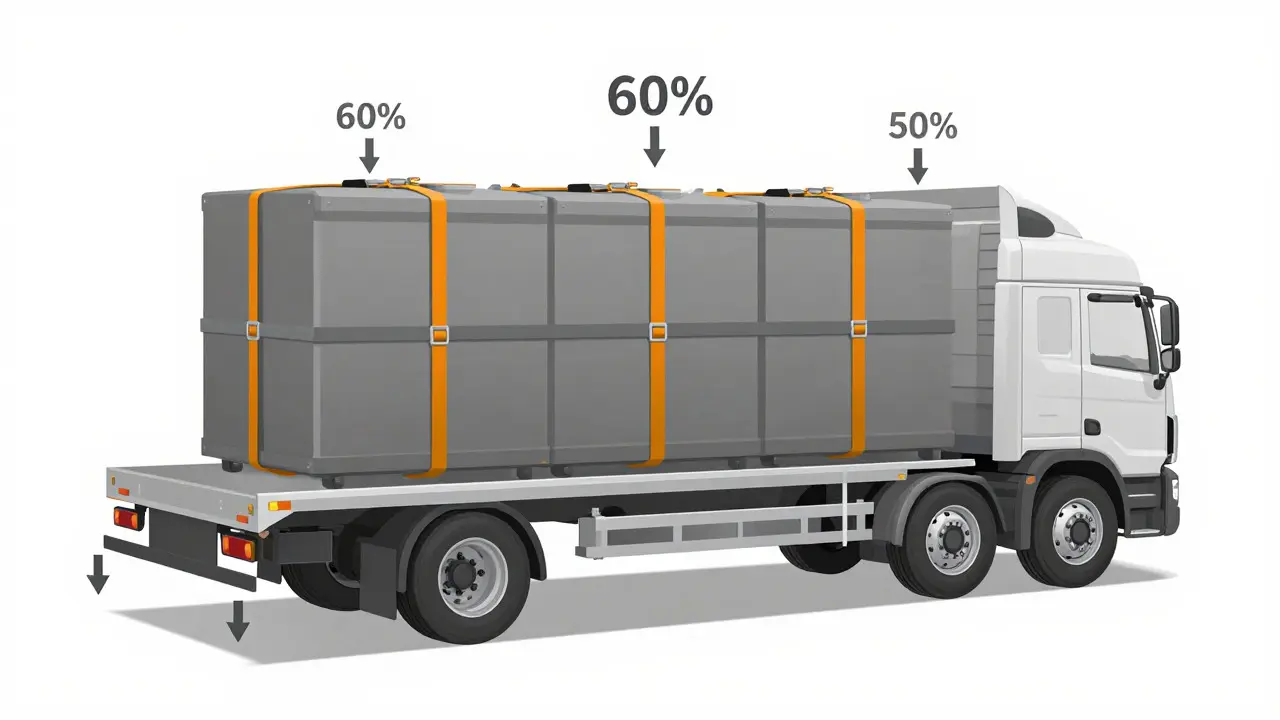
How you load your trailer is just as important as the equipment you use. The golden rule is to keep 60% of the cargo weight in the front half of the trailer, directly over or slightly ahead of the axle. If you put too much weight in the back, the tongue becomes too light, reducing downward pressure on the hitch. This causes the trailer to float and sway easily. Conversely, too much weight on the tongue overloads the truck’s rear suspension.
Secure everything tightly. Loose items shifting around while driving change the center of gravity constantly, triggering instability. Use ratchet straps, bungee cords, and cargo nets to immobilize your gear. Before you leave, check the tire pressure on both the truck and the trailer. Under-inflated tires generate excessive heat and flex, which contributes to sway. Load-range E tires are specifically designed for towing and offer better sidewall stiffness than standard passenger tires.
Weather and Environmental Factors
Wind is the silent killer of towing stability. Even a moderate crosswind can destabilize a poorly loaded trailer. If you are driving through open plains or across bridges, expect gusts. Slow down further in these conditions. Rain also reduces tire grip, making it harder to correct minor sways. Increase your following distance to at least four seconds behind other vehicles. This gives you more time to react without needing sudden maneuvers.
Mountain driving requires a different approach. Going downhill, use lower gears to let the engine compression help slow you down, rather than riding the brakes. This prevents brake fade and keeps the rig stable. When going uphill, maintain steady throttle input. Avoid jerky acceleration, which can cause the trailer to fishtail.
Maintaining Your Towing Setup
Your equipment degrades over time. Inspect your hitch components regularly. Look for cracks in the welds, worn-out spring bars, and loose bolts. Lubricate moving parts according to the manufacturer’s instructions. Check the wiring harness for frayed wires or corrosion, especially after washing your vehicle or driving through mud. A faulty electrical connection can cause intermittent brake application, leading to unexpected swaying.
Finally, consider upgrading to a fifth-wheel or gooseneck hitch if you frequently tow heavy loads. These hitches sit over the truck bed, placing the pivot point closer to the truck’s center of gravity. This inherent design makes them significantly more stable than traditional bumper-pull hitches, virtually eliminating sway issues for most users.
What causes trailer sway?
Trailer sway is primarily caused by improper weight distribution, excessive speed, crosswinds, and poor loading practices. When the trailer's center of gravity is too far back or the tongue weight is insufficient, the trailer becomes unstable and begins to oscillate laterally.
How do I fix trailer sway while driving?
To fix trailer sway, ease off the accelerator gradually to reduce speed. Avoid slamming on the brakes. If equipped, rely on electronic sway control. Steer gently in the direction of the sway to counteract it, then straighten the wheel. Do not make sudden steering corrections.
Do I need a weight distribution hitch?
You need a weight distribution hitch if your trailer's tongue weight exceeds 10% of its total weight or if it surpasses 500-600 lbs. It is essential for large travel trailers and boat trailers to level the tow vehicle and improve handling stability.
What is the ideal tongue weight percentage?
The ideal tongue weight is typically 10-15% of the total trailer weight. For example, a 5,000 lb trailer should have a tongue weight of 500-750 lbs. This ensures adequate downward pressure on the hitch without overloading the truck's rear suspension.
Can under-inflated tires cause trailer sway?
Yes, under-inflated tires can contribute to trailer sway. They create excessive heat and sidewall flex, reducing stability and responsiveness. Always inflate tires to the recommended load-range pressure specified on the tire sidewall, not the door jamb sticker.