
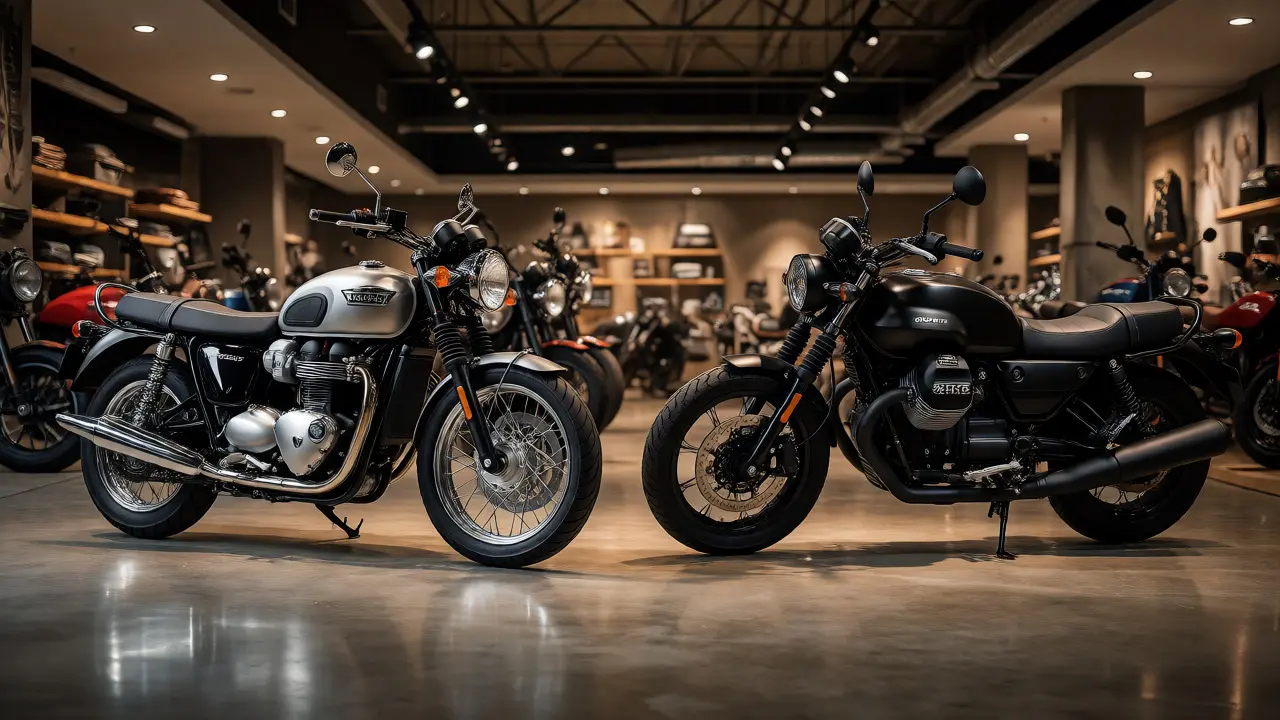
You’re standing in a showroom or scrolling through listings, and you’ve got two beautiful machines staring back at you. On one side, the Triumph Bonneville, a British icon that screams heritage with its twin-cylinder rumble and chrome details. On the other, the Moto Guzzi V7, an Italian masterpiece known for its transverse V-twin engine and soulful character. Both are retro roadsters. Both look incredible. But they ride very differently, cost different amounts to maintain, and appeal to different kinds of riders. Choosing between them isn’t just about which logo you prefer on your tank; it’s about what kind of riding experience you actually want every day.
Let’s cut through the marketing fluff. You don’t need another brochure. You need to know how these bikes feel when you twist the throttle, how much they’ll hurt your wallet over five years, and whether you’ll regret picking one over the other after six months of real-world use. We’re breaking down the engine character, handling dynamics, maintenance realities, and ownership costs so you can make a decision that matches your life, not just your Instagram feed.
Engine Character: Parallel Twin vs. Transverse V-Twin
The heart of this debate is the engine layout, and it dictates everything else. The Triumph Bonneville uses a parallel-twin configuration. This means both pistons move up and down in cylinders arranged side-by-side. The result? A smooth, linear power delivery that feels effortless at low speeds and pulls cleanly all the way to the redline. It’s predictable. If you’re new to motorcycles or commute daily in stop-and-go traffic, this smoothness is a gift. You won’t fight the bike to keep it steady in first gear.
Moto Guzzi does things differently. Their V7 features a longitudinal V-twin, where the cylinders stick out sideways from the frame like wings. This layout creates a unique torque curve. There’s a slight hesitation off the line, followed by a strong mid-range pull that pushes you forward with more urgency than the Triumph. Some riders find this thrilling; others find it jerky in city traffic. The exhaust note is also distinct. The Bonneville hums with a classic British burble, while the Guzzi has a deeper, thumping rhythm that resonates through the frame. If you love auditory feedback, the Guzzi wins on emotion. If you prefer refinement, the Triumph takes the crown.
| Feature | Triumph Bonneville T120 | Moto Guzzi V7 Stone/Special |
|---|---|---|
| Engine Type | Parallel Twin | Transverse V-Twin (90°) |
| Displacement | 1200cc | 853cc |
| Horsepower | ~80 hp | ~65 hp |
| Torque Delivery | Linear, Smooth | Punchy Mid-Range |
| Cooling | Liquid-Cooled | Air-Cooled |
Handling and Ride Quality
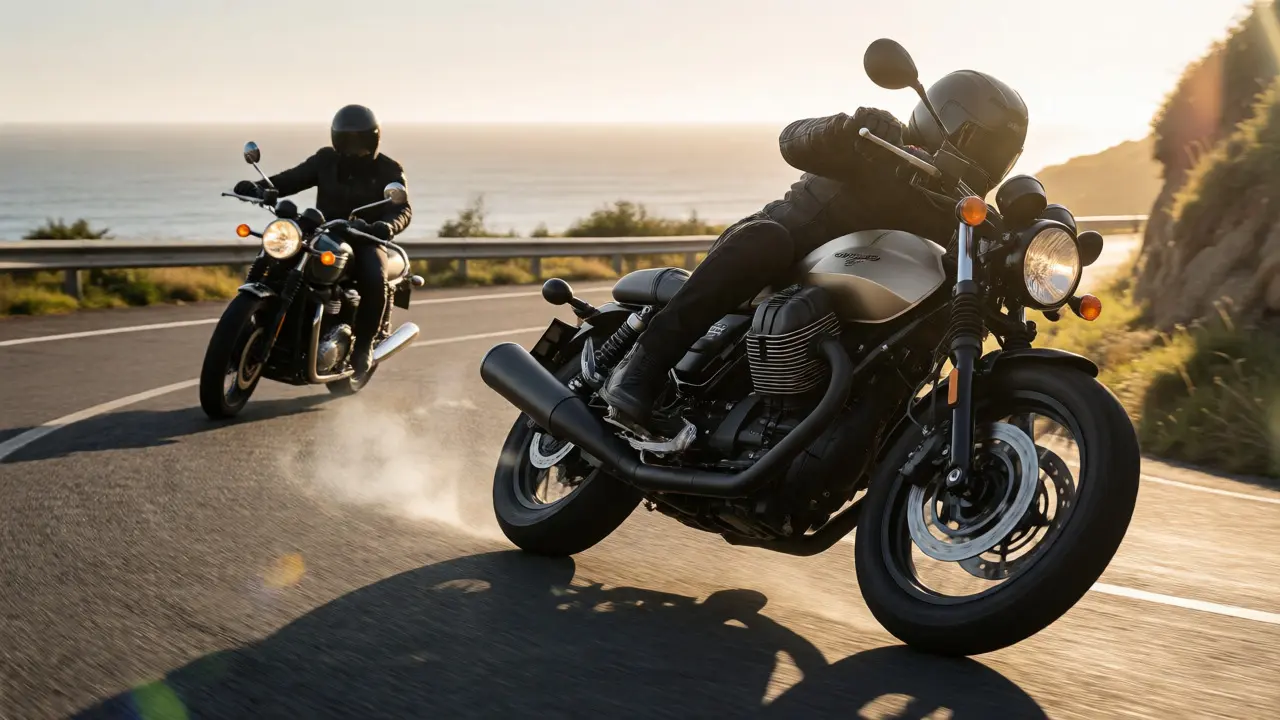
How do these bikes handle corners? The Bonneville feels planted and stable. Its chassis geometry is designed for comfort and straight-line stability, making it excellent for long highway stretches or cruising along coastal roads. The suspension is tuned softly, absorbing bumps without upsetting the rider. You can lean it into turns with confidence, but it doesn’t beg to be ridden aggressively. It’s a cruiser with sportbike manners, not a sportbike pretending to be a cruiser.
The Moto Guzzi V7 feels lighter and more agile on its feet. Because the engine mass is concentrated centrally and lower due to the V-layout, the center of gravity is different. Riders often describe the Guzzi as having a "go-kart" feel in tight urban environments. It flicks into corners quicker than the heavier Triumph. However, this agility comes at a cost. The air-cooled engine runs hotter, especially in summer traffic, and the softer rear shock can bottom out if you’re carrying a passenger or heavy luggage. For canyon carving or winding backroads, many enthusiasts prefer the Guzzi’s playful nature. For relaxed touring, the Triumph’s stability is superior.
Maintenance and Reliability Realities
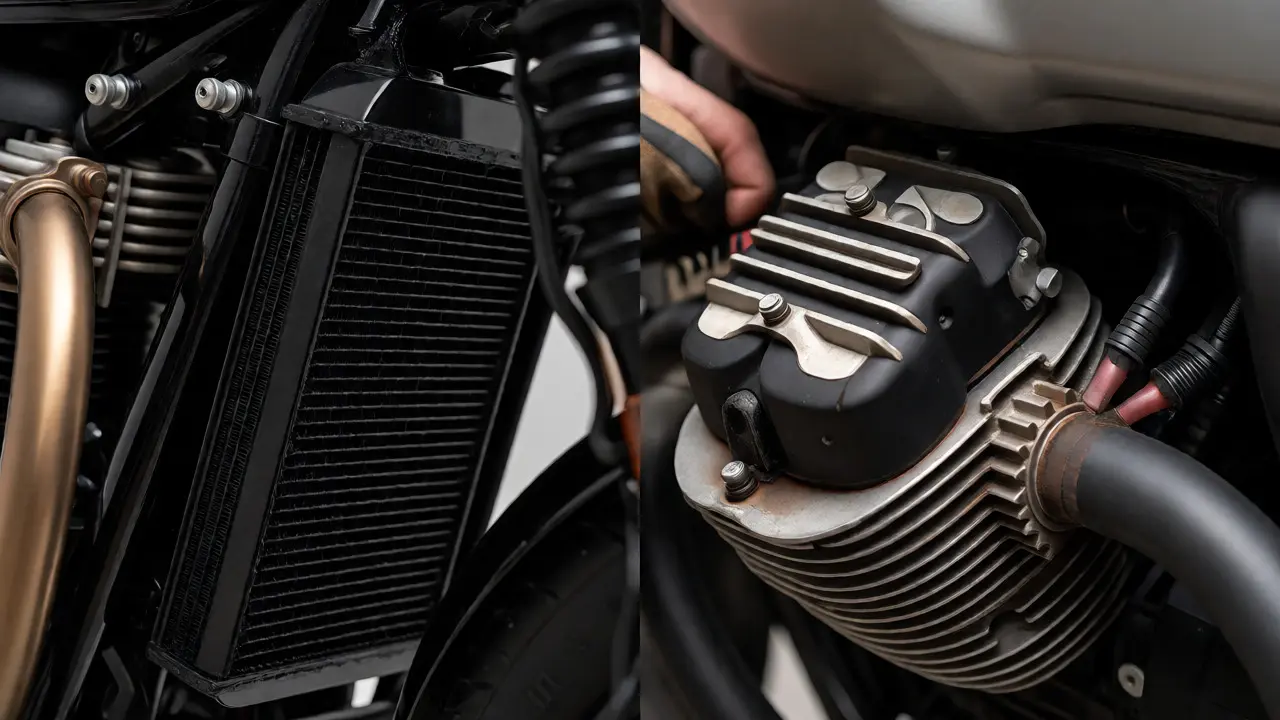
Here’s where the rubber meets the road financially. Neither bike is cheap to maintain, but they fail in different ways. The Triumph Bonneville benefits from being part of a massive global ecosystem. Parts are widely available, mechanics everywhere know how to work on them, and service intervals are standard. That said, liquid cooling systems add complexity. Radiator leaks or thermostat issues are rare but possible, and repairs involve draining coolant and bleeding air pockets-a job best left to pros if you aren’t handy.
Moto Guzzi ownership is a niche hobby. Finding a mechanic who specializes in Italian bikes can be tough outside major cities. The air-cooled system is simpler mechanically-no radiator, no water pump-but it requires strict adherence to valve clearance checks. Neglecting these leads to expensive top-end rebuilds. Owners report higher-than-average electrical gremlins, particularly with sensors and wiring harnesses exposed to heat from the protruding cylinders. If you buy used, budget extra for potential electrical diagnostics. If you buy new, warranty coverage helps, but dealer networks are thinner than Triumph’s.
Cost of Ownership: Purchase Price vs. Long-Term Value
Sticker prices are similar, hovering around $11,000-$13,000 for base models in 2026. But resale value tells a different story. Triumph holds its value remarkably well. The brand strength and high demand mean you can sell a three-year-old Bonneville for nearly what you paid, minus minor depreciation. Moto Guzzi depreciates faster. You might lose 20-25% of the value in the first year alone. This makes buying a used Guzzi a smart financial move, but selling it later can be frustrating if you want top dollar.
- Insurance: Generally comparable, though some insurers charge slightly more for Guzzis due to repair part availability times.
- Fuel Economy: The smaller-displacement Guzzi edges out the Triumph by 5-8 mpg, saving you maybe $100 a year if you ride 5,000 miles annually.
- Tires: Both use common sizes, but Guzzis often wear rear tires faster due to the torque delivery characteristics.
Who Should Buy Which?
Choose the Triumph Bonneville if you prioritize ease of use, reliability, and a refined riding experience. It’s perfect for commuters, weekend tourers, and those who want a bike that starts every time and doesn’t require constant tinkering. It looks classic but behaves modernly. You’re paying for polish and peace of mind.
Choose the Moto Guzzi V7 if you crave character and engagement. You enjoy the ritual of maintaining a mechanical machine and don’t mind occasional quirks. You want a bike that stands out in a parking lot and offers a rawer connection to the road. It’s for riders who see their motorcycle as a passion project rather than just transportation. The trade-off is higher maintenance vigilance and potentially fewer service options near your home.
Frequently Asked Questions
Is the Moto Guzzi V7 too hot for city riding?
Yes, significantly warmer than the liquid-cooled Triumph. In summer traffic, you will feel heat radiating from the front cylinder onto your legs. While manageable with proper gear, it’s less comfortable for long idling periods compared to the Bonneville.
Which bike is better for beginners?
The Triumph Bonneville is generally more beginner-friendly due to its smoother power delivery, lighter clutch feel, and wider dealer network for support. The Guzzi’s torque surge can surprise new riders, requiring more throttle control finesse.
Are spare parts hard to find for Moto Guzzi?
Common wear items like brake pads and chains are easy to source. Specific bodywork or engine internals may have longer lead times depending on your location. Triumph parts are ubiquitous globally, whereas Guzzi parts might require ordering from Europe or specialized importers.
Can I tour comfortably on the Moto Guzzi V7?
You can, but it’s less ideal than the Bonneville. The seat is firmer, and wind protection is minimal. Adding accessories like a windshield and panniers helps, but the overall package is optimized for shorter trips and spirited riding rather than cross-country endurance.
Which has better electronics?
Modern Triumph Bonnevilles come with more advanced rider aids, including multiple ride modes, traction control, and cruise control as standard or optional features. The Guzzi V7 keeps things simpler, often lacking sophisticated electronic interventions, which appeals to purists but limits adjustability.