

Imagine paying for your car insurance based on how much you actually drive, rather than a flat rate that assumes you’re behind the wheel every single day. For millions of drivers in 2026, this isn’t just a dream-it’s reality. Usage-based insurance is a type of auto coverage that adjusts premiums based on actual driving habits and mileage instead of static demographic factors. It flips the traditional insurance model on its head.
Traditionally, insurers relied heavily on broad data points like your age, credit score, zip code, and vehicle type to set rates. If you were a young driver in a city with high traffic, you paid more, regardless of whether you drove safely or rarely left your driveway. Usage-based insurance (UBI) introduces a level playing field. It rewards safe, low-mileage drivers with lower costs while charging higher rates to those who log many miles or exhibit risky behaviors like hard braking and rapid acceleration.
The core question most drivers ask is simple: Is it worth switching? The answer depends entirely on your lifestyle. If you work from home, live in a rural area, or simply prefer public transit, UBI could save you hundreds of dollars annually. However, if you commute long distances daily or have erratic driving habits, these programs might cost you more. Let’s break down the two main types of usage-based insurance-telematics and pay-per-mile-to help you decide which fits your life.
How Telematics Insurance Works
Telematics is the technology used in insurance to track driving behavior through GPS and accelerometer sensors installed in your vehicle or via a smartphone app. When you sign up for a telematics program, you agree to share specific data about how you drive. This data becomes the primary factor in calculating your premium discount or surcharge.
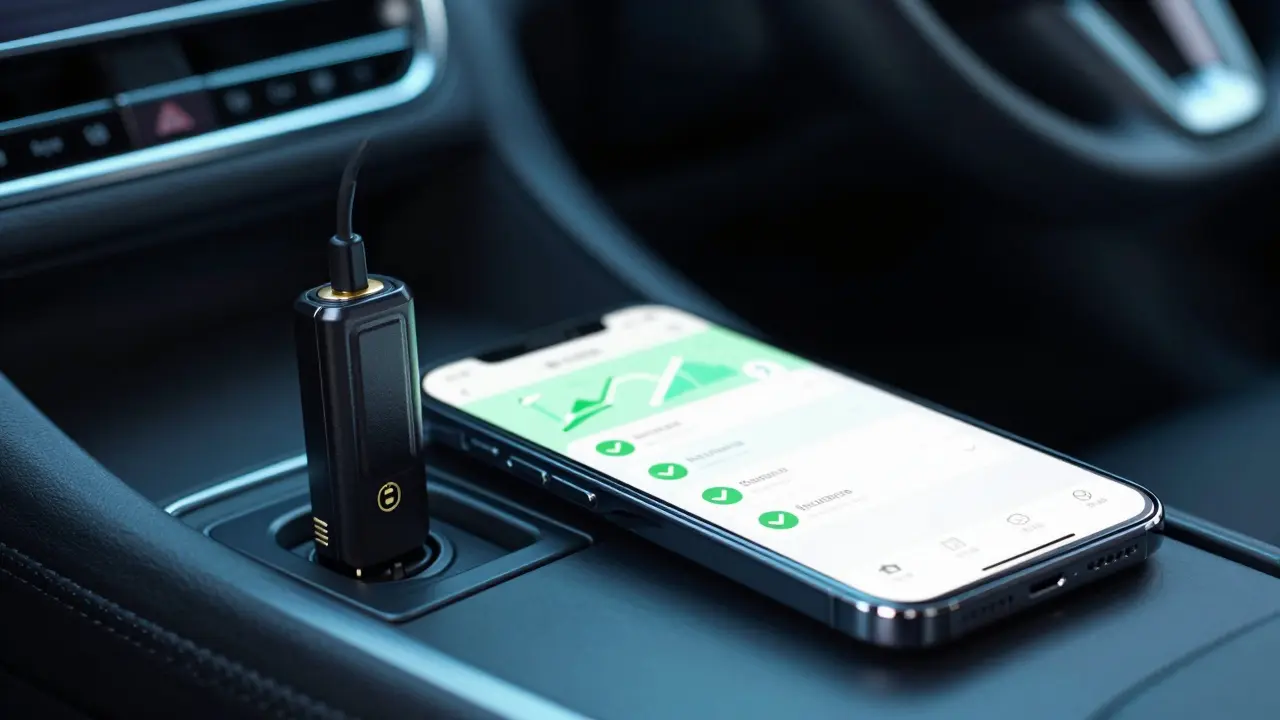
There are generally two ways insurers collect this data. The first method involves a plug-in device. You connect a small black box to your car’s OBD-II port, usually located under the dashboard. This device tracks your speed, location, time of day, and how smoothly you handle the vehicle. The second, increasingly popular method uses your smartphone. By downloading an insurer’s app, you allow it to use your phone’s GPS and motion sensors to record similar metrics. No hardware installation is required, making it less intrusive for tech-savvy drivers.
What exactly are they looking for? Insurers analyze several key behaviors:
- Mileage: How many miles you drive per week or month.
- Speed: Whether you consistently stay within posted limits.
- Braking: Frequency and intensity of hard stops, which can indicate tailgating or distraction.
- Acceleration: Rapid speeding up, often associated with aggressive driving.
- Time of Day: Driving during late-night hours (e.g., midnight to 5 AM) may carry higher risk weights.
- Phone Usage: Some apps detect if your phone is moving while you’re driving, suggesting distracted driving.
Major providers like Progressive’s Snapshot, Allstate’s Drivewise, and Liberty Mutual’s RightTrack offer these programs. Typically, you drive normally for three to six months. At the end of this period, the insurer reviews your data and offers a discount ranging from 5% to 30%. In some cases, if your driving profile is poor, your rate could increase, though many companies cap this penalty to protect consumers.
Understanding Pay-Per-Mile Insurance
If you dislike the idea of being monitored for every hard brake or sudden turn, Pay-per-mile insurance is a usage-based model where premiums are calculated primarily on the number of miles driven, with minimal tracking of driving style. This approach is simpler and focuses almost exclusively on volume rather than behavior.
The structure of pay-per-mile policies usually includes two components: a base monthly fee and a per-mile charge. For example, you might pay $50 a month plus $0.10 for every mile you drive. If you drive 800 miles in a month, your total bill would be $130. This predictability appeals to drivers who want to know exactly what their insurance will cost without worrying about hidden behavioral penalties.
Companies like Metromile and Root have pioneered this space. Metromile, for instance, uses a dongle or an app to count miles but does not penalize you for speeding or hard braking. The logic is straightforward: the more you drive, the higher your statistical likelihood of being in an accident. Therefore, low-mileage drivers subsidize high-mileage drivers less than they do in traditional models.
This model is particularly beneficial for urban dwellers who rely on ride-sharing services, subways, or biking for most trips. It also suits seasonal drivers, such as those who only use their cars for weekend getaways or occasional errands. However, if your annual mileage exceeds 10,000 to 12,000 miles, pay-per-mile plans often become more expensive than standard fixed-rate policies.
Telematics vs. Pay-Per-Mile: Key Differences
Choosing between telematics and pay-per-mile comes down to what you value more: privacy or potential savings. While both fall under the umbrella of usage-based insurance, their mechanisms and outcomes differ significantly.
| Feature | Telematics (Behavior-Based) | Pay-Per-Mile (Distance-Based) |
|---|---|---|
| Primary Metric | Driving habits (braking, speed, time) | Total miles driven |
| Data Collection | Detailed behavioral analysis | Mileage counting only |
| Privacy Impact | High (tracks location and style) | Medium (tracks location for mileage) |
| Best For | Safe, moderate-mileage drivers | Low-mileage, urban drivers |
| Potential Savings | Up to 30% discount | Variable; can exceed traditional rates if high mileage |
| Rate Stability | Changes annually based on review | Predictable monthly billing |
One critical distinction is the "behavioral penalty." With telematics, a few instances of reckless driving can erase any savings from low mileage. With pay-per-mile, you can drive aggressively, and as long as you don’t crash, your rate remains tied strictly to distance. Conversely, a careful driver who commutes 50 miles a day might find that telematics offers better overall value because the behavioral discounts offset the mileage costs, whereas pay-per-mile would charge them heavily for the distance.
Pros and Cons of Usage-Based Insurance
Before signing up, it’s essential to weigh the advantages against the drawbacks. UBI is not a one-size-fits-all solution.
Advantages
- Cost Savings: Low-mileage and safe drivers can see significant reductions in premiums. Studies show average savings of 15-20% for qualifying participants.
- Fairness: Rates reflect individual risk rather than group averages. Young drivers who drive cautiously no longer pay the same as reckless peers.
- Improved Driving Habits: Many users report driving more carefully once they know they are being monitored. Real-time feedback apps can coach drivers to smooth out their acceleration and braking.
- Theft Recovery: Since these systems track location, they can help locate stolen vehicles quickly.
Disadvantages
- Privacy Concerns: Sharing detailed location and behavioral data raises questions about data security and ownership. Who owns your driving data? Can it be sold to third parties?
- Technical Issues: Bluetooth connectivity problems, dead phone batteries, or faulty dongles can lead to inaccurate data recording, potentially affecting your rate unfairly.
- Complexity: Understanding how algorithms calculate your score can be confusing. A "good" driver in one system might be rated "average" in another due to differing thresholds.
- Not Available Everywhere: While widespread, UBI is not offered in all states or by all carriers. Regulations vary by jurisdiction.
Who Should Switch to Usage-Based Insurance?
To determine if UBI is right for you, consider your current driving profile. Ask yourself these questions:
- Do I drive less than 7,500 miles a year? If yes, pay-per-mile is likely a strong candidate.
- Am I a safe driver with a clean record? If yes, telematics can reward your caution with substantial discounts.
- Do I work from home or use public transit regularly? These lifestyles align perfectly with low-mileage models.
- Am I comfortable sharing my location data? If privacy is a major concern, stick with traditional insurance.
- Is my current premium high due to demographics? If you’re young or have a lower credit score but drive safely, UBI can override these negative factors.
If you answered "yes" to most of these, exploring UBI options makes sense. Start by requesting quotes from both telematics and pay-per-mile providers. Compare the estimated annual cost against your current policy. Remember to factor in any enrollment fees or hardware costs, although many companies now waive these to attract customers.

Privacy and Data Security in 2026
In 2026, data privacy has become a central concern for UBI adoption. Regulators have tightened rules around how insurers collect, store, and share driving data. Most reputable companies anonymize data before using it for broader analytics. They also provide dashboards where you can view your own driving scores and understand how they impact your rate.
However, always read the fine print. Look for clauses regarding data sharing with third-party advertisers or law enforcement. Some states have passed laws requiring explicit consent for continuous location tracking. Ensure your chosen provider complies with local regulations and offers clear opt-out mechanisms if you decide to discontinue the program.
Getting Started with Usage-Based Insurance
Switching to UBI is straightforward. Here is a step-by-step guide to getting started:
- Research Providers: Identify insurers in your state that offer UBI. Check if they require a new policy or if they add-on to existing coverage.
- Request Quotes: Get estimates for both telematics and pay-per-mile options. Use online calculators provided by companies like Metromile or Progressive.
- Check Compatibility: Ensure your vehicle is compatible with the required hardware or that your smartphone meets the app’s OS requirements.
- Install or Download: Follow instructions to install the OBD-II device or download the mobile app. Keep the device charged or connected as directed.
- Drive Normally: Avoid altering your routine drastically just to game the system. Drive as you normally would, but consciously aim for smoother maneuvers.
- Monitor Your Score: Use the provider’s app to track your progress. Adjust habits if you notice frequent alerts for hard braking or speeding.
- Review Results: After the trial period, review your final rating and compare it to your previous premium. Decide whether to continue or revert to traditional coverage.
Usage-based insurance represents a shift toward personalized, fairer pricing in the automotive industry. By leveraging technology, it empowers drivers to take control of their insurance costs. Whether you choose telematics for behavioral rewards or pay-per-mile for simplicity, understanding how these systems work ensures you make an informed decision that saves money and enhances safety.
Can usage-based insurance raise my rates?
Yes, telematics programs can raise your rates if your driving behavior is deemed risky. Factors like frequent hard braking, speeding, or late-night driving can result in higher premiums. However, many insurers cap the increase to prevent drastic hikes. Pay-per-mile plans typically do not raise rates based on behavior, only on increased mileage.
Does telematics track my exact location?
Yes, most telematics systems use GPS to track your location. This data helps verify mileage and context for driving events. However, reputable insurers aggregate this data for risk assessment and do not share real-time locations with third parties unless required by law or for theft recovery.
Is pay-per-mile insurance cheaper than traditional insurance?
It depends on your mileage. If you drive fewer than 7,500 miles annually, pay-per-mile is often significantly cheaper. For high-mileage drivers (over 12,000 miles), traditional fixed-rate policies are usually more cost-effective.
What happens if my phone dies while using a telematics app?
If your phone battery dies, the app cannot record data. Most insurers allow you to manually log missing days or upload offline data when the phone reconnects. Frequent gaps in data may affect your score, so keep your device charged or use a plug-in hardware device for reliability.
Can I switch back to traditional insurance after trying UBI?
Yes, you can usually cancel a UBI program at any time. However, check the terms for any cancellation fees. Note that switching back may result in a different premium rate, as the insurer will revert to standard demographic-based pricing.