
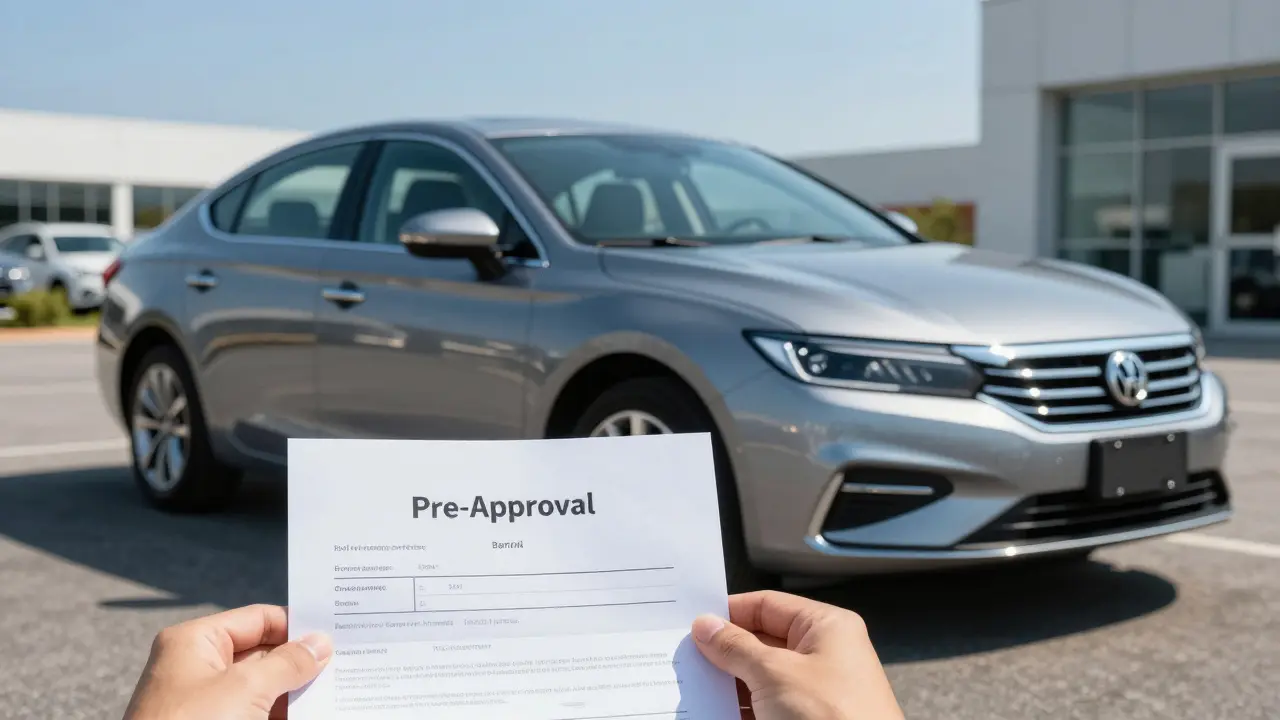
The Truth About Financing a Pre-Owned Ride
Walking onto a car lot with a check in your pocket is a power move, but most of us don't have $15,000 sitting around. That's where used car financing comes in. The problem is that banks often view used cars as riskier than new ones. Why? Because a 2018 sedan doesn't hold its value as predictably as a 2026 model. This means you might face higher interest rates or stricter approval requirements than you'd expect.
Getting a loan isn't just about whether the bank says "yes" or "no." It's about the cost of that "yes." A difference of 3% in your APR can mean thousands of extra dollars over a five-year term. If you're shopping for a car today, your goal isn't just to get approved-it's to make sure you aren't paying for the car twice because of bad interest rates.
Quick Takeaways for Fast Approval
- Get pre-approved: Never walk into a dealership without a loan offer from your own bank or credit union.
- Check your reports: A simple typo on your credit report can tank your score. Fix it before applying.
- Down payment is king: Putting 20% down reduces the lender's risk and lowers your monthly payment.
- Watch the term length: A 72-month loan looks cheaper per month, but you'll pay way more in total interest.
Decoding the Approval Process
When you apply for a loan, the lender looks at more than just your score. They look at your Debt-to-Income Ratio, which is the percentage of your gross monthly income that goes toward paying debts. If you're already spending 40% of your paycheck on a mortgage and student loans, a lender might worry that another $400 car payment will push you over the edge.
Then there's the "Loan-to-Value" (LTV) ratio. Lenders use a Kelly Blue Book or NADA guide to see what the car is actually worth. If you try to finance a car for $12,000 but the book value is only $9,000, the lender will likely deny the loan or demand a larger down payment. They won't lend you more than the car is worth because if you default, they can't recoup the money by selling the vehicle.
| Credit Tier | Score Range | Avg. APR (Used) | Approval Likelihood |
|---|---|---|---|
| Super Prime | 780 - 850 | 4.5% - 6.5% | Very High |
| Prime | 660 - 779 | 6.6% - 9.0% | High |
| Non-Prime | 600 - 659 | 9.1% - 14.0% | Moderate |
| Below 600 | 14.1% - 22.0% | Low/Specialized |
Where to Find the Best Rates
Not all lenders are created equal. Most people just take whatever the dealer offers, but that's usually a mistake. Dealerships often add a markup to the interest rate the bank gives them, pocketing the difference as a fee.
Your first stop should be a Credit Union, which is a member-owned financial cooperative that often provides lower loan rates than traditional banks. Because they are non-profits, they tend to be more flexible with people who have a decent history but maybe a slightly lower score. They might look at your actual relationship with the institution rather than just a number on a screen.
Traditional banks are a solid second choice, especially if you've had an account with them for years. Online lenders have also become huge players. They can shop your loan across multiple banks simultaneously, which can create a bidding war for your business, potentially shaving a percentage point off your rate.
Common Pitfalls and How to Avoid Them
One of the biggest traps is the "low monthly payment" pitch. A salesperson might say, "I can get you down to $300 a month!" Sounds great, right? But they might do this by extending your loan to 84 months. By the time you finish paying, you'll have paid for a luxury car while driving a beat-up sedan, and you'll be "underwater" (owing more than the car is worth) for years.
Another red flag is the "Buy Here Pay Here" (BHPH) lot. These places are a last resort. They don't check your credit because they are the bank. Instead, they charge predatory interest rates-sometimes 25% or higher. If you miss one payment, they often have GPS trackers in the cars and can repo the vehicle within 48 hours.
Instead, if your credit is rough, look for Cosigners. A cosigner is a person who agrees to be legally responsible for a loan if the primary borrower defaults. Having a parent or partner with great credit can drop your rate from 18% to 6% instantly. Just remember: if you don't pay, their credit gets trashed too.
The Step-by-Step Approval Strategy
- Audit Your Credit: Get your free report. Look for errors. If you see a late payment that wasn't actually late, dispute it. This can take 30 days, so do it before you shop.
- Determine Your Budget: Use a rule of thumb-your total car costs (loan, insurance, gas) shouldn't exceed 15% of your take-home pay.
- Shop for Pre-Approval: Apply at one credit union and one online lender. This gives you a baseline. When the dealer asks how they can beat your 6% rate, you have leverage.
- Verify the Vehicle's Value: Once you find a car, check the VIN. Make sure the dealer isn't overcharging you, which would inflate the loan amount.
- Read the Fine Print: Look for "prepayment penalties." Some lenders charge you a fee if you pay the loan off early. Avoid these at all costs.

Comparing Financing Options
Depending on your situation, you might choose between a traditional term loan or a lease. While leasing is mostly for new cars, some certified pre-owned (CPO) vehicles offer lease-like options. A term loan is almost always better for used cars because you actually own the asset at the end.
If you're deciding between a bank and a dealer, consider this: banks offer stability and transparent terms. Dealers offer convenience. If you're in a rush and have a 750+ score, the dealer's rate might be competitive. But if you're fighting for every cent, the extra two hours spent at a credit union will save you hundreds of dollars.
Will applying for multiple loans hurt my credit score?
Not as much as you'd think. Credit bureaus recognize "rate shopping." As long as all your auto loan applications happen within a 14-to-45-day window, they usually count as a single hard inquiry on your report.
What is a good down payment for a used car?
While some lenders offer 0% down, aiming for 20% is the gold standard. This prevents you from being "upside down" on the loan and significantly improves your chances of getting a lower interest rate.
Can I refinance my used car loan later?
Yes. If your credit score improves six months after buying the car, you can apply for a refinancing loan with a different lender to lower your monthly payment and interest rate.
What happens if I have no credit history?
You'll likely need a cosigner or a substantial down payment. Some lenders may offer "first-time buyer" programs, but be wary of the higher rates that usually accompany them.
Is a 60-month loan too long for a used car?
For a car that's already 5 years old, a 60-month loan means you're paying for the car until it's 11 years old. You risk the car's value dropping faster than the loan balance, which is a dangerous financial position.
Next Steps for Your Car Hunt
If you're ready to start, your first move is to pull your credit report. Don't guess your score-know it. Once you have that number, visit a local credit union and ask for their current used car rates. This gives you a benchmark.
If you're struggling with approval, don't panic and run to the nearest BHPH lot. Instead, spend three months paying down a small credit card balance or adding a cosigner. The difference in interest can be the difference between owning a car and just renting one from the bank for the next five years.