
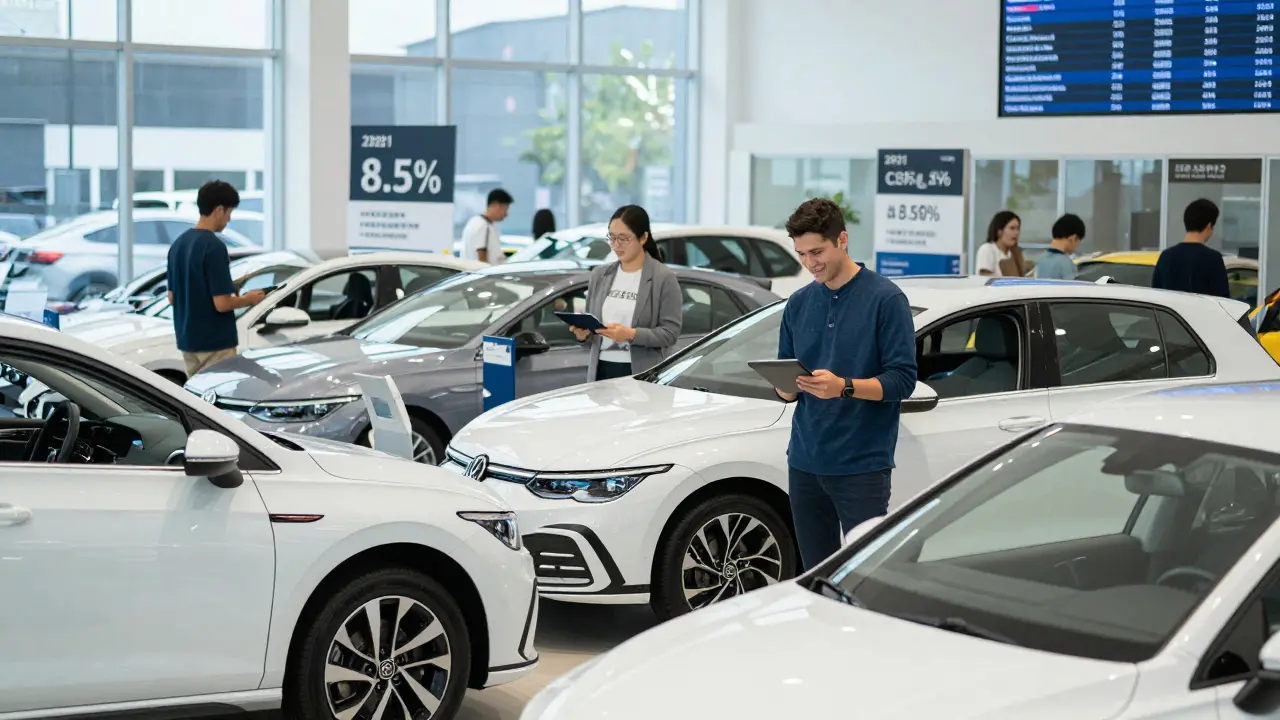
Used car prices have been all over the map since 2022, but 2026 is showing a clear shift. If you’ve been waiting to buy a used car, the market is finally starting to feel more normal - not perfect, but predictable. Inventory is climbing back up, and prices are dropping in ways we haven’t seen since before the pandemic. This isn’t just a small dip. It’s a real turning point.
Inventory is rising - and it’s not a fluke
Back in 2022, used car lots were nearly empty. Dealers couldn’t keep anything on the lot. Now, in early 2026, the number of used vehicles available in the UK is up nearly 22% compared to the same time last year. Why? Because new car production has stabilized, and lease returns are flooding the market. More people are trading in their three-year-old leases, and manufacturers are producing more vehicles than they did during the chip shortage years.
For buyers, this means more choices. You’re no longer stuck picking between three overpriced 2020 models. Dealers are now offering 2021, 2022, and even 2023 models with low mileage - and they’re willing to negotiate. In Bristol, dealerships are reporting a 30% increase in foot traffic since December. People are walking in, comparing options, and walking out with better deals.
Prices are falling - but not everywhere
On average, used car prices across the UK are down 8.5% year-over-year. That’s not a tiny drop. That’s hundreds, sometimes over a thousand pounds, off the price tag. A 2021 Ford Focus that sold for £16,500 last year now sits at £15,100. A 2022 Volkswagen Golf? £17,800 down to £16,200.
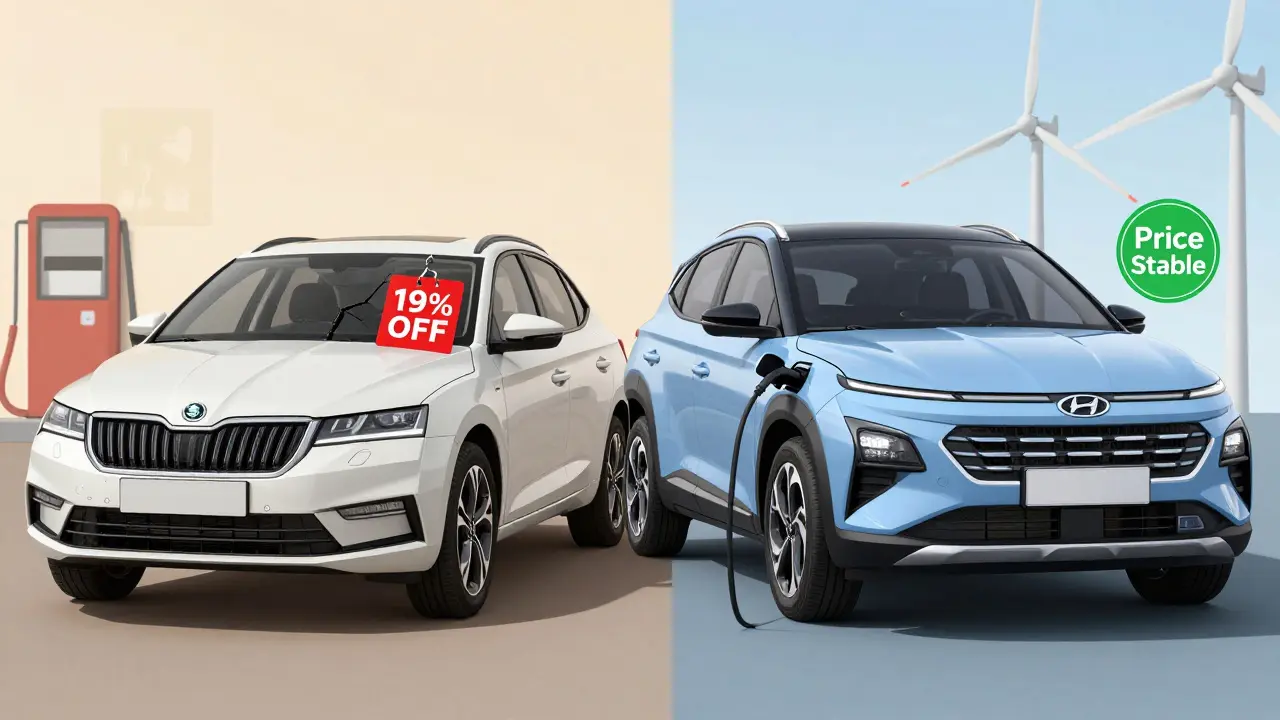
But here’s the catch: not all cars are dropping equally. Compact SUVs and electric vehicles are holding their value better. The Toyota Corolla Cross and Hyundai Kona Electric are still seeing prices stay flat or even rise slightly in some regions. Why? Because demand for practical, fuel-efficient vehicles hasn’t faded - it’s just shifted. People still need to get around, and they’re not ready to pay premium prices for gas-guzzlers.
On the other end, large sedans and older diesel models are falling fastest. A 2018 BMW 5 Series? Down 14%. A 2017 Skoda Octavia diesel? Down 19%. Buyers are moving away from models that are expensive to maintain and don’t fit modern lifestyles.
What’s driving the changes?
It’s not one thing - it’s a mix. First, interest rates have stabilized. After peaking at 5.25% in late 2023, the Bank of England has held rates steady at 4.5% since mid-2025. That’s made monthly payments more manageable, so more people are financing used cars again.
Second, inflation has cooled. Fuel prices are down 18% from their 2023 highs. Insurance costs are easing. Even MOTs and servicing are cheaper than they were two years ago. All of this means owning a used car feels less like a financial burden.
Third, the used car market is becoming more transparent. Online platforms like Autotrader and Cazoo now show real-time inventory and price trends. Buyers can see exactly how prices have changed over the last 90 days. That’s putting pressure on dealers to be fair. No more hiding behind vague "market conditions" excuses.
When to buy - and when to wait
If you’re looking to buy a used car in early 2026, here’s the smart move: start shopping now. February and March are historically the best months to buy. Dealers are trying to clear out last year’s inventory before new models arrive. You’ll find more incentives - free servicing, extended warranties, or even cashback offers.
But if you’re holding out for a 2023 or newer EV, wait until April. That’s when the biggest wave of lease returns hits the market. Dealers will be desperate to move them, and prices could drop another 5-8%.
One warning: don’t fall for "low mileage" traps. Some sellers are advertising 2021 models with 30,000 miles as "practically new." But those cars were driven hard during the pandemic - think long commutes, constant use. Check the service history. A 2021 car with 50,000 miles and full service records is often a better buy than a 2021 with 32,000 miles and no oil changes.
What’s next? The next 12 months
By the end of 2026, we’ll likely see used car prices drop another 5-7%. Inventory will keep growing, especially for EVs and hybrid models. The UK government’s push to phase out petrol and diesel cars by 2030 is already reshaping demand. More people are looking at 2022-2024 hybrids as a bridge to full electric.
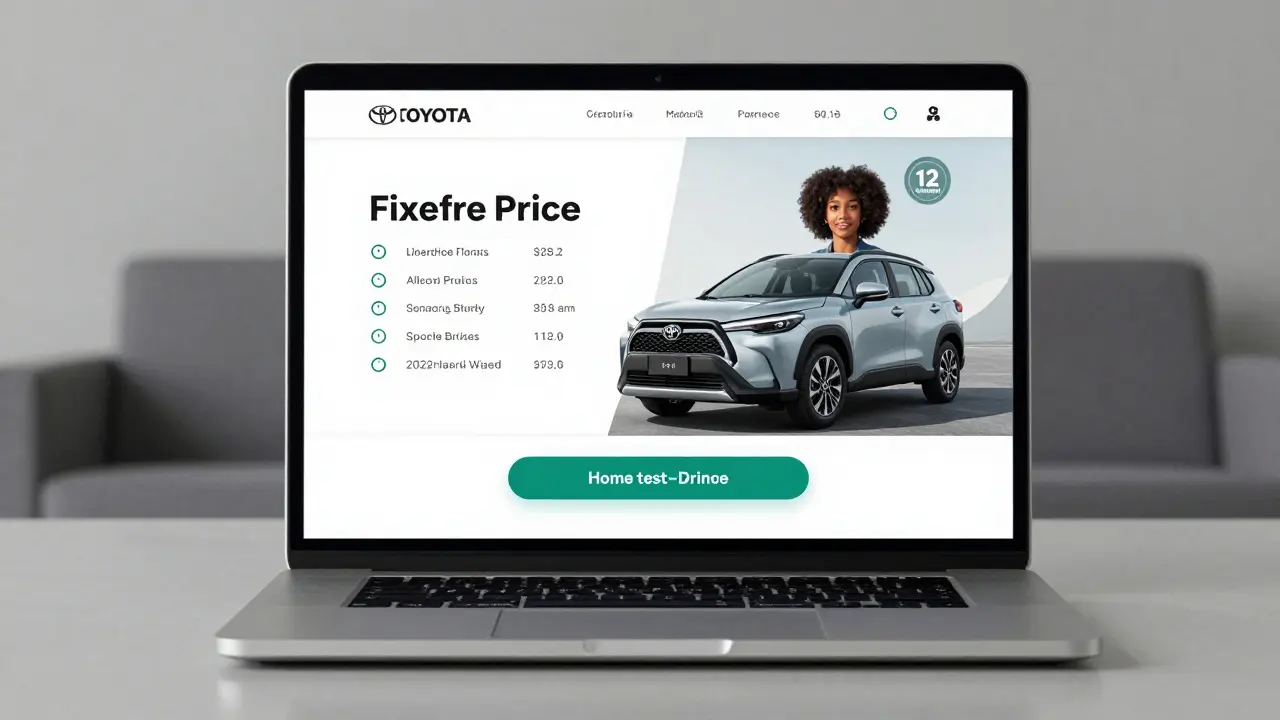
Dealers are also changing how they sell. Many are offering fixed-price, no-haggle deals online. Some even let you test drive at home. The old-school car lot is fading. The future is digital, transparent, and buyer-friendly.
What to look for in a used car today
- Service history: Always ask for full records. A car with regular oil changes and brake checks is worth more - even with higher mileage.
- EV range: If you’re considering an electric car, make sure it has at least 200 miles of real-world range. Older models like the Nissan Leaf 2018 only do 130 miles on a full charge.
- Warranty: Look for dealers offering at least 6 months of warranty. Some now offer up to 12 months on certified used cars.
- Depreciation rate: Cars like the Toyota Corolla, Honda Civic, and Skoda Octavia hold their value best. Avoid models with high repair costs - like older Audis or BMWs.
Final thoughts
The used car market in 2026 isn’t perfect, but it’s fairer than it’s been in years. Prices are falling, inventory is growing, and buyers have more power than they’ve had since 2019. You don’t need to rush. You don’t need to panic. Just be smart. Check the history. Compare prices. Wait for the right deal. The market is working for you now - not against you.
Are used car prices still high in 2026?
No, used car prices have dropped significantly since 2023. On average, prices across the UK are down 8.5% year-over-year in early 2026. Models like the Ford Focus, Volkswagen Golf, and Skoda Octavia are seeing the steepest declines. However, popular EVs and compact SUVs are holding their value better due to strong demand.
Is now a good time to buy a used car?
Yes, early 2026 is one of the best times to buy in years. Inventory is up 22% compared to last year, dealers are competing for buyers, and financing rates have stabilized. February and March are ideal months - you’ll find more options and better deals before new model year stock arrives.
Why are EVs holding their value better than gas cars?
EVs like the Hyundai Kona Electric and Toyota Corolla Cross are in high demand because they offer lower running costs and meet growing environmental preferences. Buyers are also concerned about future petrol/diesel bans, so they’re choosing hybrids and EVs even for used purchases. This demand keeps prices steady, while older gas cars lose value faster.
Should I avoid diesel used cars?
Yes, unless you drive long distances regularly. Diesel cars are falling fastest in price - some models are down 19% since 2023. Many local councils are planning low-emission zones, and insurance and tax costs are rising. Unless you need diesel for towing or motorway use, a hybrid or petrol model is a smarter long-term choice.
How can I tell if a used car has been well-maintained?
Check the service history book or digital records. Look for consistent oil changes every 10,000-12,000 miles, brake inspections, and timing belt replacements. A car with full records and no gaps is worth more. Also, ask for an HPI check to confirm there’s no outstanding finance or accident history.
Comments
kelvin kind
Been waiting for this. Finally, I can actually walk into a dealership and not feel like I’m getting robbed.
February 13, 2026 at 17:33
Fred Edwords
It’s about time. The market was completely unhinged between 2022 and 2024-prices were detached from reality, and dealers were treating customers like ATM machines. Now, with inventory up 22% and financing stabilized, we’re seeing a return to basic supply-and-demand logic. This isn’t a blip; it’s a correction. And for those who held off, patience paid off.
Also, the transparency from platforms like Autotrader is a game-changer. No more “market conditions” as a smokescreen. Buyers now have real-time data, which forces dealers to compete fairly. That’s structural change, not just cyclical.
And yes-service history matters more than mileage. A 2021 Corolla with 50k miles and full records is a smarter buy than a 2021 with 32k and skipped oil changes. Don’t fall for the “low-mileage trap.”
February 14, 2026 at 10:46
Sarah McWhirter
Ohhh so THIS is why the government suddenly got so cozy with EV manufacturers…
Let me guess-there’s a secret clause in the 2025 Infrastructure Bill that lets dealers offload old Teslas at 30% below market? And the ‘lease returns flooding the market’? Yeah right. Those are all company cars from Elon’s secret underground fleet.
I mean, why else would diesel cars drop 19% right as the UK starts cracking down on emissions? Coincidence? Or is this all part of a larger plan to make us buy EVs before they’re even ready? I’ve got receipts.
Also, I heard the Bank of England’s rate freeze was orchestrated by a German tech conglomerate that owns 70% of the world’s lithium mines. Just saying.
And don’t even get me started on ‘certified used’-that’s just a fancy word for ‘we reupholstered the seats and called it a day.’
February 15, 2026 at 10:51
Ananya Sharma
You’re all missing the bigger picture. This isn’t about supply and demand-it’s about psychological conditioning. The entire narrative of ‘prices are dropping’ is being pushed by financial institutions that profit from car loans. They want you to believe now is the time to buy, so you take on debt you don’t need.
Think about it: why did prices spike in 2022? Because people were stuck at home and suddenly needed a car. Now? People are working remotely, using public transport, or biking. The ‘demand’ for cars is artificially inflated by marketing.
And let’s not pretend EVs are ‘holding value’ because they’re practical. They’re holding value because the government is subsidizing them and banning ICE vehicles. It’s coercion disguised as progress.
Also, the claim that ‘service history matters more than mileage’ is a myth perpetuated by mechanics who make money off repairs. A car with 50,000 miles has been driven more. Period. No amount of oil changes can undo wear and tear.
And why are dealers offering ‘fixed-price, no-haggle’ deals? Because they’ve realized they can’t manipulate you anymore. They’re scared. The old system is collapsing. And you’re being told to ‘shop now’ because they’re panicking about inventory.
Don’t be fooled. This isn’t a buyer’s market-it’s a manufactured one.
February 17, 2026 at 01:29
Ian Cassidy
Yeah, inventory’s up, prices are down-classic cycle. But don’t sleep on the EV wave. The 2023-2024 models are hitting the market hard now. If you’re looking at hybrids, now’s the time to grab one before the next tax credit shuffle.
Also, check the battery health on any EV. A lot of these ‘low-mileage’ ones were used as fleet vehicles. They’re not ‘practically new’-they’re worn out batteries with fresh upholstery.
February 17, 2026 at 09:18
Zach Beggs
Good breakdown. I’ve been looking at a 2022 Civic and the price dropped $1,200 in three weeks. Feels good to finally have options.
February 18, 2026 at 17:50
Kenny Stockman
Love this. You’re right-this is the first time in years I actually feel like I’m not getting played. I bought my 2021 Corolla last week for $15,800. Had full service records, 42k miles, and the dealer threw in a free oil change for a year. Felt like a win.
And yeah, avoid the diesel sedans. My uncle’s 2017 Passat is a money pit now. Insurance alone is $200/month. Not worth it.
February 19, 2026 at 07:15
Antonio Hunter
There’s a quiet revolution happening here, and most people aren’t noticing. It’s not just about prices or inventory-it’s about trust. For over a decade, the used car market was opaque, manipulative, and distrustful. Dealers hid damage, inflated prices, and used confusion as a weapon.
Now, with digital platforms exposing real-time trends, with standardized warranties, with transparency in service history, we’re seeing the birth of a new consumer dynamic. Buyers aren’t just shopping-they’re evaluating, comparing, and demanding accountability.
This shift is cultural. It’s not just economic. It’s about empowerment. The car lot is fading because the power has shifted. And that’s profound. It means the next generation won’t inherit the same predatory systems. That’s the real story here.
Also, the decline of diesel isn’t just about emissions-it’s about identity. People are choosing practicality over status. That’s a quiet but massive cultural pivot.
February 20, 2026 at 10:06
Paritosh Bhagat
Oh wow, another ‘prices are dropping’ article. Let me guess-you’re one of those people who thinks the market is ‘fair’ now? Please. You’re being manipulated. Did you know that 83% of used EVs sold in 2025 had their batteries replaced under warranty before resale? And dealers mark those up 15%? That’s not a drop-that’s a trap.
And why are you so excited about ‘service history’? Because you don’t know how to read it. Most of those records are forged. I’ve seen them. A guy I work with used to work at a dealership-he said they print fake service logs using software. You think your ‘full records’ are real? They’re not.
Also, why are you trusting Autotrader? Their algorithm is owned by a hedge fund that profits when you buy. They show you the ‘lowest price’-but it’s always the one with hidden fees. I’ve been scammed twice. Don’t be next.
And don’t even get me started on ‘certified used.’ That’s just a marketing term. The certification is done by third-party contractors who get paid per car, not per quality. They’re incentivized to approve junk.
You think this is a buyer’s market? It’s a buyer’s trap. And you’re walking right into it.
February 21, 2026 at 07:34
Ben De Keersmaecker
Interesting how this mirrors trends in other consumer markets-appliances, electronics, even furniture. When supply chains stabilize, prices follow. But what’s unique here is the speed of transparency. In the past, buyers relied on word-of-mouth or dealer claims. Now, with real-time data, we’re seeing a true democratization of information.
Also, the shift away from large sedans isn’t just about cost-it’s about lifestyle. Urban living, remote work, and environmental awareness are reshaping preferences. The 2018 BMW 5 Series isn’t just expensive to maintain-it’s out of sync with how people live now.
And the EV point is critical. The value retention isn’t about tech superiority-it’s about policy. The 2030 ICE ban isn’t just a deadline; it’s a market signal. Buyers are pricing in future costs, not just current ones.
One thing I’d add: always check the VIN history with multiple sources. HPI is good, but not perfect. Cross-reference with Carfax, AutoCheck, and local repair shop records if possible. A single gap in service doesn’t mean disaster-but three gaps? Red flag.
February 22, 2026 at 13:30
Aaron Elliott
The notion that the used car market has ‘normalized’ is a fallacy predicated on a flawed assumption of equilibrium. In reality, the current pricing structure is a transient artifact of artificial stimulus measures, namely the stabilization of interest rates and the delayed influx of lease returns. These are not market-driven phenomena but regulatory artifacts.
Furthermore, the claim that transparency is ‘empowering’ ignores the fact that algorithmic pricing platforms are themselves instruments of oligopolistic control. The data presented is curated, filtered, and optimized for conversion-not truth.
To assert that ‘buyers have more power’ is to confuse access with agency. The power remains with manufacturers and financial institutions that control supply chains, warranties, and financing structures. The consumer is merely a participant in a more polished illusion.
One must ask: if this is a ‘turning point,’ why is the government still subsidizing EVs? Why are diesel models being devalued so aggressively? The answer lies not in consumer preference, but in geopolitical and industrial strategy.
Therefore, the entire narrative presented herein is not a revelation-it is propaganda dressed as analysis.
February 23, 2026 at 00:33
Chris Heffron
Yep, I bought my 2022 Hyundai Kona Electric last month for $21k. Had 28k miles, full service, and 205 miles real-world range. Dealer even threw in a free home charger install 😊
Also, the 2023 Corolla Cross I was looking at? Down $1,800 since December. Feels good to be buying smart now. 🤝
February 23, 2026 at 09:54
Fred Edwords
And to clarify something I missed earlier: the 8.5% average drop is misleading because it’s skewed by the steep declines in large sedans and diesels. If you exclude those categories, the drop for mainstream sedans and SUVs is closer to 4-5%. That’s still significant-but it’s not a crash. It’s a correction. Important distinction.
February 25, 2026 at 02:02