

Imagine this: it’s 2 AM. You’re parked in a quiet forest, tucked into your sleeping pod after a long day of driving. The heater is humming softly. Suddenly, you wake up with a splitting headache and nausea. Is it just the altitude? Or is there something worse lurking in the air? This isn’t a horror movie plot; it’s a real risk for anyone living in a converted van or camper. The compact space of a van is a versatile vehicle adapted for living, working, or traveling, often featuring custom interiors for comfort and functionality amplifies dangers that would be negligible in a house. Heat builds up faster, fumes concentrate quicker, and escape routes are tighter.
Safety isn’t about paranoia; it’s about preparation. When you turn a metal box on wheels into a home, you introduce new hazards. Cooking with gas, heating with diesel or propane, and running electrical systems all carry risks. Getting the right van safety gear isn’t optional-it’s the foundation of a sustainable van life. Let’s break down the non-negotiables: fire suppression, invisible gas detection, and emergency readiness.
Why Standard Home Safety Rules Don't Apply to Vans
In a house, if a smoke detector goes off, you have minutes to grab essentials and walk out the front door. In a van, you have seconds. The volume of air is tiny. A small grease fire can fill the cabin with toxic smoke in under a minute. Worse, many van dwellers use auxiliary heaters or run generators outside while sleeping inside. If those exhaust pipes aren’t perfectly sealed, carbon monoxide (CO) slips in silently. Unlike smoke, which you see and smell, CO is odorless, colorless, and deadly.
The physics of a confined space change everything. Heat rises, but in a low-ceilinged van, it traps against the roof, cooking the insulation and wiring above you. Gases like propane are heavier than air, so they pool at floor level, creating an explosion hazard near your feet or under the bed frame. Understanding these dynamics helps you choose the right equipment. You don’t need industrial-grade plant safety systems, but you do need gear designed for mobile, high-risk environments.
Fire Extinguishers: Choosing the Right Class and Size
Most people think one fire extinguisher is enough. They’re wrong. Fires fall into classes based on what’s burning. For a van, you need to cover Class A (wood, paper, fabric), Class B (liquids like gasoline, oil, alcohol), and Class C (electrical equipment). Water extinguishers are useless here-they conduct electricity and spread liquid fires. You need a multi-purpose dry chemical extinguisher.
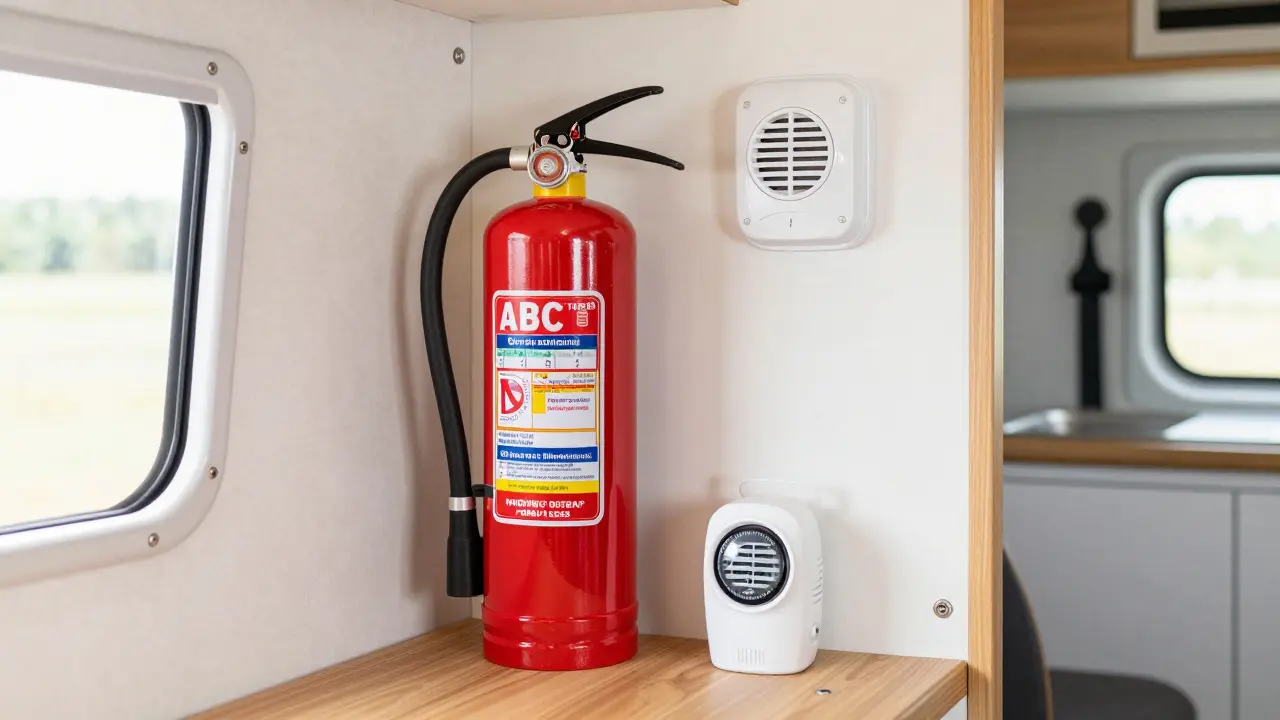
ABC Dry Chemical Fire Extinguisher is a portable fire suppression device containing monoammonium phosphate powder effective against solid, liquid, and electrical fires is the gold standard for vehicles. Look for a rating of at least 2-A:10-B:C. This means it can handle a moderate wood fire and a significant fuel spill. Size matters too. A 1-liter unit is easy to store but runs out fast. A 2-liter or 5-pound model gives you more discharge time-crucial when you’re trying to knock down a flare-up in a tight kitchen corner.
Placement is key. Mount it within arm’s reach of the door, not hidden under a cushion. Use a bracket that allows quick removal. Check the pressure gauge monthly. If the needle is in the red, recharge it. And please, practice using it once a year. Pulling the pin, aiming at the base of the fire, and squeezing the handle sounds simple until adrenaline hits.
| Type | Best For | Avoid In Vans Because... |
|---|---|---|
| Water | Wood/Paper only | Conducts electricity, freezes in cold climates |
| CO2 | Electrical fires | Short range, no cooling effect, can cause frostbite |
| ABC Dry Chemical | All common van fires | Messy cleanup, corrosive residue |
| Clean Agent | Electronics/Sensitive gear | Expensive, less effective on deep-seated fuel fires |
Carbon Monoxide Detectors: The Silent Killer Guard
Carbon monoxide (CO) is the leading cause of accidental poisoning deaths in recreational vehicles. It comes from incomplete combustion in engines, generators, and propane appliances. Your body replaces oxygen with CO in the blood, leading to confusion, unconsciousness, and death before you realize anything is wrong.
You need a dedicated Carbon Monoxide Detector is an electronic safety device that senses CO gas levels and triggers an audible alarm to prevent poisoning. Don’t rely on a combo smoke/CO unit unless it’s specifically rated for automotive use. Many household detectors fail in the temperature swings and vibrations of a van. Look for electrochemical sensors, which are more accurate than bimetallic strips. Ensure it meets UL 2034 standards.
Mount it high on the wall, away from direct airflow from vents or windows. CO mixes with air, but fresh air intake can dilute local concentrations, giving false negatives. Test it weekly with canned test spray. Replace batteries annually, or better yet, choose a hardwired model tied to your van’s 12V system with battery backup. If it chirps, fix it immediately. Ignoring a low-battery warning is how tragedies happen.
Propane Alarms: Detecting Explosive Gas Leaks
If you cook with propane, you have another invisible threat. Propane is highly flammable. A leak from a loose hose, cracked regulator, or faulty valve can create an explosive atmosphere. Unlike CO, propane has a mercaptan added to give it a rotten egg smell. But your nose gets tired. After 20 minutes, you stop smelling it. That’s why you need a sensor.
Propane Gas Alarm is a safety device designed to detect leaks of liquefied petroleum gas (LPG) and alert occupants before dangerous concentrations build up should be installed low to the ground. Remember, propane is heavier than air. It sinks. Placing the detector on the ceiling is useless. Install it within 12 inches of the floor, near the stove or fridge. Choose a model with a catalytic bead sensor for accuracy.
Integrate it with your ventilation system if possible. Some advanced setups trigger fans automatically when gas is detected. Always keep a wrench near the main shut-off valve. In an emergency, turning off the source is faster than opening every window. Never ignore a hissing sound near connections. Tighten fittings regularly and replace hoses every three years.
Smoke Detection: Early Warning Systems
Smoke detectors are obvious, but often overlooked in quality. Ionization alarms detect flaming fires quickly. Photoelectric alarms catch smoldering fires (like overheating wires or slow-burning upholstery) earlier. For a van, photoelectric is generally preferred because electrical faults are a major ignition source. However, dual-sensor units offer the best protection.
Install at least two smoke detectors: one near the sleeping area and one near the kitchen/living space. Avoid placing them directly next to vents, where airflow might delay detection. Interconnect them if your budget allows. If one goes off, they all scream. This wakes you up even if you’re in the back and the fire starts in the front engine bay. Use lithium battery models for longevity-they last 10 years without replacement.
Emergency Escape and First Aid
Detection and suppression are half the battle. The other half is getting out safely. Windows in vans are often tinted, locked, or obstructed by curtains. In a panic, you might not find the latch. Keep a window punch or seatbelt cutter mounted near the driver’s seat. These tools shatter tempered glass instantly. Practice using them.
Your first aid kit should go beyond bandages. Include burn gel, eye wash, and trauma shears. Add a thermal blanket for shock prevention. Store it in a waterproof container. Consider a personal locator beacon (PLB) if you camp in remote areas. Cell service is unreliable in forests and mountains. A PLB sends your GPS coordinates to rescue services via satellite. It’s cheap insurance for peace of mind.

Maintenance Routine: Keeping Gear Ready
Gear sits unused until disaster strikes. Then it must work perfectly. Create a monthly checklist:
- Check fire extinguisher pressure gauge.
- Test CO and propane alarms with test spray.
- Inspect smoke detector sensors for dust.
- Verify battery dates on all devices.
- Ensure escape tools are accessible and undamaged.
Budgeting for Safety
Safety gear adds up. A good ABC extinguisher costs $30-$50. A reliable CO detector runs $40-$80. Propane alarms are similar. Smoke detectors vary widely. Total investment: $150-$300. Compare that to medical bills, vehicle repair, or loss of life. It’s negligible. Buy quality brands like Kidde, First Alert, or Halton. Cheap imports often fail certification tests. Read reviews from other van lifers. Real-world performance matters more than marketing claims.
Insurance may require certain equipment. Check your policy. Some insurers offer discounts for installed safety systems. It’s worth asking. Every dollar spent on prevention saves hundreds in potential damage.
Final Thoughts on Living Safely Mobile
Van life offers freedom, but freedom requires responsibility. You are your own building inspector, firefighter, and emergency responder. The gear discussed here forms a safety net. It won’t prevent every accident, but it will give you time to react. Time is the most valuable resource in a crisis. Invest in it wisely. Sleep soundly knowing your van is protected.
Do I really need both a CO detector and a propane alarm?
Yes. Carbon monoxide comes from combustion engines and heaters. Propane leaks come from fuel lines and appliances. They are different gases with different sources and behaviors. One detector does not reliably sense the other. Using both covers distinct risks.
Where should I mount the propane alarm in my van?
Mount it low, within 12 inches of the floor. Propane is heavier than air and sinks. Ceiling mounts will miss leaks entirely. Place it near the stove or refrigerator but not directly under a vent.
How often should I replace my fire extinguisher?
Dry chemical extinguishers typically last 10-12 years. However, if used, even partially, they must be recharged immediately. Inspect the gauge monthly. If the casing is corroded or damaged, replace it sooner.
Can I use a household smoke detector in my van?
It’s not recommended. Household units may not withstand vibration, temperature extremes, or humidity changes in a vehicle. Look for automotive-rated or RV-specific detectors designed for mobile environments.
What should I do if my CO alarm goes off while I’m sleeping?
Wake up immediately. Do not assume it’s a false alarm. Open doors and windows to ventilate. Turn off any fuel-burning appliances. Get everyone out of the van. Seek fresh air and medical attention if you feel dizzy or nauseous. Investigate the source only after ensuring safety.