

Keeping a fleet on the road without costly breakdowns or fines isn’t luck-it’s a routine. Every year in the UK, fleets lose an average of £1,200 per vehicle due to failed inspections, delayed repairs, or compliance violations. That’s not just money. It’s lost time, dropped deliveries, and damaged reputation. The fix? A simple, repeatable vehicle inspection and compliance reporting checklist.
Why Your Fleet Can’t Skip This Checklist
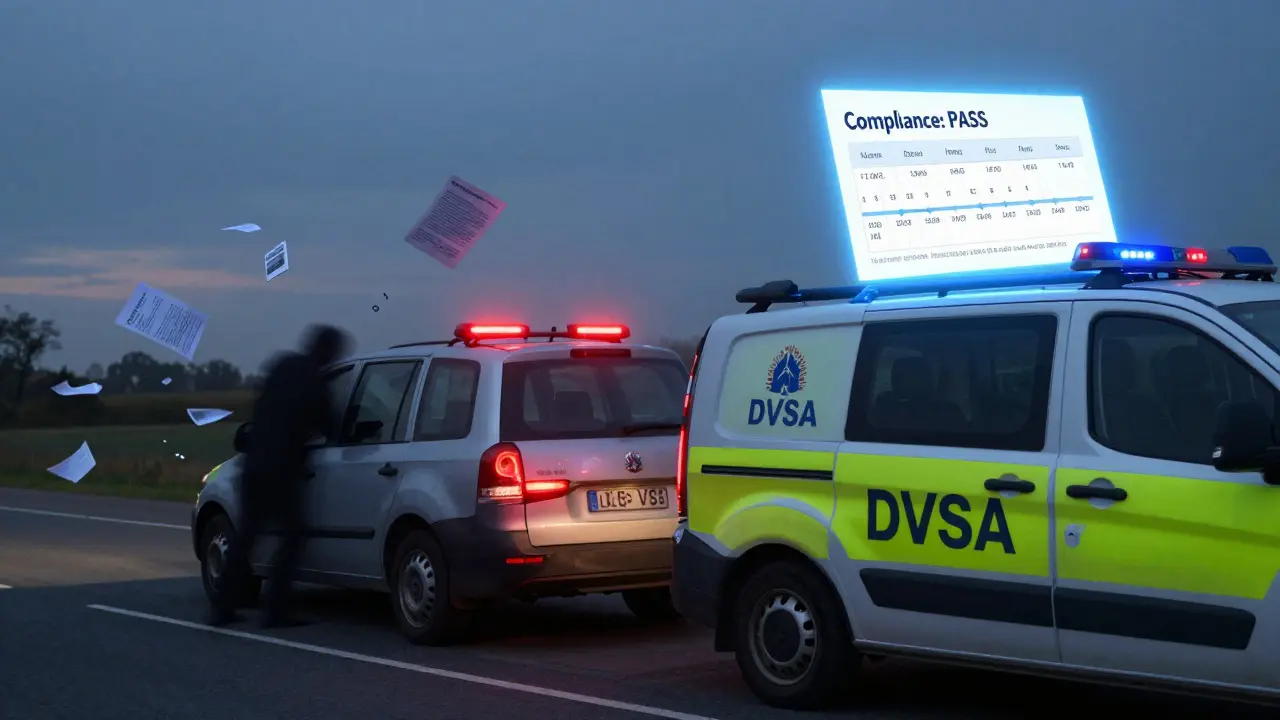
If your drivers are just checking tyres and lights before they head out, you’re already behind. A proper inspection isn’t about ticking boxes. It’s about catching small issues before they become legal liabilities. The DVSA (Driver and Vehicle Standards Agency) can pull any commercial vehicle off the road for a roadside check. And if you’re found non-compliant, the penalties start at £300 per vehicle-and can go up to £10,000 if it’s a repeat or involves safety-critical failures.Compliance isn’t optional. It’s the cost of doing business. But most fleets don’t track inspections properly. They rely on memory, paper logs, or apps that don’t connect to reporting systems. That’s how you end up with a vehicle that’s been overdue for an MOT for three months, and no one notices until the DVSA shows up.
What’s in a Proper Vehicle Inspection Checklist
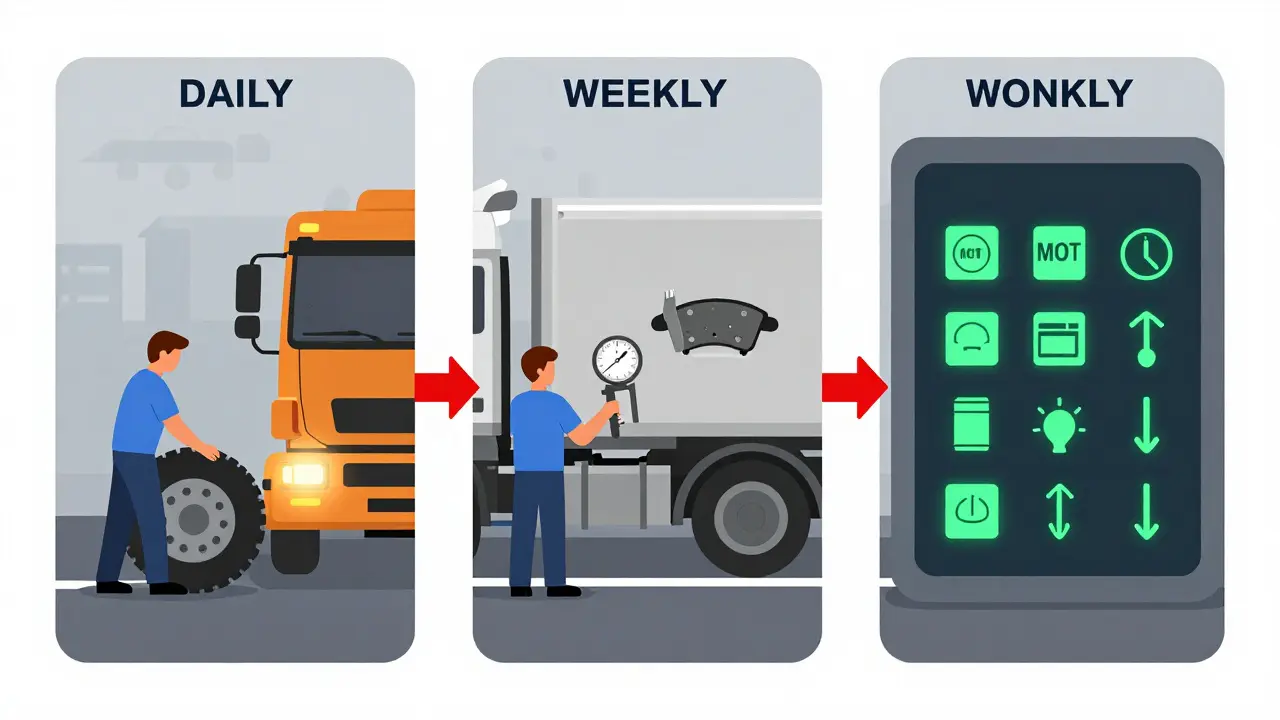
A good checklist covers everything from the engine to the trailer hitch. It’s broken into three parts: daily checks, weekly inspections, and monthly compliance reviews. Each level has a different focus.- Daily checks are done by the driver before starting the shift. They take five minutes and focus on safety-critical items.
- Weekly inspections are done by a technician or fleet supervisor. These are more detailed and include fluid levels, brake performance, and electrical systems.
- Monthly compliance reviews verify legal requirements: MOT status, tachograph records, insurance, driver licensing, and weight certifications.
Here’s what each level should include:
Daily Driver Checks (Pre-Shift)
- Tyres: tread depth (minimum 1.6mm across 75% of width), no cuts or bulges
- Brakes: no unusual noises, pedal feels firm, no warning lights
- Lights: headlights, brake lights, indicators, hazard lights all working
- Windscreen and wipers: no cracks, wipers clear without streaking
- Fluids: engine oil, coolant, windscreen washer fluid at correct levels
- Mirrors and windows: clean, unobstructed, no missing or cracked glass
- Exhaust: no visible smoke (other than light white in cold weather), no loud noises
- Seatbelts: all functional, no fraying or sticking
Drivers should log each check in a digital form-no paper. If something’s wrong, they tap ‘Report Issue’ and it auto-notifies the maintenance team. No delays. No lost slips.
Weekly Technician Inspections
- Brake pads and discs: thickness measured with calipers (replace if under 3mm)
- Steering and suspension: check for play in ball joints, shock absorbers, and tie rods
- Fluid leaks: inspect under the vehicle for oil, coolant, brake fluid, or diesel
- Battery: terminals clean, voltage above 12.4V, case free of cracks
- Exhaust system: secure mounts, no rust-through, emissions within legal limits
- Body and chassis: no severe rust, especially on wheel arches or frame rails
- Load securing points: intact, no bent or broken anchors
- Tachograph: calibrated, data downloaded, driver card inserted and working
These inspections should be scheduled every 7 days or every 1,000 miles-whichever comes first. Use a digital work order system that auto-schedules based on mileage or calendar. Don’t rely on someone remembering.
Monthly Compliance Review
This is where most fleets fail. It’s not about the vehicle’s condition-it’s about the paperwork.- MOT certificate: valid, no advisories ignored
- Insurance: up to date, covers commercial use
- Driver’s licence: valid, no disqualifications, correct vehicle class
- Driver hours: tachograph records downloaded and stored for 12 months
- Vehicle registration: matches DVLA records, no outstanding tax
- Weight certification: for HGVs and trailers, load weight must be documented
- Environmental compliance: Euro 6 emissions standard for diesel vehicles (required since 2015)
- Spill kits and first aid: present, not expired, accessible
Each month, assign one person to run a compliance audit. Use a digital dashboard that pulls data from your maintenance system, tachograph software, and DVLA records. If any item is flagged, it auto-generates a corrective action task.
How to Turn Inspections Into Compliance Reports
A checklist is useless if no one sees the results. You need to turn each inspection into a report that answers three questions:- What was checked?
- What was found?
- What was done?
Use a fleet management platform that auto-generates PDF reports after each inspection. The report should include:
- Vehicle registration number
- Date and time of inspection
- Name of inspector
- Photos of any damage or defects
- Actions taken (e.g., ‘replaced brake pads’, ‘repaired tail light’)
- Next inspection due date
- Compliance status: Pass / Fail / Pending
These reports are your legal defence. If the DVSA comes knocking, you can pull up the last 12 months of records in seconds. No more scrambling for paper files.
Common Mistakes That Cost Fleets Money
Here’s what most fleets get wrong:- Waiting for breakdowns-Fixing a worn brake pad costs £80. Waiting until it fails costs £1,200 in repairs and a £300 fine.
- Using paper logs-They get lost, smudged, or never signed. Digital logs are searchable, timestamped, and auditable.
- Ignoring advisories-An MOT advisory says ‘tyre tread close to limit’. That’s not a pass-it’s a warning. Treat it like a failure.
- Not training drivers-If drivers don’t know what to look for, they won’t report issues. Run a 15-minute refresher every quarter.
- Not linking systems-Your maintenance system, tachograph software, and compliance tracker should talk to each other. If they don’t, you’re doing twice the work.
Tools That Make This Easy
You don’t need fancy tech. But you do need the right tools:- Digitally enabled inspection apps like Fleetio, Samsara, or Fleet Complete-these let drivers take photos, sign off, and submit reports instantly.
- Automated reminders-Set alerts for MOTs, insurance renewals, and tachograph downloads.
- DVLA and DVSA APIs-Some platforms auto-check vehicle registration and MOT status. No manual lookup needed.
- Cloud storage-Keep all reports backed up and accessible from any device. GDPR-compliant, of course.
One Bristol-based haulage company cut compliance-related fines by 87% in six months after switching to digital inspections and automated reporting. Their drivers now spend less time filling out forms and more time driving.
What Happens If You Don’t Do This?
You think it won’t happen to you. But last year, 14,000 UK commercial vehicles were taken off the road for non-compliance. Half of those were because of paperwork failures-not mechanical ones.Imagine this: your van is pulled over because a driver forgot to renew insurance. You get a £300 fine. Your delivery is delayed. The client cancels the next job. Your driver is stressed. Your reputation takes a hit. And now you have to explain to your boss why you didn’t have a system in place.
It’s avoidable. With a simple checklist, digital reporting, and regular reviews, you turn compliance from a nightmare into a routine.
Start Today: Your 7-Day Action Plan
1. Day 1-Download a free vehicle inspection checklist template (DVSA offers one). Print it for one vehicle. 2. Day 2-Train your driver on the daily checks. Watch them do it. Correct mistakes. 3. Day 3-Pick one vehicle for a full weekly inspection. Document everything. 4. Day 4-Check the MOT status and insurance for that vehicle on the DVLA website. 5. Day 5-Set up calendar reminders for the next MOT and insurance renewal. 6. Day 6-Choose one digital fleet app and start a free trial. 7. Day 7-Run your first compliance report. Save it. Share it with your team.You don’t need perfection. You just need consistency. One vehicle at a time.
Do I need a checklist if my vehicles are under warranty?
Yes. Warranty covers manufacturer defects, not wear and tear or poor maintenance. If you skip inspections and a brake fails, the warranty won’t protect you from fines or liability. Compliance is separate from warranty.
How often should I inspect my fleet vehicles?
Drivers should check daily before each shift. A full technician inspection should happen every week or every 1,000 miles. Monthly compliance reviews are mandatory for legal reasons. Don’t wait for problems-schedule inspections like you schedule fuel.
What’s the biggest cause of failed vehicle inspections?
Tyres and brakes. Together, they account for over 60% of all MOT failures in commercial vehicles. Check tyre tread depth weekly. Measure brake pad thickness monthly. Don’t guess.
Can I use a smartphone app for inspections?
Yes, and you should. Apps like Fleetio, Samsara, or Fleet Complete let drivers take photos, sign off, and send reports instantly. They auto-save records, send reminders, and generate compliance reports. Paper is outdated and risky.
What happens if my vehicle fails an MOT?
It’s illegal to drive it on public roads unless it’s going directly to a pre-booked repair. You have 10 working days to fix the issues and retest. If you’re caught driving a failed vehicle, you can be fined up to £2,500, banned from driving, and face a criminal record.
Do I need to keep inspection records?
Yes. By law, you must keep inspection and maintenance records for at least 15 months. For tachograph data, it’s 12 months. Digital records are acceptable-just make sure they’re backed up and accessible.
Are electric fleet vehicles subject to the same inspections?
Yes. EVs still need tyre, brake, light, and structural checks. The MOT for EVs excludes emissions and exhaust tests, but all other safety items are identical. Battery and charging system checks are recommended monthly, though not legally required yet.
Comments
Mbuyiselwa Cindi
This is actually one of the most practical fleet guides I've seen in a while. No fluff, just clear steps. I've been using Fleetio for six months now and our compliance fines dropped 80% too. Drivers hate paperwork, but they love that their phone tells them what to check before shift. No more forgotten brake checks.
January 19, 2026 at 00:09
Krzysztof Lasocki
Let me guess - you’re the guy who bought the $500 fleet app and now thinks you’re a logistics guru. Real talk: most small fleets don’t need all this. Just get drivers to check tires and lights. Done. The rest is corporate theater. Also, why does every article now say ‘digital’ like it’s magic? Paper works if you’re consistent.
January 20, 2026 at 16:06
Nathan Pena
While the structure of this checklist is undeniably methodical, the underlying assumption-that compliance can be reduced to procedural automation-is dangerously reductive. The DVSA’s enforcement mechanisms are not merely bureaucratic; they are symptomatic of a broader neoliberal erosion of labor autonomy in transport logistics. A digital form cannot account for the psychological burden placed on drivers forced to self-police under surveillance regimes masquerading as ‘safety protocols.’ The real cost is not £1,200 per vehicle-it’s the commodification of human vigilance.
January 22, 2026 at 09:29
Tonya Trottman
First off, ‘minimum 1.6mm tread depth’ - that’s the legal minimum, not the safe minimum. You should be recommending 3mm. And you said ‘light white smoke in cold weather’ is normal - technically true, but you didn’t mention condensation vs. coolant leak distinction. Also, ‘tachograph data downloaded’ - for how long? 28 days? 56? You left out the regulation number. This isn’t a checklist, it’s a half-baked draft with a fancy UI.
January 23, 2026 at 20:02
Victoria Kingsbury
Love the emphasis on linking systems. So many fleets use five different apps that don’t talk to each other. I’ve seen guys manually copy data from Samsara into Excel just to generate a report. It’s 2025. If your tech stack can’t auto-sync DVLA MOT status, you’re literally paying for your own inefficiency. Also, EVs need brake checks too - people forget regen braking wears pads slower but doesn’t eliminate wear. Just saying.
January 25, 2026 at 19:01
Henry Kelley
Just started using a free template from DVSA and it’s already helped. Driver missed a cracked mirror last week, we fixed it before the MOT. No app, no fuss. You don’t need fancy stuff if you just pay attention. Also, thanks for the 7-day plan - I’m doing it this week. One vehicle at a time, right?
January 26, 2026 at 11:40
VIRENDER KAUL
It is imperative to understand that the institutionalized negligence observed in many fleet operations stems from a fundamental absence of systemic accountability. The reliance upon digital tools as panaceas is a symptomatic manifestation of capitalist alienation wherein human oversight is displaced by algorithmic proxies. The legal obligation to retain records for fifteen months is not a suggestion but a statutory imperative under the Road Traffic Act 1988 and subsequent amendments. Failure to adhere constitutes not mere negligence but criminal recklessness. The notion that a checklist can substitute for managerial responsibility is a dangerous illusion.
January 27, 2026 at 18:28
Santhosh Santhosh
I work in a small fleet in Pune, India. We don’t have access to Samsara or Fleetio. But we do something simple: every driver has a notebook. Before shift, they write down: ‘Tires OK? Lights OK? Oil? Brakes?’ Then they sign. Every Friday, the mechanic checks the books and signs too. Last month we caught a leaking brake line because the driver wrote ‘brake pedal soft’ and no one ignored it. No app needed. Just respect. Maybe digital is better, but human attention is cheaper and works.
January 28, 2026 at 00:47
Rocky Wyatt
You’re all missing the point. This isn’t about compliance. It’s about control. The companies don’t care if you live or die. They care if the paperwork says you’re safe. So you check the tires, but your back is broken from lifting. You log the brake pads, but you haven’t slept in 36 hours. They’ll fine you if you’re late. They’ll fire you if you’re tired. This checklist? It’s just another leash. And you’re all polishing it like it’s a trophy.
January 28, 2026 at 22:41
Mike Marciniak
Anyone else notice how the DVSA and DVLA are always mentioned like they’re benevolent guardians? What if they’re just profit-driven contractors? What if the MOT system is rigged to fail vehicles so private garages make more money? I’ve seen the same van fail twice with identical issues - both times at the same garage. Coincidence? Or a scheme? This checklist is just giving you a false sense of security while the real scam runs in the background.
January 29, 2026 at 09:58