
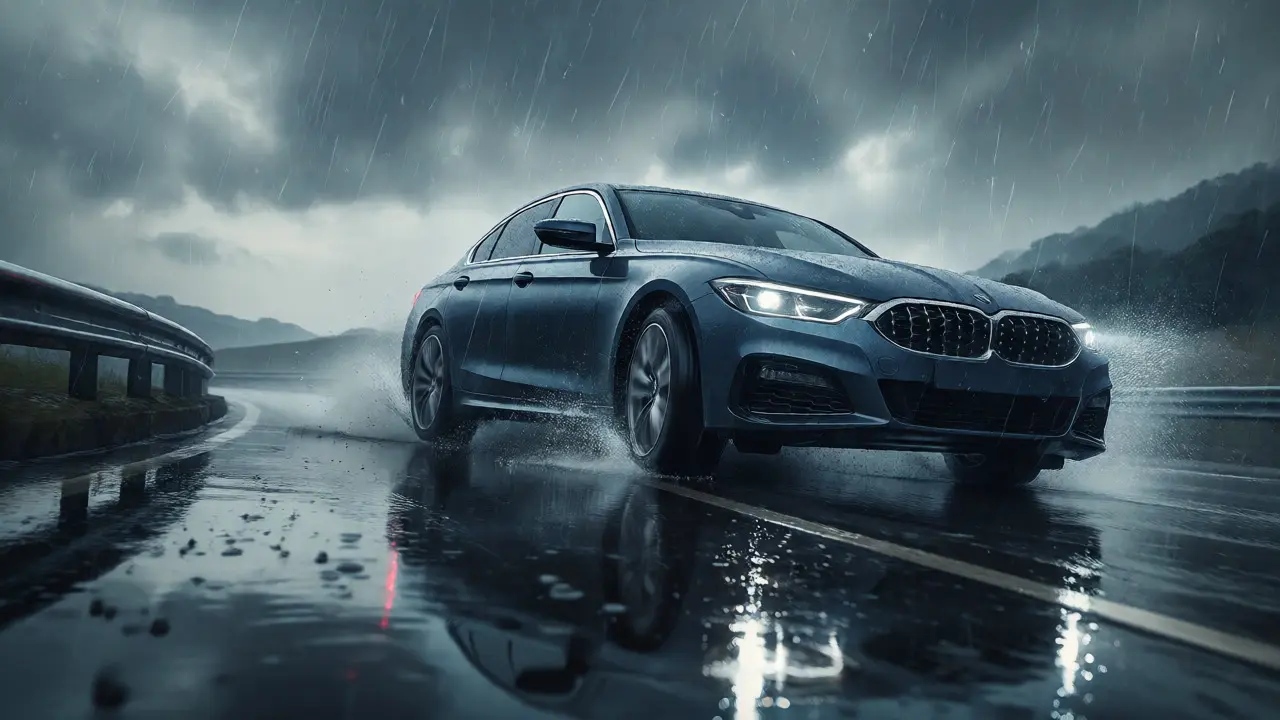
You’re driving down a wet road in Bristol, the rain slicking the tarmac into a mirror. You take a curve slightly too fast, or maybe you swerve to avoid a cyclist who didn’t signal. Your heart jumps as the rear of the car steps out, sliding sideways toward the curb. In the old days, that moment was pure panic-counter-steering blindly, hoping for grip that wasn’t there. Today, before your brain even registers the slide, invisible sensors have already intervened. This is Vehicle Stability Control (VSC, also known as ESC), and it’s arguably the most important active safety feature fitted to modern cars since the seatbelt.
It sounds like magic, but it’s just physics applied at lightning speed. If you’ve ever wondered how your car seems to know it’s about to crash before you do, or why older SUVs rolled over so easily while new ones stay planted, this guide breaks it down. We’ll look at what VSC actually does, how it differs from traction control and anti-lock brakes, and why understanding it might save your life-or at least your insurance premium.
The Physics of Losing Grip
To understand why Electronic Stability Control is necessary, you first need to grasp what happens when a tire loses its grip on the road. Tires don’t just roll; they generate lateral force to keep the car moving in a straight line or through a corner. This force depends entirely on friction between the rubber and the surface. When you turn the steering wheel, you demand more lateral force than the tires can provide-especially if the road is wet, icy, or covered in loose gravel.
When this limit is exceeded, two things usually happen. First, understeer: the front tires lose grip, and the car pushes wide, ignoring your steering input and continuing straight. Second, oversteer: the rear tires lose grip, causing the back end to swing out, potentially spinning the car. Both scenarios are dangerous, but oversteer is often more critical because it can lead to a spin or, in high-center-of-gravity vehicles like vans and SUVs, a rollover.
Rollover accidents occur when the lateral forces acting on the vehicle exceed its resistance to tipping over. This risk is highest during emergency maneuvers where the driver jerks the wheel quickly. Without intervention, the weight transfer shifts abruptly to one side, lifting the inner wheels off the ground. Once those wheels lift, gravity takes over, and the vehicle flips. VSC exists specifically to manage these extreme weight transfers and loss-of-grip events.
How Vehicle Stability Control Actually Works
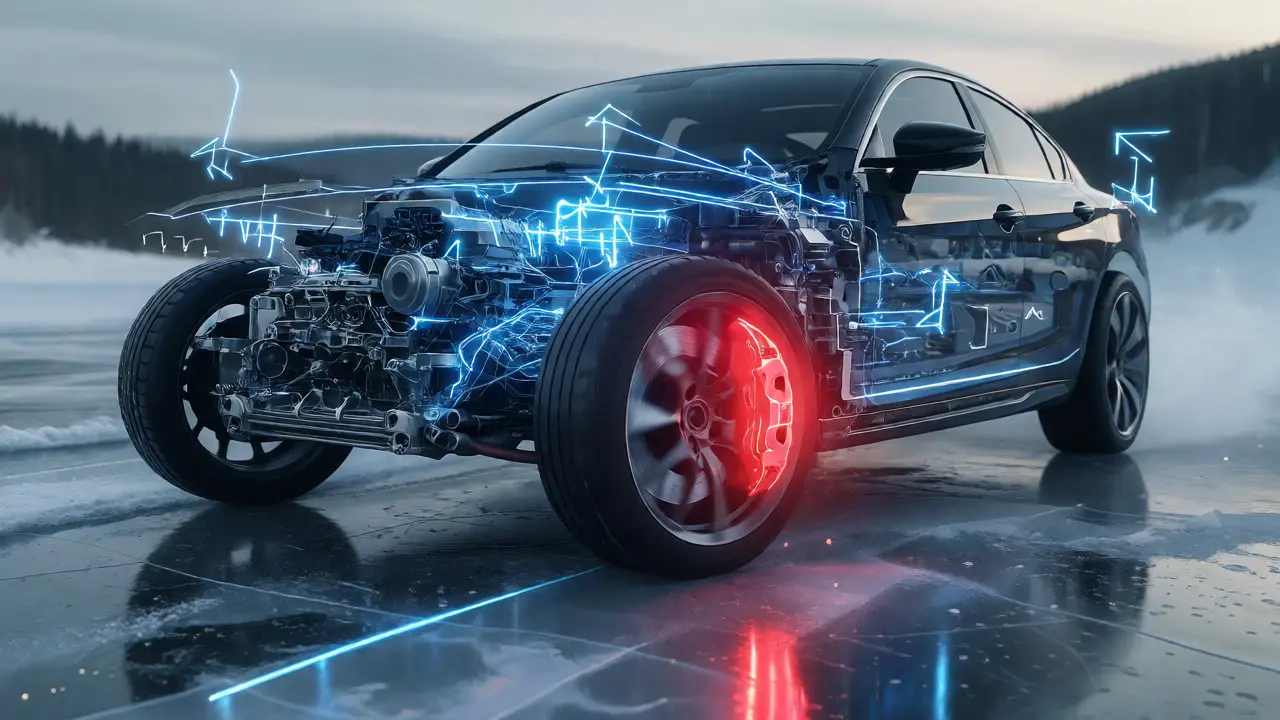
VSC isn’t a single part; it’s a network of sensors and actuators working together. Think of it as the car’s inner ear and reflexes combined. The system constantly monitors three key pieces of data:
- Steering Angle: What direction does the driver *want* to go?
- Yaw Rate: Which way is the car actually turning around its vertical axis?
- Lateral Acceleration: How hard is the car being pushed sideways?
A microprocessor compares the driver’s intent (steering angle) with reality (yaw rate). If you turn the wheel left, but the car continues straight (understeer), the system knows the front tires aren’t gripping. If you turn left, but the car swings right (oversteer), the rear tires are slipping. The discrepancy between intended path and actual path is called the "slip angle." When this angle exceeds a safe threshold, VSC kicks in.
Unlike human drivers, who react in hundreds of milliseconds, VSC reacts in milliseconds. It doesn’t try to make the car perfect; it tries to keep it stable. It does this by selectively braking individual wheels and sometimes reducing engine power. For example, if the car is understeering (pushing wide), VSC might brake the inside rear wheel. This creates a pivot point, pulling the nose of the car back into the corner. If the car is oversteering (spinning), it might brake the outside front wheel to counteract the rotation.
VSC vs. ABS vs. Traction Control: What’s the Difference?
People often confuse these acronyms. They are related siblings in the family of chassis control systems, but they solve different problems. Understanding the distinction helps you appreciate why VSC is considered superior for accident avoidance.
| System | Primary Function | When It Activates | Key Benefit |
|---|---|---|---|
| ABS | Prevents wheel lock-up during braking | Hard braking or slippery surfaces | Maintains steering ability while stopping |
| Traction Control | Prevents wheel spin during acceleration | Accelerating on low-grip surfaces | Improves launch and prevents skidding |
| Vehicle Stability Control | Corrects yaw and lateral slip | Cornering, evasive maneuvers, sudden turns | Prevents spins and rollovers |
Anti-lock Braking System (ABS) stops your wheels from locking up when you slam the brakes. This keeps the tires rolling rather than skidding, allowing you to steer while slowing down. Traction Control handles the opposite end of the spectrum: it stops wheels from spinning when you press the gas pedal too hard on ice or mud. VSC sits above both. It uses the hardware of ABS and the logic of traction control but adds yaw monitoring. It can brake any single wheel independently, not just to stop the car or prevent spin, but to rotate the car’s body.
Preventing Rollovers: The High-Profile Killer
Rollovers are statistically rare but disproportionately deadly. According to data from the National Highway Traffic Safety Administration (NHTSA), rollovers account for a small percentage of crashes but a massive share of fatalities. Why? Because roofs crush, occupants are ejected, and the forces involved are immense.
VSC plays a crucial role here, particularly in Sport Utility Vehicles (SUVs) and light trucks, which have a higher center of gravity. A high center of gravity makes a vehicle more prone to tipping when lateral forces spike. Before VSC became standard, drivers had to rely solely on smooth inputs. One sharp jerk could send an SUV flipping.
Modern VSC systems include specific rollover mitigation algorithms. These monitor the lateral G-forces and the suspension travel. If the system detects that the vehicle is approaching its tipping point-essentially, if the inner wheels are about to lift-it applies aggressive braking to the outer wheels. This braking action lowers the vehicle’s speed rapidly, reducing the centrifugal force trying to flip it. It effectively buys time and reduces energy, keeping all four wheels on the ground. Studies suggest that mandatory ESC/VSC has reduced fatal single-vehicle crashes by nearly 40% for passenger cars and even more for SUVs.
Limitations: When VSC Can’t Save You
While VSC is brilliant, it is not invincible. It operates within the laws of physics. If you enter a corner at 80 mph on black ice, no amount of computerized braking will create friction that doesn’t exist. The tires must have some grip for the system to work.
Another common misconception is that VSC replaces skilled driving. It doesn’t. It is a corrective measure, not a preventive one. If you drive aggressively, tailgate, or ignore weather conditions, you are relying on the system to bail you out repeatedly. Eventually, you may encounter a scenario where the system maxes out its capability. Furthermore, VSC cannot correct mechanical failures like a blown tire or broken suspension component instantly, though it may help stabilize the car afterward.
Drivers should also be aware of "false confidence." Some drivers feel safer with VSC and therefore drive faster or closer to limits. Research indicates that while the technology saves lives, risky behavior can offset some benefits. Always respect the limits of adhesion.
Real-World Scenarios: How VSC Helps You
Let’s look at three common situations where VSC intervenes, often without the driver fully realizing it.
1. The Emergency Lane Change: You’re on the motorway, doing 70 mph. A truck ahead brakes suddenly. You yank the wheel to change lanes. The initial turn causes weight transfer to the outside of the car. As you counter-steer to straighten up, the weight shifts back violently. This "double lane change" maneuver is a classic rollover trigger. VSC senses the rapid yaw change and gently brakes the appropriate wheels to dampen the oscillation, keeping the car flat.
2. Rain-Slicked Roundabouts: Exiting a roundabout on a wet day, you accelerate slightly too early. The rear wheels begin to step out (oversteer). You instinctively counter-steer, but the car is still sliding. VSC detects the mismatch between your steering angle and the car’s heading. It applies brief pulses of brake pressure to the front outer wheel, pulling the car back into line before you hit the central island.
3. Gravel Driveways: Pulling out of a muddy driveway onto a paved road, your front wheels spin due to lack of traction. You turn the wheel to merge. With traction control alone, the engine cuts power, leaving you stuck. With VSC, the system can brake the spinning wheel and redirect torque to the wheel with more grip, allowing you to move forward and steer simultaneously.
Buying Advice: Checking for VSC
If you are buying a used car, especially an older model (pre-2012 in many markets), verify that it has VSC. Since 2012, it has been mandatory in the US, and widely adopted elsewhere earlier. However, base models of budget cars sometimes lacked it in the late 90s and early 2000s.
- Check the Dashboard: Look for a warning light resembling a car with squiggly lines underneath. If it lights up briefly at startup and then goes off, the system is present and functional.
- Read the Manual: Search for terms like ESC, ESP, DSC, VDC, or VSC. Different manufacturers use different names (e.g., BMW calls it DSC, Toyota calls it VSC).
- Test Drive: On a safe, empty, wet lot, try a moderate emergency stop and a quick lane change. Feel for the pulsing in the brake pedal and the slight reduction in throttle response. That’s the system working.
For fleet managers or parents buying a first car for a teen, prioritize vehicles with robust VSC implementation. It is the single best upgrade for inexperienced drivers who tend to mishandle emergencies.
Can I turn off Vehicle Stability Control?
Yes, most cars have a button to disable VSC, usually labeled "OFF" or with the same icon as the warning light. Drivers often turn it off for deep snow, sand, or track driving where wheel spin is desired. However, for normal road driving, it should always remain on. Remember, disabling it removes the safety net against spins and rollovers.
Why does my VSC light stay on?
If the VSC light flashes, the system is actively intervening to correct a slide-that’s normal. If it stays solid, there is likely a fault. Common causes include dirty wheel speed sensors, a faulty steering angle sensor, or issues with the ABS module. It’s advisable to get it checked, as you may have lost stability assistance.
Is VSC the same as All-Wheel Drive (AWD)?
No. AWD improves traction by sending power to all four wheels, helping you start moving and climb hills. VSC improves handling and stability by braking wheels individually. AWD helps you go; VSC helps you stop and turn safely. AWD does not prevent rollovers or spins if you enter a corner too fast.
Does VSC reduce fuel efficiency?
The impact is negligible. While VSC may cut engine power momentarily during intervention, this happens rarely during normal driving. The slight drag from brake application is minimal compared to aerodynamic drag or tire resistance. You won’t notice a difference in miles per gallon.
Which cars have the best VSC systems?
Luxury brands like Porsche, Mercedes-Benz, and Audi often have highly refined systems that intervene subtly. However, mainstream brands like Subaru and Volvo have long prioritized safety and offer excellent standard implementations. The "best" system is one that intervenes smoothly enough not to unsettle the driver but firmly enough to correct the error.
Comments
Brad Walker
Oh, look at this. Another long-winded essay trying to convince us that a computer knows better than the human soul behind the wheel. It’s not magic, it’s just another layer of control designed to keep us docile and dependent on the machine. We used to have freedom; now we have 'stability.' How poetic. And how utterly tragic for the spirit of driving.
September 29, 2026 at 20:42
william mcstay
Finally someone admits what we’ve known all along. This tech is why people don’t know how to drive anymore. They rely on sensors instead of skill. American engineering built the car, but these safety nets are making drivers lazy across the board. If you can’t handle a slide, you shouldn’t be on the road in the first place.
September 29, 2026 at 22:41
Prayagraj Medicose
Bro, wake up! 😱 You think this is about safety? Nah man, listen closely. The insurance companies LOVED this when it came out. Why? Because they could claim accidents were 'driver error' even when the system failed or intervened weirdly.
Also, who owns the data from those yaw rate sensors? Who sees your driving habits? Big Data is watching every turn you take. It’s not just preventing rollovers; it’s preventing your privacy. Don’t let them fool you with the physics talk. 🕵️♂️
October 1, 2026 at 02:19
Hemali Jaiswal
This is such a beautifully articulated breakdown of a complex mechanical dance! 🌟 I love how you compared the system to the car's 'inner ear.' That metaphor really helps visualize the sensory input versus the corrective output.
For anyone new to cars, understanding the difference between ABS (braking) and ESC (cornering stability) is crucial. It empowers you to trust your vehicle more, especially during those heart-stopping moments on wet roads. Keep learning, everyone-knowledge is the best safety feature! 💖
October 2, 2026 at 07:29
Sean Eagen
If u cant drive in rain then stay home. VSC dont fix bad drivers. Its a crutch for ppl who buy SUVs they cant handle. End of story. 🚫🏎️
October 4, 2026 at 06:45
Howard Hurd
Actually, if you read the NHTSA stats correctly, which most people don't because they're too busy arguing, ESC reduces fatal single-vehicle crashes by nearly 40%. That is a massive number. :P
And regarding the 'lazy driver' argument: Human reaction time is roughly 200-300 milliseconds. ESC reacts in under 10ms. You literally cannot match the speed of the processor. So no, it's not a crutch, it's a necessity for modern high-speed travel. Get over it. 😉
October 4, 2026 at 07:59
Manoj Kumar
The assertion that human reaction times render electronic intervention obsolete is fundamentally flawed due to a misunderstanding of biomechanical limitations. Furthermore, the conspiracy theory regarding data harvesting overlooks the fact that local processing occurs within the ECU, with minimal transmission unless connected to telematics services.
We must also consider the economic implications of reduced accident frequency on insurance premiums globally. To dismiss this technology as merely a tool for corporate surveillance ignores the empirical evidence of lives saved. Please refrain from spreading misinformation without proper citation. 🧐
October 5, 2026 at 09:48
Kieran Mitchell
I am absolutely FURIOUS that this article doesn't mention the specific calibration differences between manufacturers!!! 😤
BMW's DSC is vastly different from Toyota's VSC!!! One feels like a gentle nudge, the other feels like an emergency stop!!! It's NOT one size fits all!!! People buying used cars need to KNOW THIS!!!
It drives me insane that generalizations are made about 'VSC' as if it's a single monolithic entity!!! It's nuanced!!! It's complex!!! And yet, here we are, simplifying it for the masses!!! Ugh!!! 😩💢
October 5, 2026 at 11:27