
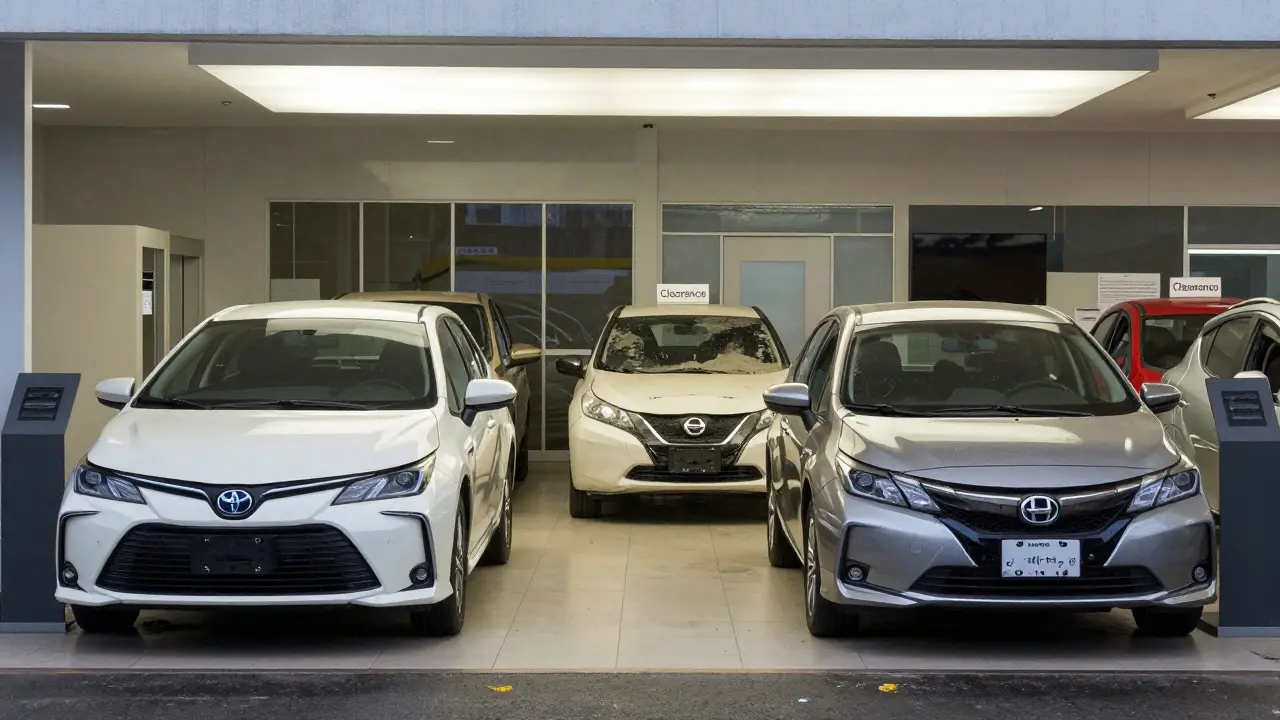
When you walk into a car dealership, not all vehicles on the lot are created equal. Some sit for weeks. Others sell in days. The difference isn’t just luck-it’s vehicle stocking grades. These are the hidden ratings dealerships use to decide which cars to stock, how many to order, and which ones to discount fast. If you’ve ever wondered why some models disappear from the lot while others linger, this is why.
What Are Vehicle Stocking Grades?
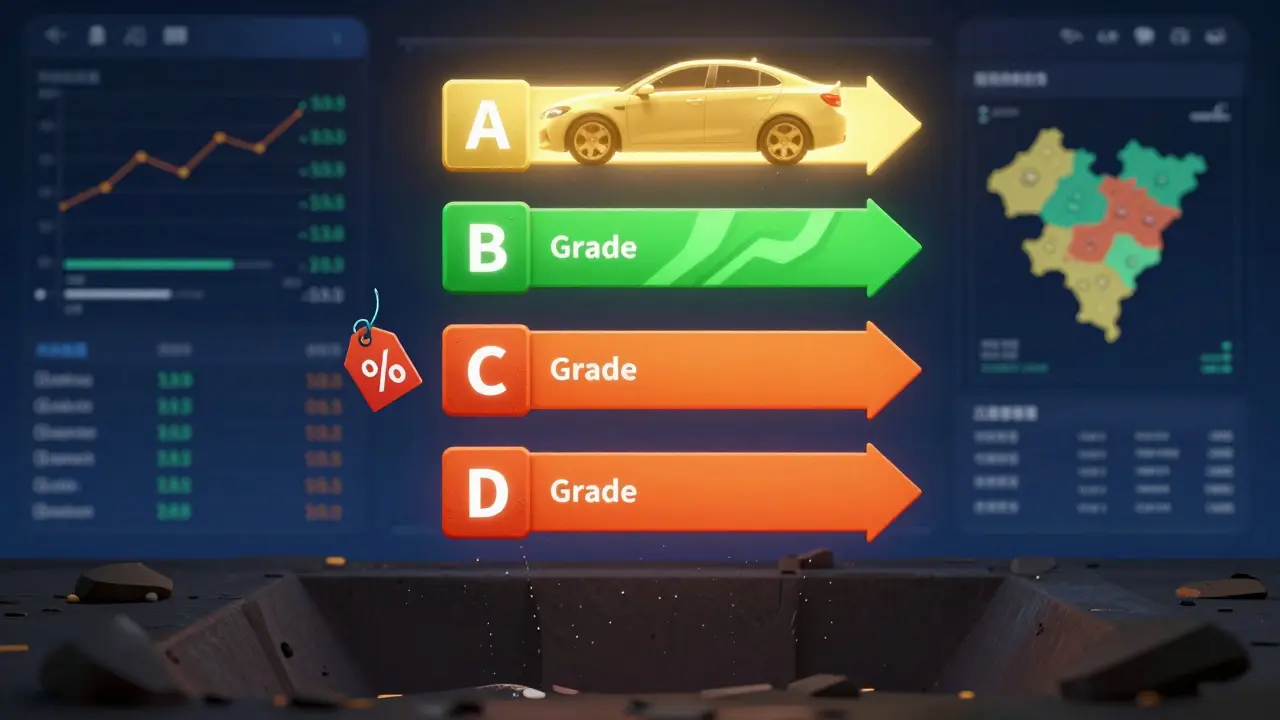
Vehicle stocking grades are performance ratings assigned to each model a dealership carries. They’re based on real-world sales data, customer demand, and how quickly inventory turns over. Think of them like report cards for cars. A Grade A vehicle sells fast, at or above MSRP, with little to no discounting. A Grade D? It’s sitting there because nobody wants it-and the dealer knows it.
These grades aren’t guesswork. Dealerships track them using internal systems that pull data from sales history, online search trends, trade-in volumes, and even regional preferences. For example, a Ford F-150 in Texas might be a solid Grade A, but in downtown London, it could be a Grade C because fuel costs and parking space make it less appealing.
The Four Tiers of Vehicle Stocking Performance
Most dealerships use a simple four-tier system:
- Grade A: High Demand, Fast Turnover - These vehicles sell within 15-30 days, often with little to no discounting. Buyers compete for them. Examples: Toyota Corolla, Honda Civic, Hyundai Tucson. In Bristol, a well-equipped Volkswagen Golf with a diesel engine was Grade A for over a year because of low emissions tax and strong resale value.
- Grade B: Steady Demand, Moderate Turnover - Sells in 30-60 days. May need minor incentives like free servicing or low-rate financing. These are reliable but not exciting. Think: Kia Sorento, Subaru Outback, Mazda 3. They’re safe choices, but not headline-grabbers.
- Grade C: Slow Moving, Needs Incentives - Takes 60-90 days to sell. Often requires discounts, extended warranties, or trade-in bonuses. These models usually have poor reviews, outdated tech, or weak brand perception. A 2023 Buick Envision with no sunroof and only 100 miles on it might still be Grade C because buyers skip it for cheaper alternatives.
- Grade D: Unsold, High Risk - Stays on the lot longer than 90 days. Dealers start marking them down aggressively. Sometimes they’re moved to auction within 120 days. These are the models nobody wants: underpowered electric cars in cold climates, niche luxury sedans with poor service networks, or discontinued lines with no parts support.
How Dealerships Assign Grades
It’s not magic. It’s data. Dealerships use a mix of automated tools and human insight to assign grades. Here’s what they look at:
- Sales velocity - How many units sold per month per model. A car that sells 12 units a month gets a higher grade than one that sells 2.
- Discount depth - If a car needs a £2,000 discount to move, that’s a red flag. Grade A vehicles rarely need discounts.
- Trade-in volume - If customers keep trading in the same model, it’s popular. If they avoid it, the model is losing appeal.
- Online search interest - Google Trends and dealership website analytics show what people are looking for before they even walk in.
- Regional fit - A pickup truck might be Grade A in rural Somerset but Grade D in central Bristol due to congestion charges and narrow streets.
- Service cost and parts availability - If a car needs expensive repairs or hard-to-find parts, buyers avoid it. That drops its grade.
One Bristol dealer told me they update their grades every two weeks. If a model drops two grades in a single month, they stop ordering it. No exceptions.
Why This Matters to Buyers
Knowing stocking grades helps you shop smarter. If you’re looking for a used car, avoid the ones marked Grade C or D unless you’re getting a huge discount. Dealers know these models are hard to sell, so they’re more likely to negotiate.
On the flip side, if you’re selling your car, you want to know what grade it is. A Grade A model like a Toyota Yaris will fetch 15-20% more than a Grade B model with the same mileage. That’s thousands of pounds.
Even new car buyers benefit. If you’re eyeing a model that’s been on the lot for 70 days, ask: “What’s its stocking grade?” If they hesitate, it’s probably Grade C or worse. That’s your leverage.
How Electric Vehicles Are Changing the System
EVs have thrown the old grading system into chaos. In 2024, a Tesla Model 3 was Grade A across the UK. By early 2025, after price cuts and increased competition, it dropped to Grade B in some regions. Meanwhile, the MG4, a budget EV with decent range and low running costs, jumped from Grade C to Grade A in just three months.
Dealers now track EV-specific metrics:
- Charging speed compatibility with UK public networks
- Battery degradation rates reported by owners
- Eligibility for government grants or tax breaks
- Resale value trends for EVs under 3 years old
One Bristol dealership stopped taking in 2022 Nissan Leafs because their battery health scores were dropping too fast. That model went from Grade B to Grade D in under six months.
What Happens to Grade D Vehicles?
They don’t just sit there. Dealers have systems to move them out:
- Internal auctions - sold to other dealers at a loss
- Wholesale auctions - like Manheim or Auction House UK
- Trade-in swaps - given to customers as part of a deal on a new car
- Lease returns - turned into rental fleet vehicles
Some end up in rental fleets. Others get stripped for parts. A few are shipped overseas, especially to Eastern Europe, where demand for used UK cars is still strong. But most Grade D vehicles never make it to a second owner in good condition.

How to Spot a Grade C or D Vehicle
You don’t need insider access. Here’s how to tell:
- Check the build date - if it’s over 8 months old, it’s likely stuck.
- Look at the mileage - if it’s under 100 miles and it’s been there 60+ days, something’s wrong.
- Compare pricing - if it’s £3,000 below the average market price for that model, it’s probably Grade C or worse.
- Ask for the service history - if it’s missing or has multiple warranty claims, it’s a red flag.
- Check online forums - search “[model] + problems” or “[model] + resale value.” Real owners talk.
One buyer in Bath bought a 2023 BMW 3 Series for £1,000 under market value. Turns out it was Grade D. The transmission had a known flaw, and BMW had stopped offering extended warranties on it. He got lucky and found a mechanic who could fix it cheap. Most people don’t.
What Dealerships Are Doing Differently Now
Top dealerships now use stocking grades to predict inventory needs months ahead. Instead of ordering 50 of a model, they order 10 Grade A, 15 Grade B, and skip Grade C entirely. This cuts holding costs and improves cash flow.
Some even use AI tools that scan social media, classified ads, and competitor pricing to adjust grades daily. One chain in the West Country uses a tool that flags models with rising negative sentiment on YouTube reviews. If a car starts trending as “overpriced” or “unreliable,” its grade drops fast.
They’re also changing how they display inventory. Grade A vehicles get prime spots near the entrance. Grade D models are tucked in the back, often with “Clearance” signs. It’s not an accident.
Final Takeaway: Grades Are Power
Vehicle stocking grades aren’t just internal jargon. They’re the hidden map of the used car market. Whether you’re buying, selling, or trading, understanding them gives you real power. A Grade A car holds its value. A Grade D car loses it fast. The difference isn’t in the engine or the paint-it’s in the data.
If you’re shopping, look for the cars that sell fast. If you’re selling, know what grade your car is. And if you’re a dealer? Stop guessing. Start grading.