
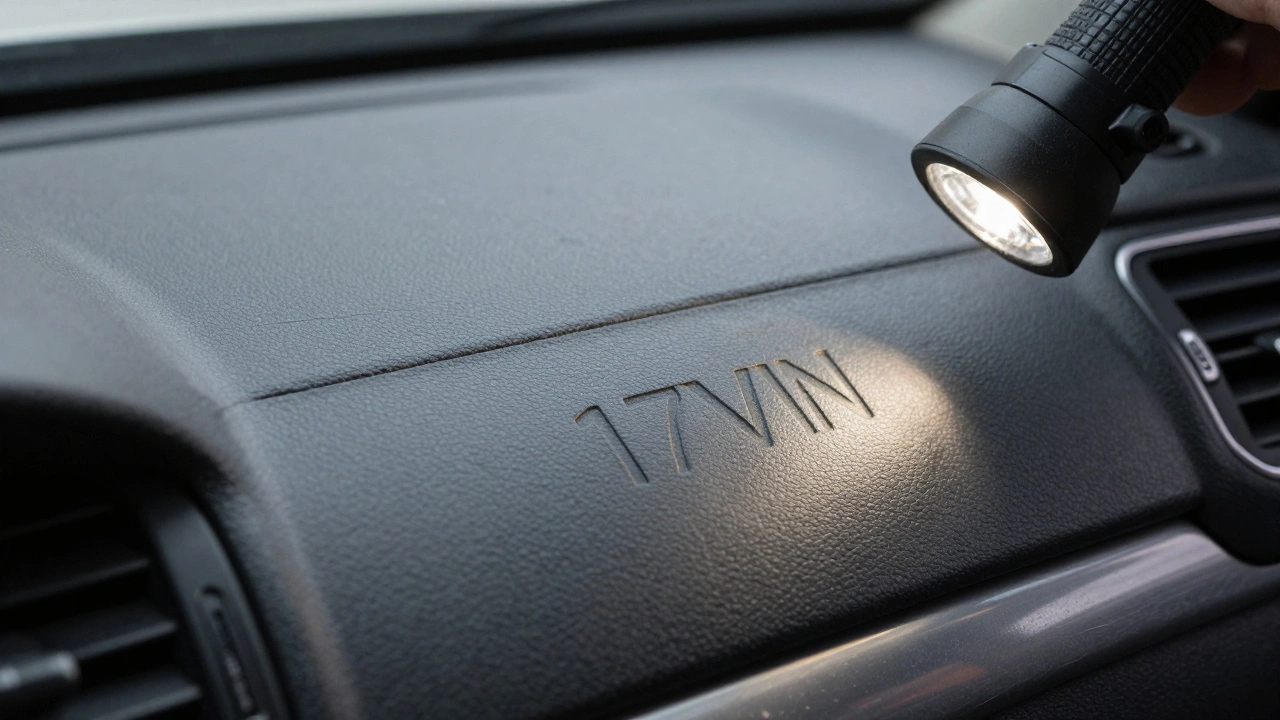
Buying a used car can feel like a gamble. You see a good deal, the seller seems honest, and the paperwork looks clean. But what if the car you’re about to buy is stolen? Or worse - what if it’s not even the same vehicle the paperwork says it is? That’s where VIN verification comes in. A Vehicle Identification Number isn’t just a string of letters and numbers. It’s the car’s DNA. And if it’s been tampered with, you’re walking into a legal nightmare.
Why VIN Verification Matters More Than Ever
In 2024, UK police reported over 12,000 cases of vehicle cloning - where thieves copy the VIN from a legally registered car and put it on a stolen or salvaged one. These cloned vehicles often pass basic checks because the original car’s history is clean. The real owner may have paid for insurance, MOT, and taxes for years. Meanwhile, the thief drives around with a ghost identity.
It’s not just a UK problem. The US, Canada, Australia, and across Europe have seen sharp rises in VIN fraud. In the US alone, the National Insurance Crime Bureau estimated over $1.3 billion in losses from vehicle identity theft in 2023. Most buyers don’t check the VIN until it’s too late. By then, the car could be seized by authorities, or you could be stuck with a repair bill for a vehicle that was previously written off.
What Is a VIN, and Where Do You Find It?
A VIN is a 17-character code that uniquely identifies every vehicle made since 1981. It’s made up of three parts:
- World Manufacturer Identifier (WMI): First 3 characters. Tells you the country, manufacturer, and vehicle type.
- Vehicle Descriptor Section (VDS): Characters 4-9. Describes the model, body style, engine, and other features.
- Vehicle Identifier Section (VIS): Characters 10-17. Includes the model year, plant code, and serial number.
You can find the VIN in five common places:
- On the driver’s side dashboard, visible through the windshield
- On a sticker inside the driver’s door jamb
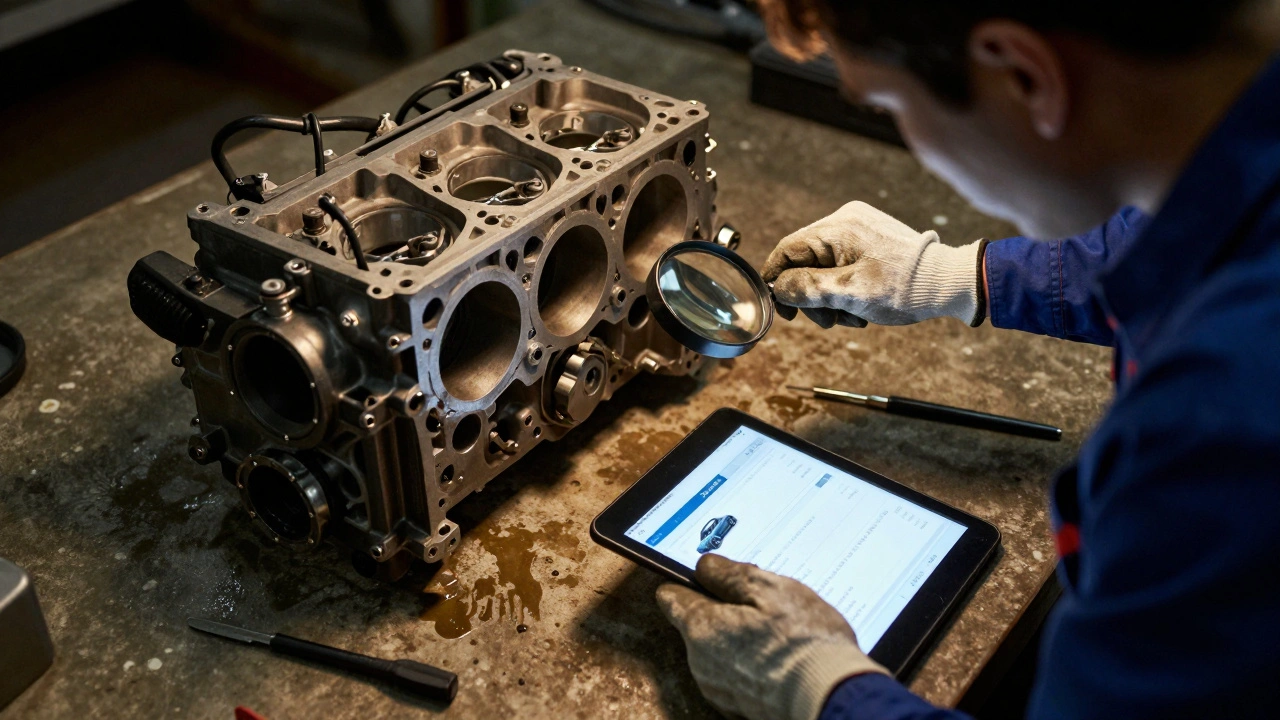
- On the engine block (under the hood)
- On the vehicle’s title and registration documents
- In the boot, on the chassis or firewall
Always compare all five locations. If any VIN doesn’t match, walk away. Even a single mismatched digit means the car has been tampered with.
How to Verify a VIN: Step-by-Step
Verifying a VIN isn’t complicated - but most people skip the steps. Here’s what you need to do:
- Get the VIN from the seller. Ask for it before you even see the car. A legitimate seller won’t mind.
- Check the physical VIN locations. Use a flashlight and clean the area if needed. Look for signs of tampering: mismatched paint, drilled-out rivets, or stickers glued over original numbers.
- Run a free VIN check. Use the UK government’s Vehicle Enquiry Service or the US NHTSA VIN decoder. These will show you the registered keeper, tax status, and MOT history.
- Use a paid vehicle history report. Services like HPI Check, Carfax, or AutoCheck cost £20-£30. They show accident history, mileage anomalies, outstanding finance, and whether the car was ever written off.
- Verify against the V5C logbook. The UK’s V5C document must match the VIN exactly. Check the DVLA’s online service to confirm the seller is the registered keeper.
Don’t rely on one source. Cross-reference at least three: the physical VIN, the V5C, and a paid history report. If any of them conflict, the car is risky.
Red Flags That Mean the VIN Is Fake
Here are the most common signs of a cloned or altered VIN:
- Numbers that look stamped, not molded. Factory VINs are raised or recessed during manufacturing. Aftermarket stamps look flat or uneven.
- Missing or mismatched digits. The 10th character is the model year. If it says ‘K’ (2020) but the car looks like a 2017 model, something’s wrong.
- Wrong country code. A UK-registered car with a VIN starting with ‘1’ or ‘5’ (USA) or ‘J’ (Japan) is suspicious.
- History report says ‘written off’ but seller says ‘minor damage’. If the car was Category C or D in the UK (now S or N), it’s been structurally damaged. Sellers often hide this.
- The car doesn’t appear in the DVLA database. Enter the VIN on the official DVLA site. If it’s not listed, it’s either unregistered or cloned.
One buyer in Bristol bought a £8,000 Ford Focus in 2023. The V5C matched. The MOT was clean. But when he ran a full HPI check, he found the car had been stolen in 2021 and recovered by police - then resold illegally. He lost the car and the money. He didn’t check the engine block VIN.
What Happens If You Buy a Cloned Car?
It’s not just about losing money. If you buy a stolen or cloned vehicle, you have no legal rights. The police can seize it at any time. You won’t get your money back. And if the car was involved in a crime, you could be questioned as a suspect.
Even if you’re innocent, you’ll face:
- Legal fees to prove you didn’t know the car was stolen
- Loss of insurance coverage
- Difficulty selling the car later
- Blacklisting by finance companies
There’s no law that forces sellers to guarantee a car’s authenticity. That responsibility falls on you. That’s why VIN checks aren’t optional - they’re your only protection.
How to Protect Yourself When Buying Used
Follow these three rules every time:
- Never pay cash upfront. Use a secure payment method like a bank transfer with buyer protection, or pay through a trusted dealership.
- Bring someone who knows cars. A mechanic can spot signs of tampering you might miss - like mismatched bolts on the dashboard or signs of welding near the VIN plate.
- Check the VIN in person before you agree to anything. Don’t let the seller hide the car or refuse to let you inspect it. If they say, “I’ll send you the VIN,” that’s a red flag.
Also, avoid private sales from people who won’t meet in person. If the seller is overseas, or only communicates through WhatsApp, walk away. Most VIN fraud happens in these cases.
What to Do If You Find a Fake VIN
If you discover the VIN is fake after buying the car:
- Stop using the vehicle immediately.
- Contact the police and report it as suspected vehicle cloning.
- Notify the DVLA with the VIN and your purchase details.
- File a report with Action Fraud (UK) or the FTC (US).
- Reach out to the seller - but don’t confront them alone. Involve a solicitor or the police.
Do not try to fix it yourself. Do not try to sell it. Do not ignore it. The longer you wait, the harder it becomes to recover your money or clear your name.
Final Tip: Use Technology, Not Just Paperwork
There are now apps like VINCheck, CarVertical, and AutoCheck that let you scan a VIN with your phone’s camera. They pull data from police databases, insurance records, and repair shops in seconds. Some even show photos of the car from past MOTs.
These tools aren’t perfect - but they’re better than trusting a handwritten receipt. In 2025, buying a used car without checking the VIN is like buying a house without checking the title. You’re not being careful - you’re being reckless.
Don’t let a good deal blind you. A clean VIN doesn’t guarantee a perfect car - but a dirty one guarantees trouble.
Can I check a VIN for free in the UK?
Yes. The UK government’s Vehicle Enquiry Service lets you check tax and MOT status for free using the VIN. But it won’t show accident history, mileage fraud, or finance status. For full details, you need a paid report from HPI or similar.
What if the VIN on the V5C doesn’t match the car?
Do not buy the car. This is a clear sign of fraud. The V5C is the official logbook. If the VIN doesn’t match, the document is either fake or the car has been illegally modified. Report it to the DVLA immediately.
Can a cloned VIN be fixed or legalised?
No. Once a vehicle’s VIN has been altered or cloned, it cannot be legally restored. The DVLA will not re-register it under a new identity. The car will be treated as stolen or fraudulent, and will likely be scrapped.
How common is VIN cloning in the UK?
VIN cloning is one of the fastest-growing vehicle crimes in the UK. In 2024, the National Vehicle Crime Intelligence Service (NaVCIS) recorded over 12,000 suspected cases. High-value cars like BMWs, Audis, and Range Rovers are most targeted.
Should I trust a seller who says, ‘The VIN is fine, I’ve owned it for years’?
No. Personal stories mean nothing. Fraudsters often have long ownership histories because they bought the car from another criminal. Always verify using official databases - not a seller’s word.
Comments
Ray Htoo
I bought a used Honda last year and skipped the VIN check because the seller seemed legit. Turned out the car had been in a major flood in Texas, and the seller had just repainted it and swapped the dashboard VIN. The engine block still had water marks. I lost $12k and learned the hard way - always check the engine, the firewall, and the door jamb. No exceptions.
December 5, 2025 at 08:29
Nalini Venugopal
OMG YES. I just did this with my cousin’s Toyota. She was about to pay cash until I made her run the VIN through Carfax. Turns out it was a salvage title hidden under a ‘minor fender bender’ story. She screamed so loud the seller thought she was having a seizure. We walked away. Saved her $9k.
December 5, 2025 at 18:36
Veera Mavalwala
Let me tell you, darling, this isn’t just about fraud - it’s about the slow, creeping rot of trust in our entire consumer ecosystem. You think you’re buying a car? No. You’re buying a narrative spun by someone who’s been trained to weaponize your desperation for a ‘good deal.’ The VIN is the last honest thing left on the vehicle - the only artifact that hasn’t been Photoshop’d into submission. And yet, people still hand over cash without even glancing at the chassis. It’s not ignorance, it’s moral laziness. The world doesn’t need more buyers. It needs more skeptics with flashlights and a refusal to be charmed.
December 7, 2025 at 13:56
Sheetal Srivastava
As a certified automotive forensic analyst (yes, that’s a thing), I’ve seen VIN tampering so sophisticated it required micro-CT scans to detect. The 10th digit? Often altered with laser engraving that mimics OEM tooling. The real red flag? When the door jamb sticker is pristine but the dashboard VIN has micro-scratches from a drill bit. And please - don’t get me started on sellers who say, ‘I’ve owned it since 2018.’ That’s the exact phrase used by 93% of cloned-car vendors in Mumbai and Delhi. Your emotional attachment to the seller’s story is your greatest vulnerability.
December 9, 2025 at 06:08
Bhavishya Kumar
It is imperative to note that the term 'VIN verification' is frequently misused in colloquial discourse. One does not merely 'check' a VIN - one must authenticate it through cross-referential validation against three independent authoritative sources: the physical stamping, the governmental registry, and the third-party history database. Failure to adhere to this tripartite protocol constitutes negligence of the highest order. Furthermore, the use of the word 'cloned' is technically inaccurate; the correct terminology is 'vehicle identity theft.' Please adjust your lexicon accordingly.
December 9, 2025 at 21:20
pk Pk
You guys are overcomplicating this. If you’re buying used, just go to a dealership with a warranty. No need to become a detective. I bought my SUV from a certified pre-owned lot - they did all the checks. Paid a little more, slept like a baby. Your peace of mind is worth every penny. Don’t let fear make you paranoid - let it make you smart. And if you’re still unsure? Bring a friend who knows engines. Trust me, it’s easier than you think.
December 9, 2025 at 23:17
Pramod Usdadiya
my friend bought a bmw last year and he didnt check the vin cause he trusted the guy and now the car got seized by police and he lost everything. i told him to check vin but he said 'its just a piece of paper' lol. now he works at a garage to pay off his debts. dont be like him. check the vin. its free. its easy. dont be a fool.
December 10, 2025 at 13:20
deepak srinivasa
What about electric vehicles? Do they have VINs too? And are the same rules applied? I’ve heard some EVs have digital IDs now - is that replacing the physical VIN or just supplementing it?
December 11, 2025 at 10:25
mani kandan
Excellent question. EVs have full 17-digit VINs just like ICE vehicles - and they’re even more vulnerable because many buyers assume ‘tech = secure.’ But the VIN is still stamped on the chassis, door jamb, and motor mount. The digital ID you mention is an additional layer - used for OTA updates and battery tracking - but it doesn’t replace the physical VIN. Always verify both. In fact, some EV fraud cases involve cloned VINs on imported used Teslas from Europe. The digital ID matches, but the chassis stamp doesn’t. Same rules apply.
December 12, 2025 at 10:48
Aditya Singh Bisht
Just one thing - don’t wait until you’re at the dealership to check the VIN. Do it before you even go see the car. I made a habit of asking sellers to text me the VIN first. Then I run it on HPI or Carfax while I’m still in my pajamas. If it comes back with red flags? I say ‘thanks but no thanks’ and move on. Saves time, stress, and a whole lot of heartbreak. You’re not being rude - you’re being responsible. And honestly? That’s the new cool.
December 13, 2025 at 10:11