

You hand over your keys for a scheduled service, and the technician slides a quote across the desk that makes your stomach drop. "The brakes are worn," they say. Or maybe it's the tires, or the wiper blades. You look at your warranty booklet, confident that this expensive piece of paper covers everything under the hood. But the advisor shakes their head. "Those are wear items." Suddenly, you're facing a bill you thought was protected.
This confusion is one of the most common friction points in car ownership. The distinction between wear items and covered repairs isn't just legal jargon; it’s the difference between paying nothing and paying hundreds of pounds. Understanding this line saves you money and prevents arguments at the dealership counter.
The Core Difference: Consumption vs. Defect
To understand why your warranty doesn't cover new brake pads, you have to look at how manufacturers define failure. A standard manufacturer warranty-often called a bumper-to-bumper warranty-is designed to protect against defects in materials and workmanship. It covers things that break because they were built wrong or used bad parts. If your alternator dies after six months because the internal wiring was faulty, that is a defect. The warranty covers it.
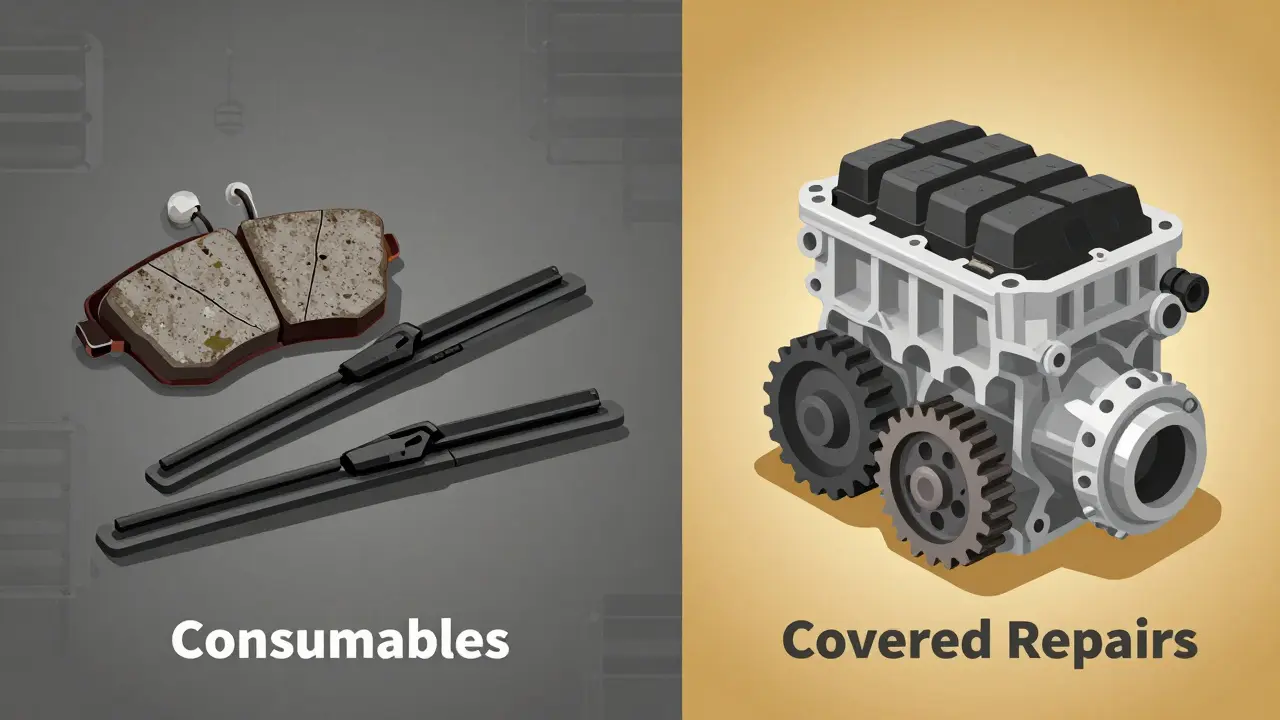
Wear items, however, are components designed to degrade over time through normal use. They are consumables. Think of them like groceries. You buy bread because you expect to eat it. You don't return the loaf to the supermarket claiming it's defective because it's now gone. Similarly, when you drive, you press the brake pedal. That physical action grinds down the brake pads to stop the wheels. The pads didn't fail; they did their job until they wore out. Because this degradation is predictable and expected, warranties exclude them.
This distinction applies to almost every major brand, whether you drive a Toyota, a Ford, or a Mercedes-Benz. The logic remains consistent: if the part has a lifespan measured in mileage or time due to friction, heat, or exposure, it is likely a wear item.
Common Wear Items Excluded from Coverage
Knowing exactly what falls into the "wear" category helps you budget for routine maintenance. These items are rarely covered by a standard new-car warranty, though some extended protection plans might offer partial coverage for specific components.
- Brake Pads and Rotors: These are the number one surprise for new owners. Brake pads typically last between 30,000 and 70,000 miles depending on driving style. City drivers who stop frequently will replace them much sooner than highway commuters. Since braking requires friction, the material must wear away to function.
- Tires: Tires are rubber compounds that degrade with age, heat, and road contact. While tire manufacturers offer tread-wear warranties, your vehicle's main warranty does not cover bald tires. Even if a tire blows out due to a manufacturing defect, the cost of the replacement tire itself is often debated, though roadside assistance usually handles the immediate safety issue.
- Wiper Blades: Rubber dries out and cracks under sun and rain. Replacing wipers is considered routine maintenance, similar to changing oil filters.
- Battery: This is a tricky one. Standard lead-acid batteries are often excluded from the basic vehicle warranty because they are consumable chemical units. However, many dealerships sell separate battery warranties. Hybrid and electric vehicle high-voltage batteries are different; those are covered extensively because they are complex powertrain components, not simple consumables.
- Fuse Links and Bulbs: Light bulbs burn out. Fuses blow to protect circuits. These are inexpensive replacements that owners are expected to handle themselves or pay for directly.
- Cabin Air Filters and Engine Oil Filters: These trap dirt and debris. Once full, they need replacing. They are maintenance supplies, not structural parts.
| Component | Category | Reason for Classification | Typical Lifespan |
|---|---|---|---|
| Brake Pads | Wear Item | Degrades via friction during stopping | 30k - 70k miles |
| Transmission | Covered Repair | Complex mechanical assembly prone to defects | 150k+ miles (if maintained) |
| Tires | Wear Item | Rubber degrades with road contact and age | 40k - 60k miles |
| Engine Block | Covered Repair | Structural component; should not crack | Life of vehicle |
| Wiper Blades | Wear Item | Rubber hardens and loses flexibility | 6 - 12 months |
| Alternator | Covered Repair | Electrical failure indicates defect | 80k - 100k miles |
What Counts as a Covered Repair?
Covered repairs involve components that should theoretically last the life of the warranty period without failing. If these parts break, it implies something went wrong during manufacturing or assembly. These are the expensive tickets you want your warranty to catch.
Major powertrain components are the core of any warranty. This includes the engine internals (pistons, crankshafts), the transmission gears and clutches, and the drivetrain (axles, differentials). If your transmission slips or your engine knocks due to a bearing failure, the dealership pays for parts and labor. These systems are sealed, complex, and not subject to daily friction in the same way brakes are.
Electronics and infotainment systems are also heavily covered. Modern cars are computers on wheels. If your touchscreen freezes, the navigation system fails, or the Bluetooth connectivity stops working, these are software or hardware defects. Manufacturers invest heavily in these features, so they warrant them against premature failure.
Safety systems like airbags, ABS sensors, and stability control modules are strictly covered. These are critical for passenger safety and are regulated by strict standards. A failure here is never attributed to "normal wear" but rather to a component malfunction.
The Grey Area: Maintenance Neglect
There is a dangerous middle ground where wear items and covered repairs intersect: neglect. Many owners believe that if they have a warranty, they don't need to worry about maintenance schedules. This is a costly mistake.
Most warranties include a clause stating that coverage is void if the owner fails to perform required maintenance. For example, if your water pump fails because you never changed the coolant as specified in the owner's manual, the dealership can deny the claim. They will argue that the lack of maintenance caused the failure, not a defect. In this case, a covered repair becomes an uncovered expense.
Similarly, if you drive aggressively and shred your brake rotors in half the expected time, the warranty won't help. But more importantly, if poor maintenance leads to secondary damage, you are on the hook. Imagine ignoring a small oil leak (a maintenance issue) until it burns onto a hot exhaust manifold and damages a nearby wiring harness (an electrical component). The dealership may cover the wiring harness if it was a defect, but if they can prove the oil leak caused the fire, they will deny the claim entirely.
To protect yourself, keep detailed records of every service visit. Use genuine parts or equivalent quality aftermarket parts. Follow the intervals listed in your owner's manual, not just the generic reminders on your dashboard. Documentation is your best defense against denied claims.

Extended Warranties and Service Contracts
When your factory warranty expires, you face a decision: do you risk it, or do you buy an extended warranty? Also known as a Vehicle Service Contract (VSC), these products can blur the lines between wear items and covered repairs.
Unlike manufacturer warranties, extended warranties vary wildly in coverage. Some are "powertrain only," covering just the engine and transmission. Others are "bumper-to-bumper," mimicking the original factory coverage. Crucially, some premium VSCs include coverage for certain wear items, such as brake pads or tires, but usually with significant limitations.
For instance, a VSC might cover brake pads up to a certain thickness reduction, or it might require you to use specific brands of parts. Always read the exclusion list carefully. Many contracts explicitly state that "routine maintenance" is excluded, meaning even if you buy an extended plan, you still pay for oil changes, filters, and wiper blades.
In the UK market, where consumer protection laws are robust, ensure your contract is backed by a reputable provider. Look for contracts that offer "parts and labour" coverage without excessive deductibles. Avoid cheap policies that have high excess fees per claim, as these can negate the savings.
How to Navigate a Claim Dispute
If you believe a repair should be covered but the dealership says it's a wear item, don't just accept the first answer. Ask for a written explanation citing the specific section of the warranty guide. Most dealerships have access to technical bulletins that detail common failures.
If the part failed prematurely-for example, brake pads wearing out in 10,000 miles instead of 40,000-there might be a defect in the pad material or the caliper. In this case, the wear item is actually a symptom of a covered defect. Document the mileage and the condition of the part. Take photos before they are removed. If the dealership refuses to help, contact the manufacturer's customer relations department directly. They often have more authority to make exceptions than local service managers.
Remember, knowledge is power. Knowing the difference between consumption and defect empowers you to advocate for your rights. You shouldn't have to guess what your warranty covers. Read the booklet, keep your records, and ask questions before you sign off on any repair order.
Does my warranty cover brake pads?
Generally, no. Brake pads are considered wear items because they degrade naturally through friction. Unless your brakes failed due to a manufacturing defect (like a stuck caliper causing uneven wear), you will need to pay for replacement pads and rotors out of pocket.
What is the difference between a bumper-to-bumper warranty and a powertrain warranty?
A bumper-to-bumper warranty covers almost all components of the vehicle except wear items and routine maintenance. This includes electronics, suspension, and AC systems. A powertrain warranty only covers the engine, transmission, and drivetrain components. It is narrower and excludes many electronic and comfort features.
Can I void my warranty by getting oil changes elsewhere?
No. In most jurisdictions, including the UK and US, you cannot void your warranty simply by having maintenance performed at an independent shop. As long as the service follows the manufacturer's specifications and you keep receipts, your warranty remains valid. Dealerships often try to convince you otherwise to generate service revenue.
Are tires ever covered by a warranty?
Tires are rarely covered by the vehicle's main warranty. However, tire manufacturers often provide a tread-wear warranty that prorates the value of the tire based on remaining tread depth. Additionally, if a tire fails due to a structural defect (like a sidewall bubble) within the first few years, the tire maker may replace it free of charge.
What should I do if the dealership denies a warranty claim?
First, ask for the denial in writing with a reference to the specific warranty clause. Second, contact the manufacturer's corporate customer service team. They can review the case and often override local dealership decisions. Keep all documentation, including service records and photos of the failed parts, to support your appeal.