
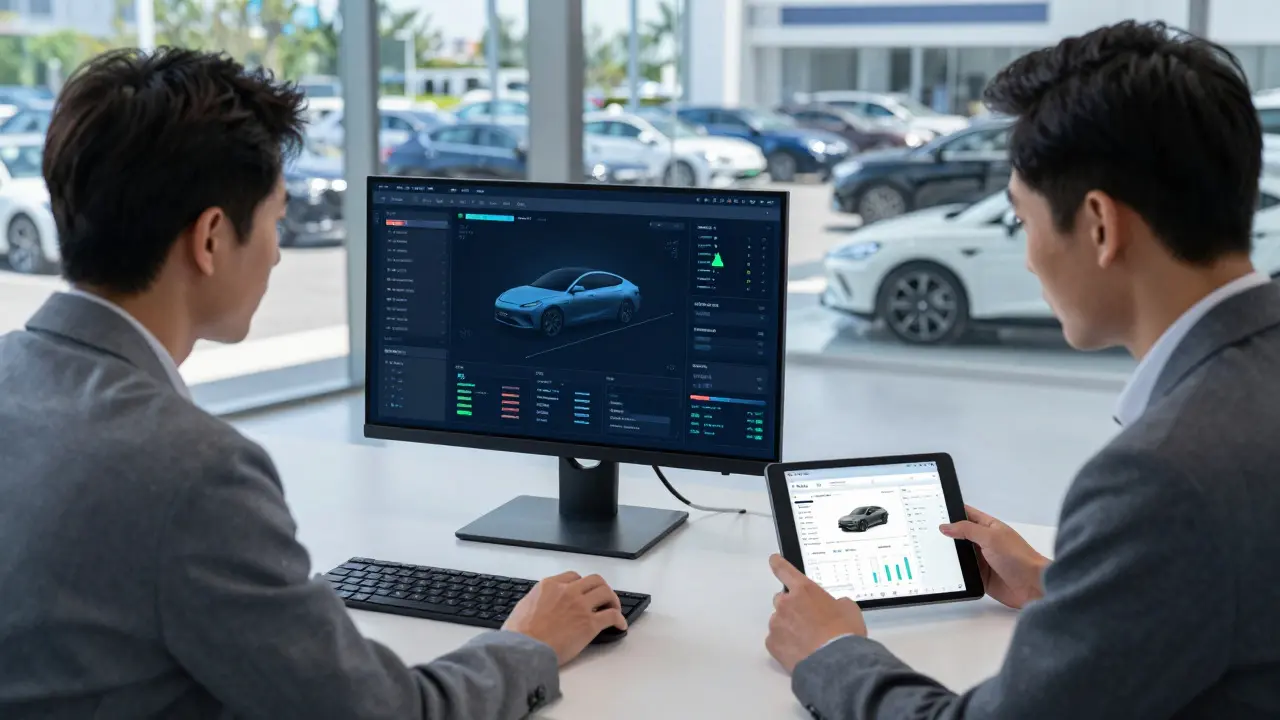
Buying cars at wholesale auctions is where the real margin lives, but it’s also where inexperienced dealers bleed money. One wrong bid on a high-mileage sedan or a missed inspection window can wipe out your profit on that unit before you even wash it. In 2026, with supply chains stabilizing and digital platforms dominating the physical lots, knowing exactly how to source inventory has shifted from a gut feeling to a data-driven discipline. This guide breaks down the mechanics of wholesale auctions, how to structure your buying team, and the specific metrics you need to track to keep your lot turning over without getting stuck with dead stock.
Understanding the Modern Wholesale Landscape
The days of standing in a dusty yard with a clipboard are largely gone. Today, most serious dealerships operate through a hybrid model combining physical attendance with digital bidding platforms. The primary entities here are the auction houses themselves, which fall into three distinct categories: dealer-only networks, public-access platforms, and specialized niche markets. Each serves a different purpose in your inventory pipeline.
Dealer-only networks like Manheim and Copart (for their dealer sections) offer the highest volume of clean-title vehicles. These are the workhorses of the industry. You’ll find everything from fresh trade-ins to fleet disposals. The advantage here is liquidity; if you need five SUVs by Friday, these are the places to look. However, competition is fierce, meaning you’re bidding against other professionals who have access to the same data feeds. Your edge isn’t just seeing the car; it’s understanding its true market value faster than the guy next to you.
Public-access platforms have grown significantly since the early 2020s. Sites like Bring a Trailer or even certain eBay Motors categories allow private sellers and smaller dealers to list vehicles. While the volume is lower, the pricing can sometimes be more transparent because the seller might not be as aggressive as a large dealer network. This channel is excellent for finding unique models or low-mileage examples that didn’t fit into a standard fleet disposal program.
Specialized niche markets focus on specific vehicle types. If you run a shop that specializes in EVs, hybrids, or heavy-duty trucks, generalist auctions often lack the depth you need. Niche platforms aggregate these vehicles, allowing you to build relationships with specific sellers who understand the quirks of those powertrains. For example, an EV specialist might find better deals on a used Tesla Model 3 through a dedicated battery-health-focused platform than they would at a generalist lot, simply because the buyer pool is smaller and less informed about residual value curves.
Building Your Acquisition Team and Roles
You cannot effectively manage wholesale sourcing if one person is doing everything. The role of the "Buyer" has evolved into a multi-person operation. At minimum, you need two distinct roles: the Bidder and the Analyst. The Bidder is the one clicking the button or raising the paddle. They need speed, confidence, and strict adherence to your maximum bid limits. The Analyst sits behind them, processing data in real-time. They check repair estimates, verify title history, and flag any red flags in the description photos.
In larger operations, you’ll add a Logistics Coordinator whose sole job is to ensure that once a car is won, it moves. They handle the transport booking, title paperwork, and initial intake inspection. Without this separation, buyers often win cars they can’t afford to hold because the administrative burden slows down the next purchase cycle. A common mistake is letting the buyer worry about shipping costs during the heat of the bid. By the time they realize the $800 freight charge eats into their margin, the car is already theirs. Pre-calculating landed cost is non-negotiable.
Training your team is just as important as hiring them. New buyers often suffer from "auction fever," chasing a deal that looks good on paper but fails in reality. Implement a strict post-mortem process. After every sale, whether won or lost, review the decision. Did we win too high? Did we lose because we were too conservative? Documenting these outcomes creates a feedback loop that sharpens your team’s intuition over time. Data doesn’t lie, but human emotion does.
Decoding Vehicle Condition and Title History
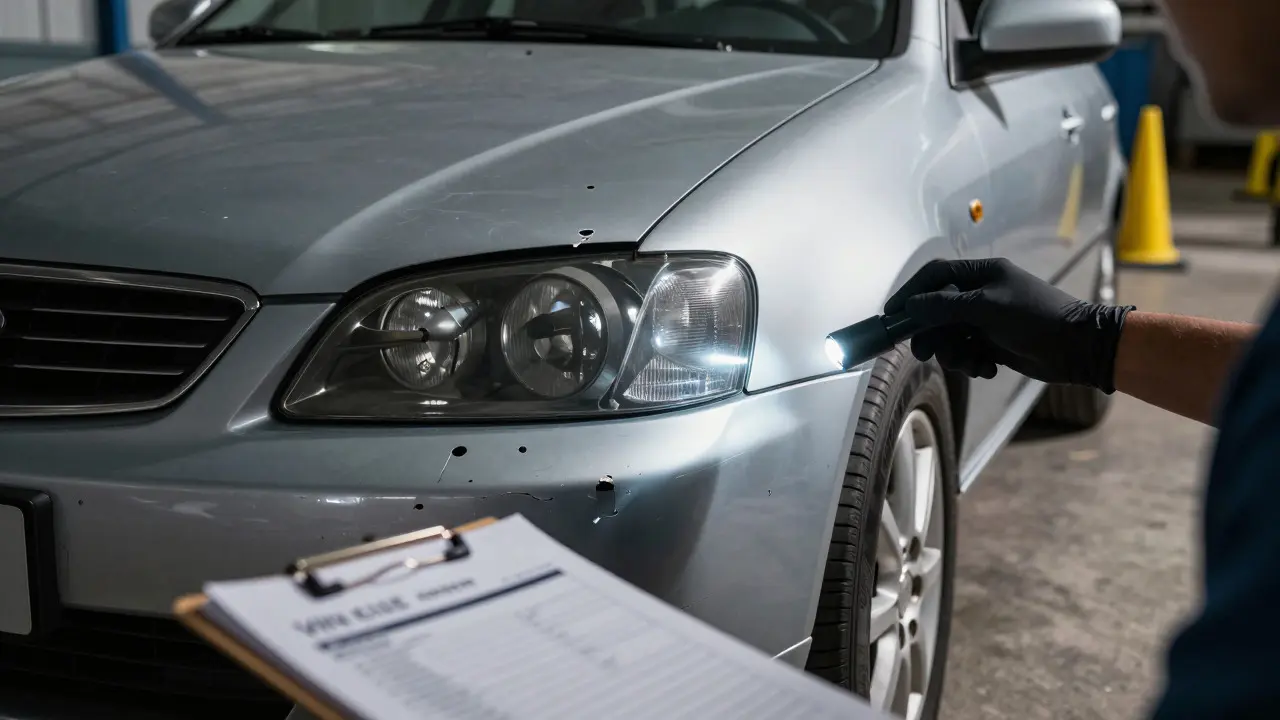
The biggest trap in wholesale sourcing is underestimating repair costs. A car listed as "Running and Driving" might still have a cracked engine block that isn’t visible in the photos. You need a systematic approach to evaluating condition grades. Most major auctions use a grading system, typically from 1 to 5, where 1 is a total loss and 5 is a pristine, accident-free vehicle. However, these grades are subjective. A Grade 3 car from one lot might be a Grade 4 from another.
Title history is the second critical factor. Clean titles are the gold standard, but salvage titles offer significant discount opportunities if you know what you’re doing. A salvage title means the insurance company declared the car a total loss, usually due to collision damage. If the repairs were done correctly, the value gap between a salvage and a clean title can be 15-25%. That’s pure margin if you fix it right. But if the frame was bent and straightened poorly, you’ve bought a liability. Always check the VIN report for structural damage indicators. Tools like Carfax or AutoCheck provide this data, but reading the fine print matters. Look for terms like "frame repaired" or "airbag deployed."
Flood titles are another category. In 2026, with climate events becoming more frequent, flood-damaged vehicles appear more often. These cars are risky because electrical issues can surface months after purchase. If you decide to buy flood titles, you must inspect the wiring harnesses personally or hire a trusted mechanic to do so before bidding. The savings are substantial, but the risk is exponential compared to collision damage.
| Channel Type | Typical Inventory | Competition Level | Best For |
|---|---|---|---|
| Dealer-Only Networks | Clean titles, fleet disposals, trade-ins | High | Volume, consistent stock, fast turnaround |
| Public-Access Platforms | Mixed titles, unique models, private sales | Medium | Niche finds, lower price points, transparency |
| Specialized Niche Markets | EVs, Trucks, Classics, Off-road | Low to Medium | Expertise leverage, higher margins on complex units |
Calculating True Landed Cost and Margin
Your bid price is only half the equation. The other half is the landed cost, which includes the purchase price, auction fees, taxes, transportation, reconditioning, and holding costs. Many new dealers forget the holding cost. Every day a car sits on your lot is money burning away. If you finance your inventory, interest accrues daily. If you pay rent on the lot, space is occupied. Calculate your daily carrying cost per vehicle. If a car takes 30 days to sell, that’s 30 days of costs eating into your profit.
A simple formula to use before bidding:
- Purchase Price: Your max bid.
- Acquisition Fees: Typically 5-10% of the hammer price, plus flat admin fees.
- Transport: Quote this specifically for the origin location. Don’t guess.
- Reconditioning: Budget 10-15% of the resale value for detailing, minor repairs, and tires.
- Holding Costs: Estimate 1-2% of the vehicle value per month.
Add all these up to get your Total Landed Cost. Then, compare it to your target retail price. Aim for a gross margin of at least 20-25% after all expenses. If the math doesn’t work, walk away. There is always another car coming. The fear of missing out (FOMO) is the enemy of profitability. Set a hard cap on your bids based on this calculation, and let your team enforce it.
Digital Tools and Data Integration
In 2026, manual spreadsheet tracking is inefficient. You need a Dealer Management System (DMS) that integrates directly with auction platforms. This allows real-time data sync. When you win a car, it should automatically create a work order for reconditioning and update your inventory levels. Look for DMS providers that offer API connections to major auction houses. This eliminates double-entry errors and speeds up the process from winning the bid to listing the car for sale.
Data analytics tools are also crucial. Use historical sales data to predict demand. If you notice that compact SUVs are selling 20% faster in Q3 than in Q1, adjust your sourcing strategy accordingly. Buy more SUVs in the spring to prepare for summer demand. Use predictive pricing models to set your retail prices dynamically. Some advanced software adjusts prices based on local market conditions, competitor listings, and seasonality. This keeps your inventory fresh and competitive without manual price adjustments every week.
Don’t ignore social media and online marketplaces. Cross-listing your acquired vehicles on multiple platforms increases visibility. However, track the source of each sale. Did the customer come from your website, Facebook Marketplace, or Autotrader? Knowing which channel drives the most profitable sales helps you allocate marketing budget effectively. A car bought cheaply at auction but sold expensively through a targeted Instagram ad is a successful campaign. Track these metrics to refine your entire business model.
Risk Management and Pitfalls to Avoid
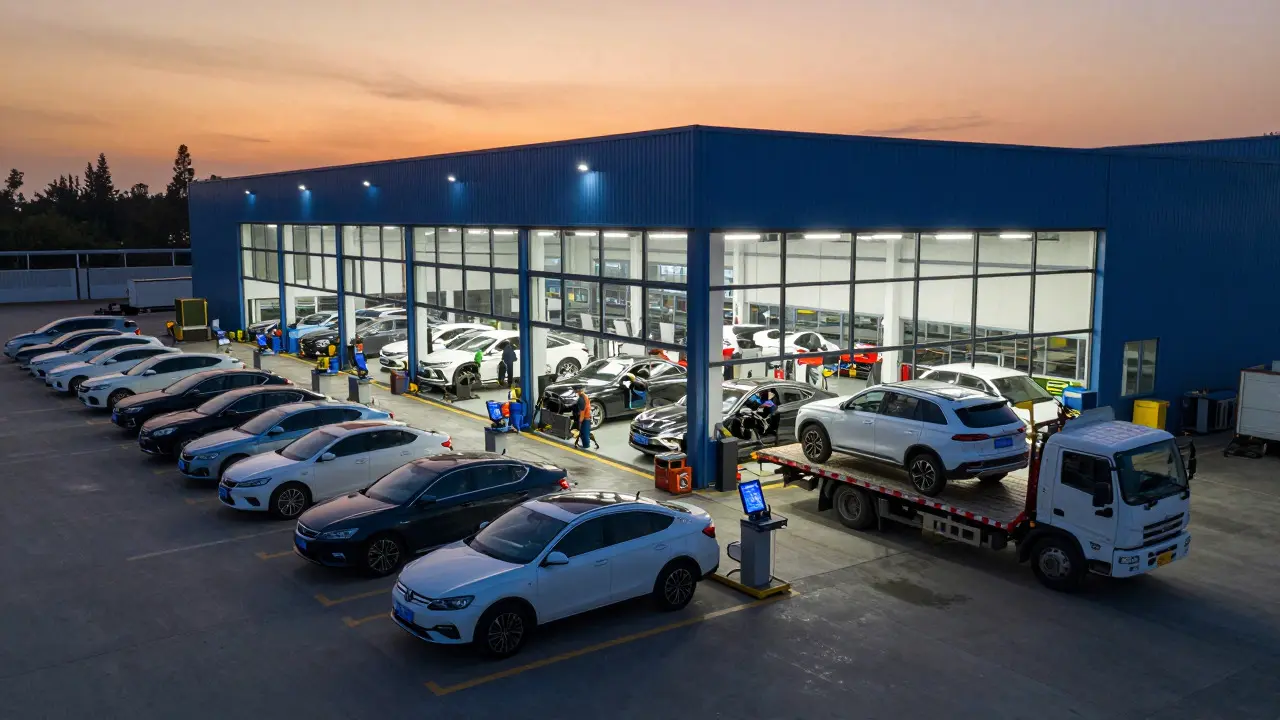
The biggest risk in wholesale sourcing is over-leveraging. Buying too many cars ties up cash flow. Keep your inventory turnover ratio healthy. Aim to sell your average inventory within 30-45 days. If it’s taking longer, you’re buying too much or pricing incorrectly. Monitor your days supply of inventory (DSI). If DSI exceeds 60 days, pause purchasing and focus on moving existing stock.
Another pitfall is ignoring seasonal trends. Winter is tough for convertibles and off-road vehicles. Summer is tough for heavy-duty snow plows. Align your purchases with upcoming seasons. Buy winter-ready vehicles in September and October, not in January when the supply is scarce and prices are high. Similarly, back-to-school season boosts demand for minivans and sedans. Anticipate these cycles to buy at the bottom of the price curve.
Finally, beware of hidden defects. Even with detailed inspections, some issues don’t show up until the car is driven. Always test drive if possible, or require a pre-purchase inspection by a third-party mechanic for high-value units. The cost of a $150 inspection fee is nothing compared to a $2,000 transmission failure discovered after purchase. Build this cost into your reconditioning budget for any car over a certain value threshold.
FAQ
What is the average profit margin on cars bought at wholesale auctions?
A healthy gross margin for dealerships sourcing from wholesale auctions typically ranges between 20% and 25%. This figure accounts for the purchase price, acquisition fees, transportation, reconditioning, and holding costs. Margins can vary based on the vehicle type, market conditions, and the efficiency of the dealership's reconditioning process. High-turnover vehicles like popular sedans may have lower margins but higher volume, while niche vehicles may have higher margins but slower sales cycles.
How do I calculate my maximum bid for a vehicle at auction?
To calculate your maximum bid, start with your target retail price. Subtract your desired gross margin (e.g., 20%), then deduct all estimated costs: auction fees, taxes, transportation, reconditioning, and holding costs. The remaining amount is your maximum bid. For example, if a car will sell for $20,000, your target margin is $4,000. If total additional costs are $3,000, your maximum bid should be $13,000. Always add a buffer for unexpected repairs.
Are salvage title cars worth buying for a dealership?
Yes, salvage title cars can be highly profitable if you have the expertise to repair them correctly. They often sell for 15-25% less than clean title equivalents, offering significant margin potential. However, they carry higher risk due to potential hidden structural or mechanical damage. Only buy salvage titles if you have a reliable repair shop and a thorough inspection process in place. Flood titles are riskier than collision titles and require extra caution regarding electrical systems.
What is the ideal inventory turnover rate for a car dealership?
The ideal inventory turnover rate for most independent dealerships is between 30 and 45 days. This means the average car on your lot should sell within this timeframe. If your Days Supply of Inventory (DSI) exceeds 60 days, it indicates slow-moving stock, which ties up capital and increases holding costs. Regularly review your inventory aging reports to identify stale units and apply strategic discounts or promotions to move them quickly.
How important is it to integrate auction data with my Dealer Management System (DMS)?
Integration is critical for operational efficiency. Manual data entry leads to errors, delays, and disconnected workflows. Integrating auction platforms with your DMS ensures that won vehicles are immediately logged into your inventory, work orders for reconditioning are created automatically, and financial records are updated in real-time. This reduces administrative overhead, speeds up the time from purchase to sale, and provides accurate data for analyzing profitability and forecasting future purchases.
Comments
john randall
Read through this last night while waiting for my coffee to brew. The section on the Analyst role really clicked for me because we’ve been struggling with exactly that lately. One guy trying to do it all just leads to mistakes.
August 25, 2026 at 03:34
Jeff Falcon
I have to say, this is a very thorough breakdown of what most small shops ignore!; I mean, who actually calculates the holding costs per day?; It’s not rocket science, but it feels like everyone skips it until their cash flow dries up and they’re stuck with ten sedans in the middle of winter!; The part about pre-calculating landed cost is so true, I got burned by a freight charge once that ate my entire margin on a nice SUV, and I never looked back at guessing again after that!
August 26, 2026 at 01:15
Alyson Karson
YESSS finally someone said it out loud! We spent months trying to figure out why our margins were tanking and it was just because we kept buying flood titles thinking we could fix them cheaply. Big mistake. Now we stick to clean titles or well-documented salvage only. Lesson learned the hard way but hey at least we are profitable now right??
August 27, 2026 at 11:53
Chris Neal
The advice on niche markets is spot on if you know what you're doing. I run a shop specializing in older German imports. Generalist auctions are useless for us because half the bidders don't know how to value a timing belt vs a water pump issue. We get better deals on specialized forums where the buyer pool understands the specific maintenance schedules required for these cars. It's less volume, sure, but the quality of inventory is significantly higher when the competition knows exactly what they are looking at.
August 29, 2026 at 04:17
Vishnu Vardhan Reddy M S
Oh, wonderful, another guide telling us to 'be data-driven' as if spreadsheets haven't already killed enough creativity in this industry. But sure, let's pretend that algorithms can smell a cracked engine block from a photo. I've seen more 'pristine' Grade 5 cars turn out to be lemonade stands than I care to count. Still, nice read, I guess. At least the formatting was decent, which is a first for this sub.
August 30, 2026 at 22:04
Kyle Ware
You make a good point about the physical inspection gap. Even with digital feeds you still need boots on the ground for high-value units. I usually set a threshold where anything over $25k gets a third-party inspection before we bid. Saves headaches later.
August 31, 2026 at 01:20
Iva Grekova
I appreciate the calm tone here. Most posts in this space feel like they're yelling at you to buy more inventory. This one feels like a friend giving you some solid advice over lunch. The DMS integration tip is huge too. We switched systems last year and the time saved on manual entry alone paid for the new software within three months.
August 31, 2026 at 21:10
Onyinyechi Nwosu
Just reading along quietly. The part about seasonal trends made me think about how different it must be in other climates. Here in Lagos the rain season affects everything differently. Good insights though.
September 2, 2026 at 05:07
Chandan Singh
While the article is fine, it misses the mark on global sourcing. If you are looking at maximizing profit in 2026, you cannot ignore the import dynamics from Europe and Japan. The depreciation curves on Japanese Kei cars and European compact diesels offer margins that domestic US auction lots simply do not match for certain segments. However, the logistics nightmare is real. You need a partner who handles the customs clearance and port fees seamlessly, otherwise your 'profit' disappears in shipping delays and demurrage charges. It is a complex game, but the rewards for those who master the cross-border supply chain are substantial.
September 3, 2026 at 07:12
Brannen Hall
Boring. Just a list of things you should already know if you are in business. Who reads a 2000-word post on Reddit instead of just asking a veteran dealer? The 'FOMO is the enemy' line is such a cliché it hurts. Anyway, thanks for the free content, I'm sure it helped some rookie somewhere.
September 5, 2026 at 05:20
tiffany King
Don't let the cynics get you down! Every expert started as a beginner who read a guide like this. I remember when I first started bidding and I thought I had it all figured out. Then reality hit. Keep learning and stay humble. The market changes fast but the principles of good math and careful inspection never change. You got this!
September 6, 2026 at 16:32
Courtney Wagstaff
This whole 'data-driven discipline' thing sounds like a lot of work but honestly it's like gardening. You gotta check the soil, water the right amount, and pull the weeds before they take over. If you just throw seeds (bids) everywhere hoping something grows, you end up with a messy yard full of dead plants (unsold cars). It's about tending to your inventory garden with patience and precision. Pretty poetic for a car dealership post, huh?
September 7, 2026 at 10:43
Brandon Olvera
We need to stop relying on foreign platforms and focus on American-made vehicles. The supply chain issues mentioned are mostly caused by importing parts and cars from overseas. Buy American, sell American. That's how you build a stable economy and keep profits in local pockets.
September 9, 2026 at 03:54
Elizabeth Brooks
Great point about the analyst role! I always forget to mention how important it is to have someone checking the VIN history in real time. I used to rely on my gut feeling and it almost cost me a fortune on a car that had a hidden frame repair. So glad we hired a dedicated person for that now. Thanks for sharing this, it really helps organize our thoughts on next steps!
September 9, 2026 at 19:12