
Quick Takeaways
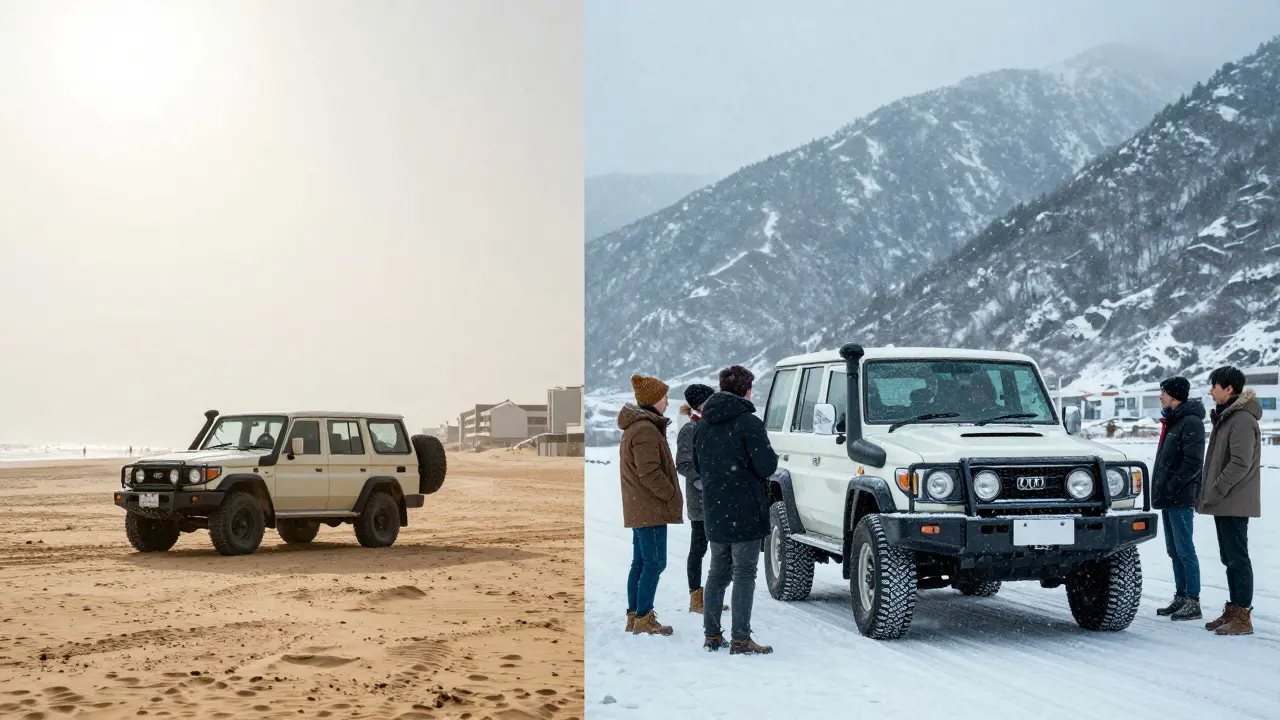
- Climate drives specific demand for 4WD/AWD vehicles in northern regions.
- Urban environments prioritize fuel efficiency and compact sizes over raw power.
- Local regulations, like Ultra Low Emission Zones (ULEZ), can tank the value of older diesels.
- Regional availability of specific brands creates localized pricing bubbles.
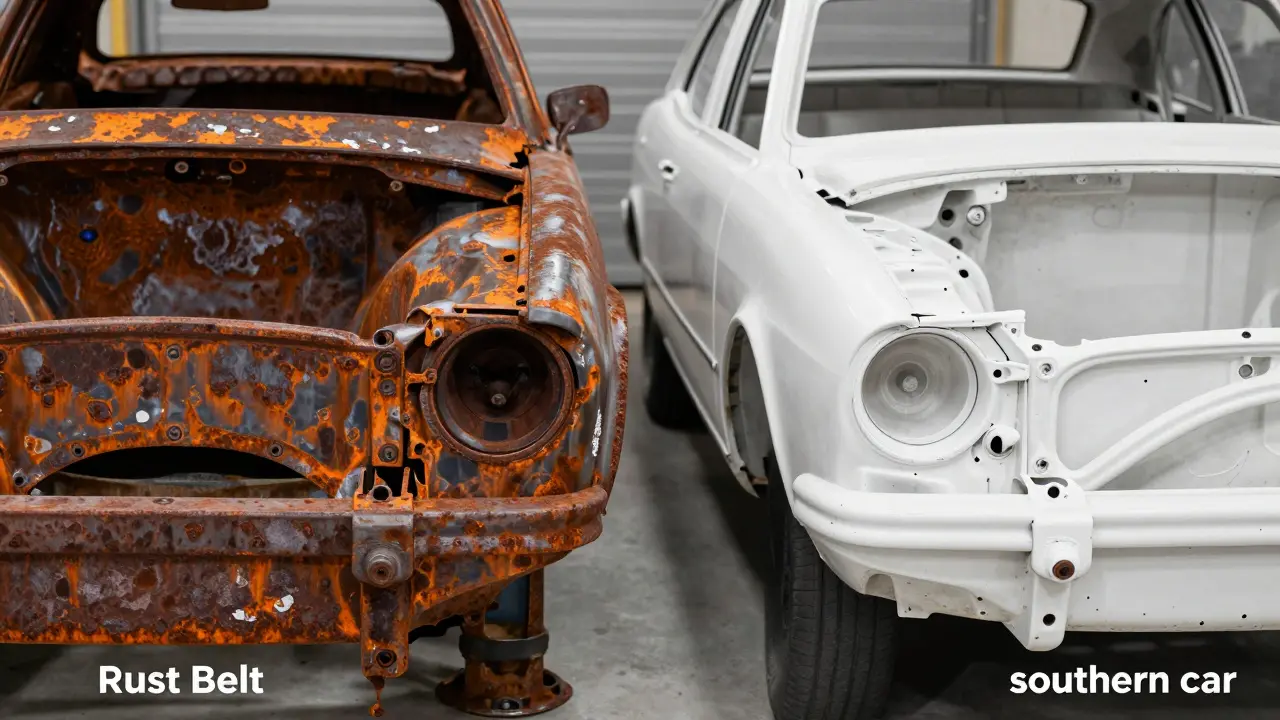
- Maintenance history varies by region, specifically regarding salt-induced rust in coastal or snowy areas.
The Climate Factor and Drive-Train Demand
Weather is the biggest invisible hand in the used car market. In the northern United States or Canada, a All-Wheel Drive (AWD) is a drivetrain system that provides power to all four wheels simultaneously, making it a necessity for winter survival. Because of this, AWD SUVs hold their value significantly better in Maine than they do in Florida. In a snowy climate, the lack of AWD is often a deal-breaker, which pushes the price of capable vehicles up while front-wheel-drive versions of the same model sit on lots for weeks.
On the flip side, look at the "Sun Belt" states. In Arizona or Texas, the demand shifts toward heavy-duty cooling systems and high-capacity air conditioning. While a Jeep Wrangler is popular everywhere, its value peaks in regions with rugged terrain or beach access. If you're selling a convertible in Miami, you're playing to the local strength; try doing that in the rainy streets of Seattle, and you'll likely have to drop your price to find a buyer who doesn't mind the wind.
Urban Density vs. Rural Freedom
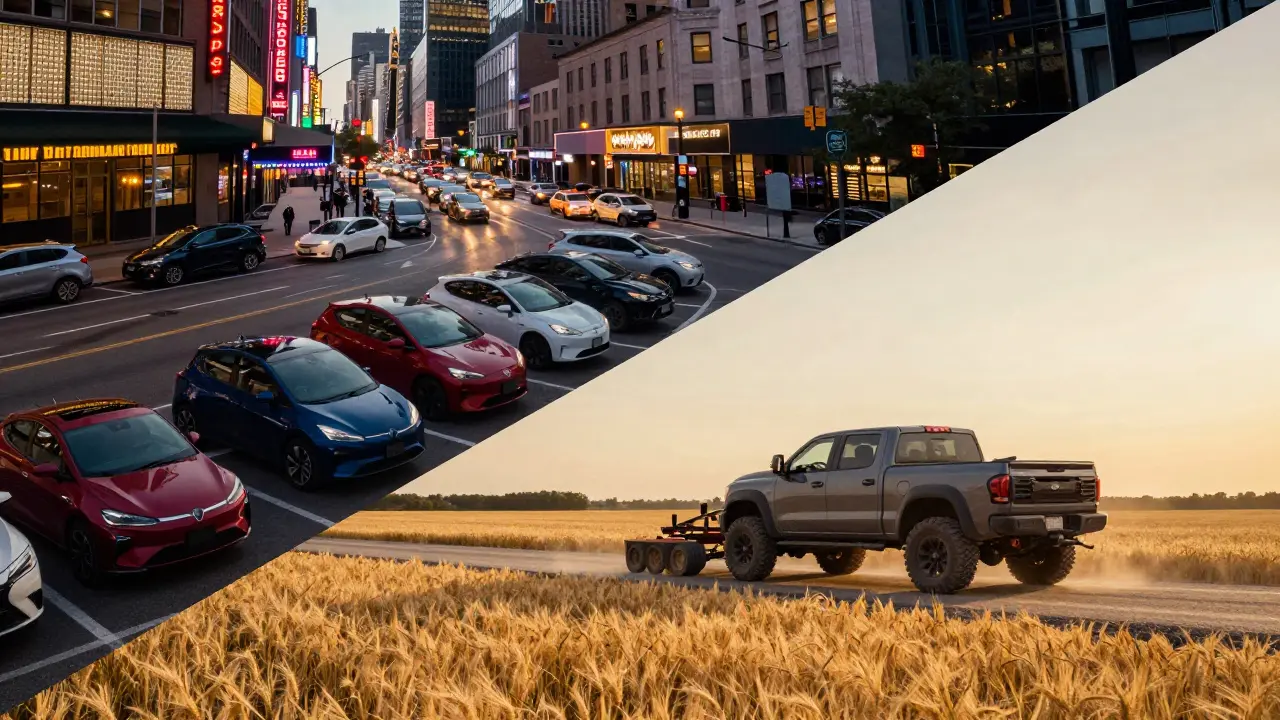
Where people live determines what they can actually use. In hyper-dense cities like New York, London, or Tokyo, space is a luxury. This creates a massive premium for Compact Cars, which are small vehicles designed for efficiency and easy maneuvering in tight urban spaces. A tiny hatchback that feels claustrophobic in a rural village is a goldmine in a city where parking spots are the size of a postage stamp.
Contrast this with rural areas. In the Midwest or the Australian Outback, a small city car is practically useless for daily chores. Here, the demand shifts toward Pickup Trucks, which are light-to-medium duty trucks with an open cargo area. In these regions, trucks aren't just vehicles; they are tools. This functional necessity keeps the resale value of brands like Ford or Chevrolet remarkably high in rural zones, often defying national depreciation averages. If you've ever wondered why a used F-150 stays expensive despite high mileage, it's because the regional demand is decoupled from the national average.
The Impact of Local Legislation and Emission Zones
Government rules can kill a car's value overnight. Take the Ultra Low Emission Zone (ULEZ) as a prime example. This is a regulatory area where vehicles must meet strict emission standards to avoid paying a daily charge. In London, the introduction of ULEZ caused a sudden, sharp drop in the value of older diesel vehicles. Owners who previously had a valuable asset suddenly found themselves holding a "dirty" car that cost money just to drive into the city.
This creates a fascinating regional migration of vehicles. We often see older diesel cars being sold cheaply in cities and bought by people in rural areas where such regulations don't exist. The car hasn't changed, but its legal environment has, shifting its value from "asset" to "liability" based on a few miles of geography.
| Environment | High Demand Entities | Value Killers | Key Attribute |
|---|---|---|---|
| Mountainous/Snowy | AWD SUVs, 4x4 Trucks | Small FWD Sedans | Traction & Clearance |
| Dense Urban | EVs, Compacts, Hybrids | Full-size SUVs, Diesels | Parking & Emissions |
| Coastal/Beach | Convertibles, Jeeps | Heavy Industrial Trucks | Leisure Utility |
| Rural/Agricultural | Diesel Trucks, Tractors | Ultra-small City Cars | Towing & Payload |
The "Rust Belt" and the Cost of Salt
Physical condition is usually the first thing a buyer looks at, but regional buyers look for specific types of damage. In the Rust Belt, a region of the US Northeast and Midwest where road salt is heavily used in winter, the biggest value killer is chassis corrosion. A car from Georgia will almost always fetch a higher price in Ohio than a local car of the same year and mileage, simply because it hasn't been blasted with salt for five winters.
This creates a "geographic premium." Buyers in snowy regions are often willing to pay more for a "southern car" because they know the frame is intact. Conversely, a buyer in Florida might be wary of a car from the coast due to salt-air corrosion, which eats through metal just as effectively as road salt. When you're valuing a vehicle, you aren't just looking at the odometer; you're looking at the map of where that car has spent its life.
Brand Loyalty and Cultural Preferences
Some regions simply love certain brands more than others. This isn't always about utility; sometimes it's about culture. In the Southern US, there is a deep-rooted loyalty to domestic brands. In certain European markets, there's a strong preference for smaller, fuel-efficient diesel engines (though this is changing with the rise of Electric Vehicles (EVs), which are cars powered by an onboard battery and electric motor).
When a brand becomes a status symbol in a specific city or region, its resale value inflates. For example, certain luxury brands maintain higher values in wealthy hubs like Los Angeles or Dubai than they do in mid-sized industrial towns. The utility of the car remains the same, but the social currency it provides varies by zip code.
How to Leverage Regional Differences for Profit
If you're a savvy seller or dealer, you can use these gaps to your advantage. The goal is to move the asset from a low-demand region to a high-demand region. Selling a convertible in a snowy state in January is a mistake; waiting until spring or listing it in a warmer climate can add hundreds, or even thousands, to the final price.
Similarly, if you're buying, look for the "mismatch." Find a high-utility vehicle (like a 4x4) in a region where it's not appreciated. A truck in a city might be priced lower because the seller is struggling to find a local buyer. If you can transport that vehicle to a rural area, you've instantly increased its value without spending a dime on repairs.
Does a car's location really affect its trade-in value at a dealership?
Yes, absolutely. Dealerships buy based on what they can sell quickly. If a dealer in Vermont receives a front-wheel-drive coupe in the middle of winter, they know it will sit on the lot. They will likely offer you less for it than a dealer in Florida would, because the local demand-and therefore the projected profit-is much lower.
Why are some cars more expensive in cities despite the traffic?
It usually comes down to scarcity and regulation. In cities with strict emission zones, compliant vehicles (like EVs or newer Hybrids) become highly sought after. When demand spikes and the supply of compliant cars is limited, prices rise regardless of the traffic conditions.
Is it worth transporting a car to another region to sell it?
Only if the price gap is larger than the cost of transport. For most average cars, the cost of shipping outweighs the regional price difference. However, for specialized vehicles-like high-end vintage cars or heavy-duty specialty trucks-moving them to a "hot market" can result in a significant profit increase.
How does 'Southern car' status actually help a sale?
It's all about the undercarriage. In the North, road salt creates a chemical reaction that accelerates rust. A car from the South typically has a clean, rust-free frame. For a buyer in the Rust Belt, this represents a longer lifespan for the vehicle and fewer expensive structural repairs, making the car more valuable.
Will the rise of EVs make regional differences disappear?
Not entirely. While EVs solve the emission problem, geography still affects them. For instance, extreme cold reduces battery range, meaning EV demand may remain lower in Arctic regions compared to temperate cities. Additionally, charging infrastructure varies by region, which continues to influence local demand and value.
Next Steps for Buyers and Sellers
If you're selling, don't just trust a national valuation tool. These tools provide an average, but averages are useless when your local market is an outlier. Check local listings (like Facebook Marketplace or regional car sites) to see what similar cars are actually selling for in your town. If your car is a "mismatch" for your area, consider listing it in neighboring regions or targeting buyers who are willing to travel for a specific feature.
For buyers, broaden your search. If you want a clean, rust-free truck, look toward the South. If you want a bargain on a small city car, look in the rural outskirts where they are less desired. By stepping outside your local bubble, you can find a vehicle that is both high-quality and reasonably priced because you're buying where the demand is lowest.
Comments
ANAND BHUSHAN
makes sense to me
April 15, 2026 at 15:49
Kasey Drymalla
this is all just a scam by the dealers to keep us guessing about the price. they probably coordinate the values in secret meetings to bleed us dry. it's all a game
April 17, 2026 at 05:21
Tarun nahata
What a stellar breakdown of the market! This is absolute gold for anyone looking to flip cars and make some serious bank. Just imagine the thrill of finding a hidden gem in the city and zooming it over to the countryside for a massive payday! Absolutely electric stuff!
April 18, 2026 at 08:54
Dave Sumner Smith
You're completely ignoring the role of corporate lobbyists in these 'emission zones'. It's not about the environment, it's about forcing people into EVs so the government can track every single move you make through the grid. Wake up. The 'regional value' is just a smokescreen for the planned obsolescence of internal combustion engines. I've seen the data and it's all rigged to favor the elites in the cities while the rural folks get left with the scraps of old diesel tech.
April 19, 2026 at 06:40
Sumit SM
The duality of man is reflected in the duality of the machine!!! We seek the ruggedness of a truck in the wild... yet crave the efficiency of a hybrid in the concrete jungle!!! It is a dance of necessity and desire!!! Truly a poetic reflection of our shifting identities based on our coordinates on a map!!!
April 19, 2026 at 22:46
Aryan Jain
exactly what i was saying... the prices are fake. the government wants us to move cars around so they can track the shipments. it's a big loop to see who's listening
April 20, 2026 at 19:17
Pramod Usdadiya
Very intresting read. I think in India we have similar things with the city and villige cars though the brands are diffrent. Thnx for sharing!
April 21, 2026 at 17:08
Nalini Venugopal
I love how this explains everything so clearly! I'm definitely going to share this with my friends who are looking for new rides.
April 22, 2026 at 09:31
Agni Saucedo Medel
So true! 🚗✨ Definitely a great way to look at the market 💖
April 22, 2026 at 13:39
Paul Timms
The analysis of road salt impact is accurate.
April 23, 2026 at 02:46
Indi s
i can see why people get stressed trying to sell their cars in the wrong place. it must be hard when you need the money but nobody wants the car
April 23, 2026 at 03:01
Pooja Kalra
Value is a social construct. We attach numbers to metal based on fear of snow or desire for status. It is an empty pursuit.
April 24, 2026 at 04:37
Cait Sporleder
The juxtaposition of urban constraints and rural liberties creates a fascinating economic microcosm that transcends simple commerce. I find myself wondering if the psychological attachment to a specific vehicle type is merely a reflection of the geographical identity one assumes when residing in these disparate environments. It is truly an intricate tapestry of supply and demand woven with the threads of climate and local legislation. One must consider the sheer audacity of transporting a vehicle across state lines simply to exploit a pricing discrepancy, which feels almost like a modern-day alchemy of automotive trade. The nuance of the 'Southern car' premium is particularly evocative of the hidden histories we carry in the very chassis of our machines. It is a vivid reminder that the physical environment leaves an indelible mark on an object, much like time leaves a mark on the soul. I suspect that the emergence of electric vehicles will not erase these regional disparities but will instead introduce a new set of variables related to energy infrastructure and thermal efficiency. The complexity of this regional valuation is simply mesmerizing in its breadth and depth. I am utterly captivated by the way geography dictates the monetary worth of a machine. It is an elegant dance of logistics and local preference. Truly a remarkable observation of human behavior and market volatility.
April 25, 2026 at 07:41
Aditya Singh Bisht
Keep this energy going! Everyone should look at their local market and find those gaps. It's a win-win for the buyer and the seller if you just put in the effort to look outside your own bubble. Let's get those deals!
April 26, 2026 at 12:37