
You look in the rearview mirror and see nothing but a dark reflection. It feels secure, private, and sleek. But that same darkness might just get you a hefty fine or fail your MOT test. Window tinting sits right at the intersection of personal style and strict legal boundaries. Getting it wrong is expensive; getting it right means better comfort, lower cabin temperatures, and that coveted sense of privacy.
In the United Kingdom, where I live in Bristol, the rules are specific and non-negotiable. You can’t just guess what’s allowed. The law dictates exactly how much light must pass through your glass. This guide breaks down those numbers, explains why they exist, and helps you choose the right film for your vehicle without breaking the bank or the law.
Understanding Visible Light Transmission (VLT)
To talk about window tint legally, you first need to understand VLT. Visible Light Transmission is the percentage of visible light that passes through the glass. A brand-new, clean windshield has a VLT of nearly 100%. If you apply a film that blocks half the light, your VLT drops to 50%.
The lower the VLT percentage, the darker the tint. A 5% VLT film is often called "limo tint" because it is almost completely opaque from the outside. A 70% VLT film looks barely tinted but still offers some glare reduction.
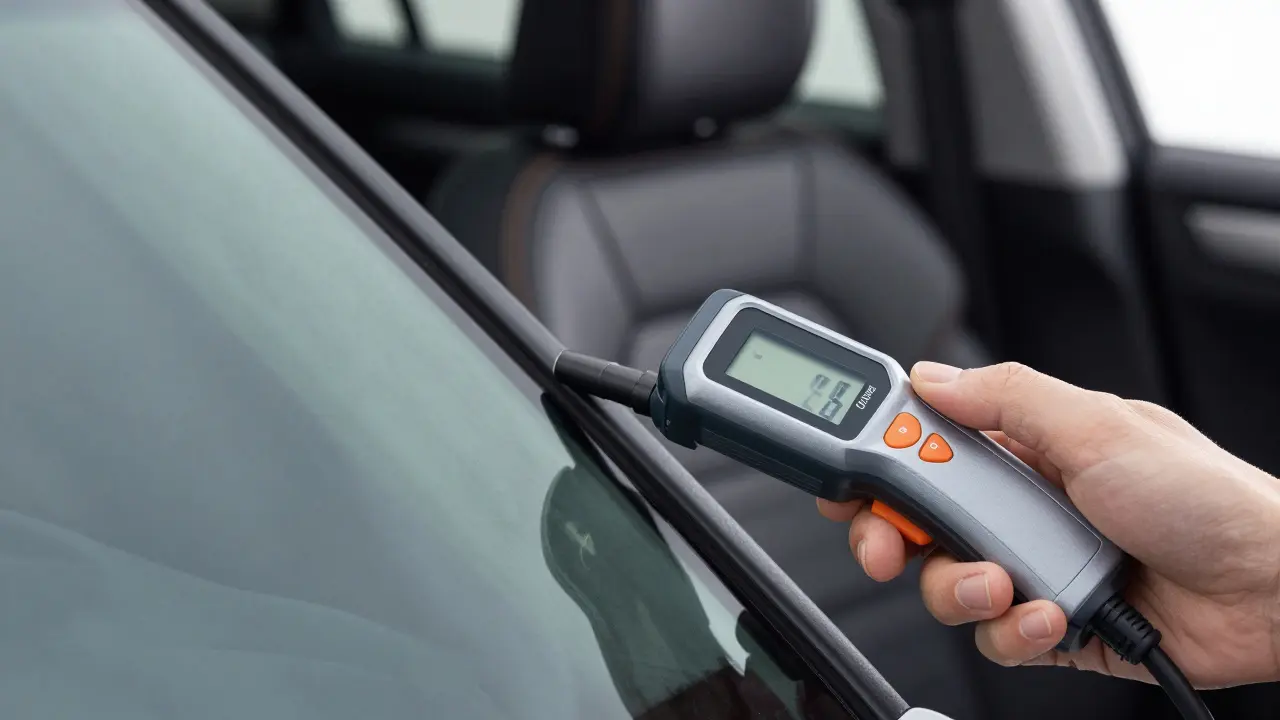
Why does this matter? Because visibility isn't just about seeing out; it's about others seeing in and you seeing hazards at night. When police officers pull you over, they don't measure the darkness with their eyes. They use a device called a tint meter. This tool measures the exact amount of light passing through the glass. If the number on the screen doesn't match the legal minimum for that specific window, you fail.
UK Window Tinting Laws: The Hard Numbers
If you drive in the UK, you must adhere to the Road Vehicles (Construction and Use) Regulations 1986. These regulations set strict limits based on the window's position relative to the driver. Here is the breakdown you need to know:
- Windshield: Must have a VLT of at least 75%. In practice, this means no tint is allowed on the main viewing area. You can only apply a small strip at the very top edge, known as the "sunstrip," which usually allows slightly less light but must not obstruct the driver's view.
- Front Side Windows: Must have a VLT of at least 70%. This includes both the driver's side and the passenger's side front doors. This is the most common place people get fined. Many shops offer "35%" or "20%" films, but these are illegal for front windows in the UK.
- Rear Side Windows: No specific VLT limit, provided the vehicle has two functioning exterior mirrors. However, if you remove a mirror to accommodate a wider body kit, you must ensure the remaining windows allow sufficient visibility.
- Rear Windshield: No specific VLT limit, again, provided you have two exterior mirrors.
The logic here is safety. Front windows are critical for detecting pedestrians, cyclists, and road signs, especially in low-light conditions like rainy Bristol evenings. Rear windows are less critical for forward motion detection, hence the leniency.
Privacy vs. Safety: Finding the Balance
Most people want tint for three reasons: privacy, heat rejection, and aesthetics. Let's be honest, looking cool is a big part of it. But privacy comes with a trade-off. Darker tints make it harder for emergency responders to see inside your car during an accident. They also make it harder for you to see parked cars or pedestrians when reversing.
There is a middle ground. Modern window films aren't just dyed plastic anymore. We now have advanced materials that offer high performance without extreme darkness.
Types of Window Film Technology
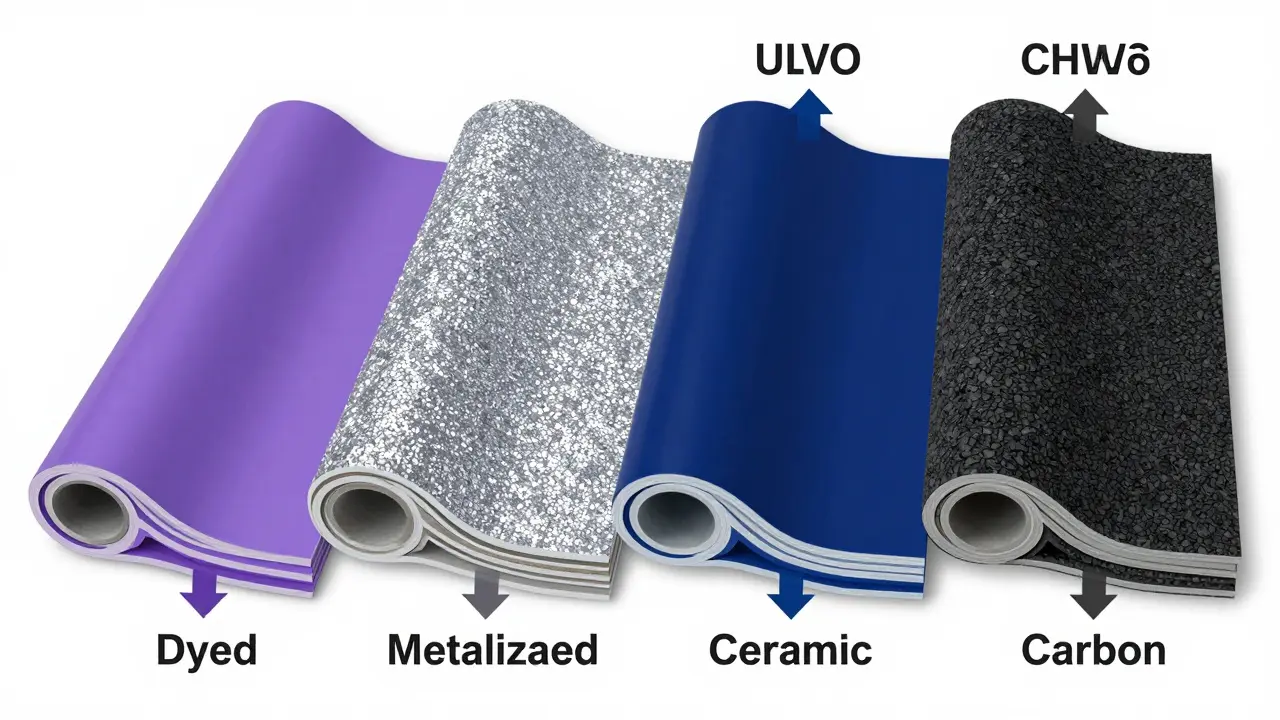
Not all tint is created equal. Choosing the right technology matters more than the shade percentage. Here are the four main types you will encounter:
- Dyed Film: The oldest and cheapest option. It adds a layer of dye to block light. It looks good initially but fades to purple over time and offers minimal heat rejection. It absorbs heat rather than reflecting it, which can sometimes damage the glass edges.
- Metalized Film: Contains tiny metallic particles that reflect heat and UV rays. It is stronger than dyed film and resists fading. However, the metal content can interfere with GPS, radio, and mobile phone signals inside the car.
- Ceramic Film: The gold standard for modern vehicles. It uses non-conductive ceramic particles to block infrared heat and UV rays without affecting electronic signals. It doesn't fade, doesn't turn purple, and provides excellent clarity. It is more expensive upfront but lasts the life of the car.
- Carbon Film: A step up from dyed film. It contains carbon particles that provide a matte black finish and decent heat rejection. It doesn't interfere with signals and won't fade, making it a popular budget-friendly alternative to ceramic.
| Film Type | Heat Rejection | Signal Interference | Lifespan | Cost |
|---|---|---|---|---|
| Dyed | Low | No | Short (fades) | Low |
| Metalized | High | Yes | Long | Medium |
| Ceramic | Very High | No | Very Long | High |
| Carbon | Medium | No | Long | Medium |
Health Benefits Beyond Privacy
We often overlook the health aspect of window tinting. Sunlight contains ultraviolet (UV) rays, specifically UVA and UVB. These rays cause skin aging, sunburn, and increase the risk of skin cancer. Even on cloudy days, UV rays penetrate car windows.
High-quality window films, particularly ceramic and carbon options, block up to 99% of harmful UV rays. This protects not just your skin, but also the interior of your car. Leather seats, dashboards, and fabric upholstery fade and crack under prolonged UV exposure. By investing in good tint, you are preserving the resale value of your vehicle by keeping the interior looking new.
Additionally, window tint reduces glare. Driving into the sunset or dealing with bright headlights at night can be blinding. A proper tint reduces this glare, reducing eye strain and fatigue during long drives. For drivers who commute daily, this is a significant quality-of-life improvement.
Installation: DIY vs. Professional
You can buy window tint kits online for a fraction of the professional cost. But installation is tricky. Air bubbles, dust particles, and wrinkles are common issues for beginners. Once the adhesive sets, removing a bad job is difficult and often requires scraping off old glue, which can scratch the glass.
Professional installers work in controlled environments, often using water sprays and squeegees to smooth out the film perfectly. They also cut the film precisely to fit the curvature of your windows. If you choose DIY, start with flat rear windows before attempting curved front sides. Remember, if the installation fails your MOT due to improper application or incorrect VLT, you are liable for the removal and reinstallation costs.
MOT Test and Enforcement
During your annual MOT test, the examiner will check your window tint. They use a tint meter to verify compliance. If your front windows are below 70% VLT, you will receive a major defect failure. You cannot drive the car until it is fixed. This means peeling off the film and potentially paying for new glass if the adhesive was too strong.
Police forces across the UK actively enforce these laws. Officers may stop you if your windows appear suspiciously dark. While rear windows can be as dark as you like, front windows are strictly monitored. Some drivers try to argue that their windows were always dark, but manufacturers rarely produce factory glass below 70% VLT for front windows. If you're caught, you could face a fixed penalty notice or even court prosecution, depending on the severity and local enforcement policies.
Choosing the Right Shade for Your Needs
If you want maximum privacy without breaking the law, focus on the rear windows. You can go very dark there-say, 20% or even 5% VLT-and pair it with a lighter, legal front tint. To maintain a cohesive look, many owners choose a 35% or 40% VLT film for the front windows. Wait, that’s illegal in the UK. So, stick to 70% for the fronts. It might look subtle, but it reduces glare and provides slight privacy during the day while maintaining full visibility at night.
For the rear, you have freedom. A 20% VLT ceramic film on the back will give you that sleek, uniform appearance while blocking heat and UV rays. Just ensure your side mirrors are intact and functional.
Common Mistakes to Avoid
- Ignoring Local Variations: While UK law is national, enforcement can vary. Always check the latest guidelines from the DVSA (Driver and Vehicle Standards Agency).
- Using Cheap Film: Cheap dyed film bubbles and fades quickly. It looks worse than no tint at all after a year.
- Tinting the Windshield: Never tint the main viewing area of your windshield. It is illegal and dangerous.
- Assuming Factory Tint Counts: Factory-tinted glass is measured differently. Aftermarket film is added on top. The total VLT must meet the legal requirement.
Window tinting is a great modification when done correctly. It enhances comfort, protects your health, and preserves your car's interior. But respect the legal limits. The 70% rule for front windows is not a suggestion; it is a safety standard. Choose ceramic film for the best performance, stick to legal shades for the front, and enjoy the privacy and style on the rear. Drive safe, stay legal, and keep your eyes on the road.
What is the legal window tint limit in the UK?
In the UK, the windshield must have at least 75% VLT, and front side windows must have at least 70% VLT. There is no specific limit for rear side windows and the rear windshield, provided the vehicle has two working exterior mirrors.
Can I put dark tint on my front windows?
No. Front windows must allow at least 70% of visible light to pass through. Darker tints like 35% or 20% are illegal for front windows in the UK and will result in an MOT failure and potential fines.
Does window tint affect GPS and phone signals?
Metalized window films can interfere with GPS, radio, and mobile phone signals. Ceramic and carbon films do not contain metal and therefore do not disrupt electronic signals.
How much does professional window tinting cost?
Prices vary by film type and vehicle size. Dyed film might cost £100-£200, while high-quality ceramic film can range from £300 to £600 or more for a full car installation.
Will window tint help keep my car cool?
Yes, especially ceramic and metalized films. They reject infrared heat, significantly reducing cabin temperature compared to clear glass or cheap dyed film.
Comments
Patrick Dorion
It is fascinating how we negotiate the boundary between our desire for privacy and the societal requirement for visibility. The law dictates 70% VLT for front windows not because it is arbitrary, but because safety requires a shared visual field. I have seen many people argue that they can see fine at night with darker tint, but they fail to account for the peripheral vision loss that occurs when contrast drops. The ceramic film option you mentioned is indeed superior because it addresses the thermal aspect without compromising the optical clarity required by statute. It is a balance of physics and regulation.
July 2, 2026 at 21:10
Marissa Haque
Oh my gosh! This is such an important topic!!! I literally just got pulled over last week because my front windows were too dark!! It was so embarrassing!!! The officer had this little device and he just scanned it right in front of me!!! My heart was pounding!!! Thank you for explaining the difference between dyed and ceramic films!!! I never knew that metalized film could mess up your GPS signal!!! That would be a nightmare on road trips!!! I am definitely going to look into getting ceramic film for my rear windows now!!! Privacy is key but I don't want to lose my phone service either!!!
July 4, 2026 at 18:32
Keith Barker
the concept of transparency is often misunderstood as weakness yet it is the foundation of trust in public spaces driving around with opaque windows creates a barrier between the individual and the collective experience of the road it is interesting to consider whether the discomfort of being seen is worth the potential danger posed to others who rely on clear sightlines to anticipate movement
July 5, 2026 at 17:32
Lisa Puster
typical british bureaucracy trying to control every aspect of personal expression while american drivers enjoy freedom without these absurd restrictions i bet the author lives in some damp miserable town where nothing matters except following rules blindly real men dont need to ask permission to tint their windows properly its pathetic how weak european laws are compared to the rugged individualism of the states
July 6, 2026 at 02:49
Joe Walters
look im a guy who knows his cars and let me tell you something about these so called experts writing guides like this they really dont get it i have had limo tint on my mustang for years and never had any issues sure maybe i get stopped once in a while but what do they do give me a warning? please. the whole point of car culture is making it yours not following some boring rulebook written by bureaucrats who probably drive sedans. also ceramic film is way overpriced hype just stick with good old dyed film if you know how to apply it right no bubbles no problem
July 7, 2026 at 00:24
Robert Barakat
there is a certain elegance in restraint that is lost when one seeks to obscure oneself entirely from view the window becomes a mirror reflecting only the self rather than connecting with the world outside this isolation may feel secure but it ultimately disconnects the driver from the communal responsibility of safe navigation
July 7, 2026 at 20:54
Michael Richards
You are all missing the point here. Safety is not negotiable. If you cannot see clearly, you are a hazard. I have worked in traffic enforcement and I have seen too many accidents caused by drivers who thought they looked cool with illegal tint. Do not test the system. Follow the 70% rule for front windows or face the consequences. It is that simple. Stop looking for loopholes and start respecting the regulations designed to keep everyone alive on the road.
July 8, 2026 at 21:54
Laura Davis
I completely agree with the emphasis on safety! We need to respect the boundaries set by law for everyone's protection. But let's also celebrate the benefits of proper tinting! It keeps your car cool and protects your skin! Just make sure you choose the right type! Ceramic is amazing! Let's support each other in making smart choices for our vehicles and our communities!
July 10, 2026 at 11:32
Lisa Nally
Let us delve deeper into the spectral analysis of infrared rejection metrics. The dichroic properties of ceramic nanoparticles allow for selective attenuation of specific wavelengths without compromising visible light transmission parameters. This technological advancement represents a significant leap forward in automotive thermodynamics. Furthermore, the dielectric nature of these films ensures electromagnetic compatibility with modern telematics systems, thereby eliminating the Faraday cage effect associated with metallic substrates. It is imperative that consumers understand these technical distinctions.
July 11, 2026 at 08:30
Edward Gilbreath
they want you to believe in these laws but who really enforces them consistently? i suspect the tint meters are calibrated differently depending on who is holding them. plus why does the government care so much about what you can see through your windows? it feels like surveillance prevention. keep your blinds drawn if you want nobody should force you to be transparent. just my two cents but question everything
July 11, 2026 at 18:30
kimberly de Bruin
the interplay between light and shadow defines our perception of reality within the confined space of the vehicle perhaps the desire for tint stems from a fundamental human need to create a sanctuary amidst the chaos of urban existence
July 11, 2026 at 20:34