

There is a specific moment every driver dreads. You are sitting in your car, enjoying the cool shade provided by your dark window film, when a police officer or an inspector walks up to tap on your glass. The question isn't whether you like the look; it is whether that look is legal. In the United Kingdom, window tinting sits at a precarious intersection between personal style, safety regulations, and strict enforcement laws. Get it wrong, and you risk failing your MOT, receiving a fine, or worse, compromising your visibility during a night drive.
Many people assume that because tinted cars are common on British roads, the rules must be loose. They are not. The Department for Transport (DFT) maintains rigid standards regarding how much light can pass through your vehicle's windows. Understanding these Visible Light Transmission (VLT) percentages is not just about avoiding tickets; it is about ensuring you can see pedestrians, cyclists, and hazards clearly when the sun goes down. This guide breaks down exactly what is allowed, why the restrictions exist, and how modern tint films actually protect your vehicle beyond just aesthetics.
Understanding Visible Light Transmission (VLT)
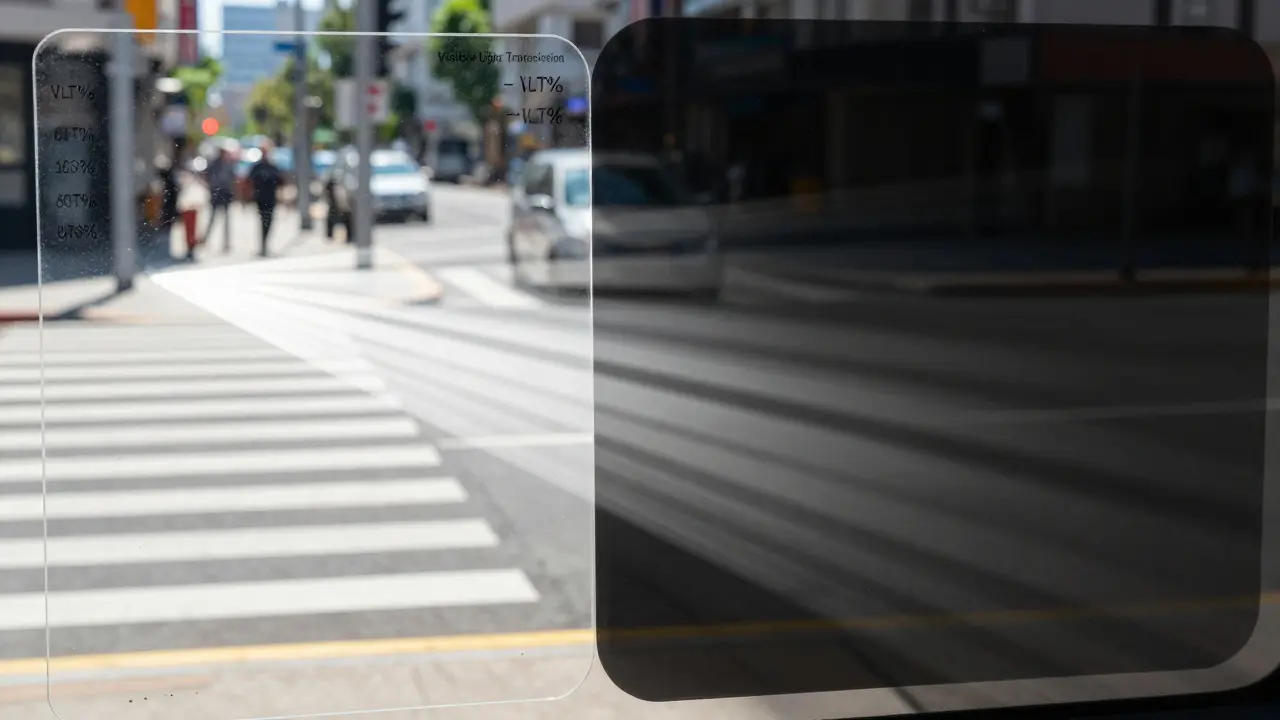
To navigate the legal landscape of window tinting, you first need to understand the metric that defines legality: Visible Light Transmission (VLT). VLT measures the percentage of light from the visible spectrum that passes through your window. A VLT of 100% means the glass is completely clear, allowing all light to enter. A VLT of 5% means only 5% of light gets through, which is essentially blacked out.
The lower the percentage, the darker the tint. While a 5% tint looks sleek and offers maximum privacy, it severely restricts your field of view. In the UK, the law does not use arbitrary descriptions like "dark" or "light." It relies on this precise numerical standard. When you buy window film, reputable suppliers will list the VLT percentage prominently. If they do not, you should be cautious, as unmarked films often fail compliance tests.
It is crucial to distinguish between the VLT of the film itself and the VLT of the combined system (glass plus film). Most automotive glass already filters some light. Adding a film reduces the total transmission further. For example, if your side glass transmits 70% of light and you apply a film with 35% VLT, the resulting combination might drop below the legal threshold, even if the film alone seemed acceptable on paper.
UK Legal Limits for Window Tint
The regulations in the UK are divided strictly by window location. Not all windows are treated equally because their role in driver safety varies significantly. The front windshield and the two front side windows are considered critical for visibility. The rear windows are given more leeway, assuming the vehicle is equipped with proper mirrors.
| Window Location | Minimum Legal VLT | Notes |
|---|---|---|
| Front Windshield | 75% | Tint is generally prohibited except for the top 140mm strip (visor band). |
| Front Side Windows (Driver & Passenger) | 70% | This includes the door glass. Must allow 70% of light through. |
| Rear Side Windows | No Limit* | *Only if the vehicle has both left and right exterior rear-view mirrors. |
| Rear Windshield | No Limit* | *Only if the vehicle has both left and right exterior rear-view mirrors. |
The 70% rule for front side windows is the most commonly misunderstood aspect. Many drivers believe they can apply a "light" tint and get away with it. However, 70% is very close to clear. To put this in perspective, factory-tinted glass often sits around 60-70%. Adding any aftermarket film to glass that is already slightly tinted will likely push you under the 70% limit, making it illegal. Police forces across the UK use handheld tint meters to check compliance during routine stops. If your reading falls below 70%, you will receive a Fixed Penalty Notice.
For the rear windows, the logic changes. If your car has functioning exterior mirrors on both sides, you can technically black out the rear windows completely. The assumption is that you rely on these mirrors rather than looking backward through the glass. However, if you remove one mirror or if it is broken, having dark rear windows becomes an immediate safety violation and an MOT failure point.
The MOT Test and Enforcement Risks
Failing to adhere to these limits has tangible consequences beyond a simple fine. The Ministry of Transport (MOT) test is the primary gatekeeper for vehicle roadworthiness in the UK. During an MOT, inspectors measure the VLT of your front side windows using calibrated equipment. If the result is less than 70%, the vehicle fails the test immediately. This is classified as a major defect, meaning you cannot legally drive the car off the test center premises until the issue is resolved.
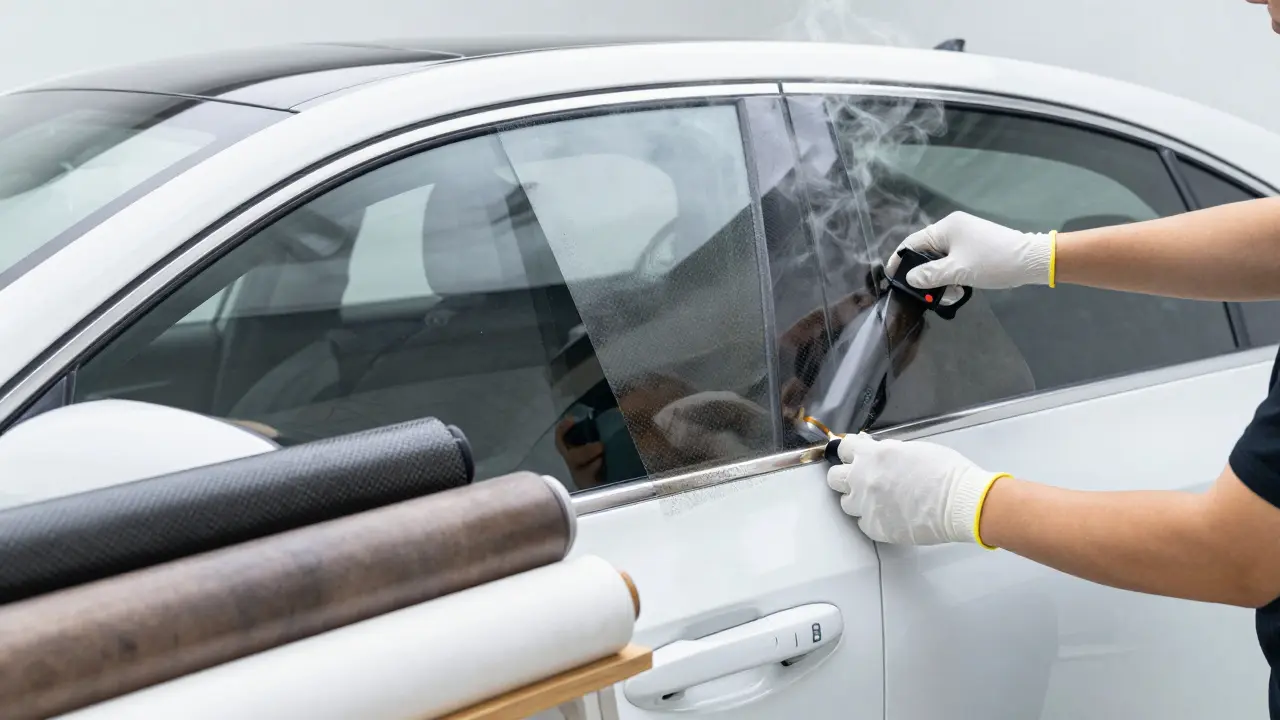
Resolving an MOT failure due to tint usually requires removing the film entirely. This is not a DIY task for most people. Professional removal involves steaming off the adhesive and cleaning the residue without scratching the glass. Once removed, you may find that the adhesive has degraded over time, leaving behind stubborn glue that requires specialized solvents. Some owners choose to replace the glass entirely if the removal process risks damage, which is a costly outcome for a cosmetic upgrade.
Police enforcement is also becoming more data-driven. Many police forces now log vehicles with illegal tint in national databases. If you have been stopped once for illegal tint, there is a higher probability of being targeted in future stops. Furthermore, insurance companies may view illegal modifications as a breach of policy terms. If you are involved in an accident where poor visibility due to illegal tint contributed to the collision, your insurer could deny coverage, leaving you liable for damages.
Protective Benefits Beyond Aesthetics
Despite the strict regulations, many drivers still opt for window tinting, particularly for rear windows or within legal limits for front windows. Why? Because high-quality window film offers significant protective benefits that go far beyond looking cool. The primary advantage is heat rejection. Standard glass allows infrared radiation to pass through, turning your car into an oven during summer months. Ceramic-based window films can block up to 90% of infrared heat, keeping the cabin cooler and reducing the load on your air conditioning system.
Another critical benefit is UV protection. Prolonged exposure to ultraviolet rays fades dashboard materials, cracks leather seats, and degrades upholstery colors. Quality window films block 99% of harmful UV rays, preserving the interior condition of your vehicle. This is especially important for used car sellers who want to maintain resale value. A pristine interior commands a higher price than one that has been bleached by the sun.
Safety and security are also enhanced by window film. When glass shatters during an accident or a break-in attempt, the film holds the shards together. This prevents sharp glass from flying into the cabin and injuring occupants. It also makes it harder for thieves to smash windows quickly to grab valuables. Additionally, some films offer glare reduction, which can reduce eye strain during long drives, particularly when driving towards the setting sun or following vehicles with bright headlights.
Choosing the Right Film Type
Not all window films are created equal. The market offers several types, each with different properties regarding legality, durability, and performance. Understanding these differences helps you make an informed choice that balances aesthetics with compliance.
- Dyed Film: The most affordable option. It absorbs heat but tends to fade over time, turning purple. It offers minimal heat rejection and no signal interference. Good for budget-conscious buyers who prioritize privacy over performance.
- Metalized Film: Contains tiny metallic particles that reflect heat. It is durable and adds strength to the glass. However, it can interfere with GPS, radio, and mobile phone signals. It also has a shiny, reflective appearance that may not suit all tastes.
- Ceramic Film: The premium choice. It uses non-conductive ceramic particles to block heat and UV rays without interfering with electronic signals. It remains color-stable over time and offers excellent clarity. While more expensive, it provides the best balance of protection and visibility.
- Carbon Film: A middle ground between dyed and ceramic. It offers good heat rejection, a matte finish, and does not fade. It does not interfere with signals but is not as effective as ceramic in extreme heat conditions.
For front side windows, where you must stay above 70% VLT, ceramic or carbon films are recommended. They provide subtle heat reduction and UV protection without altering the appearance of the glass significantly. For rear windows, where you have more freedom, you can choose darker shades based on your preference for privacy and style. Always ensure the installer verifies the VLT after application, as the combination of film and existing glass tint can vary between vehicle models.
Installation and Maintenance Tips
Professional installation is key to longevity and legality. Poorly installed film bubbles, peels, and distorts vision, which can itself be an MOT failure point. Look for installers who are certified by major film manufacturers. These professionals use clean-room environments to prevent dust contamination and have the expertise to cut patterns precisely for your specific car model.
After installation, maintenance is straightforward but requires care. Avoid rolling down windows for at least three to five days to allow the adhesive to cure fully. Clean the windows with a soft cloth and ammonia-free cleaner. Ammonia can break down the adhesive and degrade the film over time. Do not use abrasive sponges or razor blades on the interior surface unless necessary for bubble removal, and even then, proceed with caution.
If you notice bubbling or peeling, address it promptly. Small issues can often be fixed by re-saturating the film with soapy water and smoothing it out. Larger problems may require professional repair or replacement. Regular inspection ensures that your tint continues to meet legal standards and provides optimal protection.
Can I tint my front windscreen in the UK?
No, you cannot tint the main viewing area of your front windscreen. The law requires 75% Visible Light Transmission (VLT), which effectively means the glass must be clear. The only exception is a narrow strip at the very top, known as the visor band, which can be tinted to reduce glare from the sun. Applying film to the rest of the windscreen is illegal and will result in an MOT failure.
What happens if my window tint fails the MOT?
If your front side windows transmit less than 70% of light, you will fail the MOT test. This is a major defect, meaning you cannot drive the car legally until the tint is removed. You must take the vehicle to a professional who can safely strip the film and clean the adhesive residue. Once the glass returns to its original state or meets the 70% VLT requirement, you can book a retest.
Is it legal to have dark rear windows?
Yes, it is legal to have any level of tint on your rear side windows and rear windscreen, provided your vehicle is equipped with both left and right exterior rear-view mirrors. These mirrors compensate for the reduced visibility through the rear glass. If either mirror is missing or broken, having dark rear windows becomes a safety violation and an MOT failure.
Does window tint affect GPS and phone signals?
Metalized window films contain conductive particles that can interfere with radio, GPS, and mobile phone signals. If you rely heavily on navigation or in-car connectivity, avoid metalized films. Ceramic and carbon films are non-conductive and do not block signals, making them the better choice for modern vehicles with advanced electronics.
How much does professional window tinting cost?
Prices vary depending on the film quality and vehicle size. Basic dyed film installations may start around £100-£150 for a sedan. Premium ceramic films can range from £300 to £600 or more for full vehicle coverage. Always get quotes from certified installers and ask about warranties, as high-quality films often come with lifetime guarantees against fading and bubbling.