
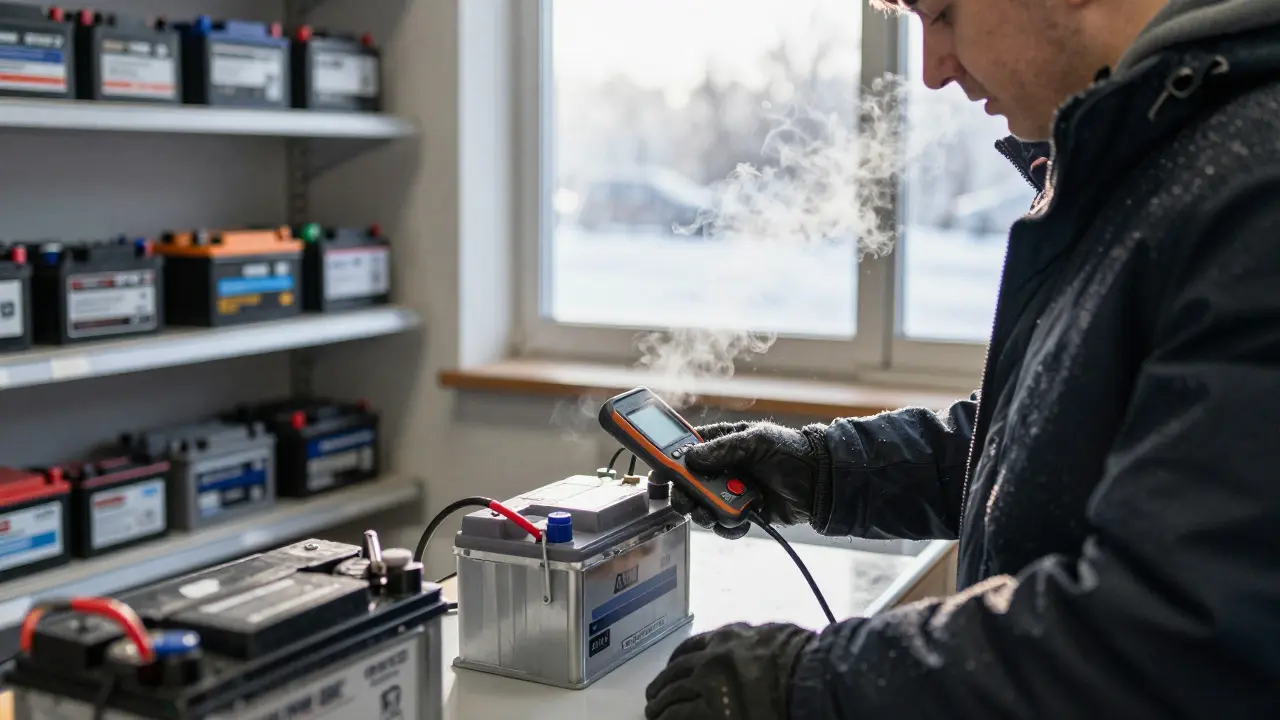
When temperatures drop below freezing, your car doesn’t just get cold-it starts to fail. A weak battery, thinning oil, and worn tires turn routine drives into risky missions. If you live where snow sticks to the road and ice forms overnight, skipping winter car maintenance isn’t an option. It’s the difference between starting your car on a Monday morning and being stranded on the side of the highway.
Check Your Battery
Car batteries lose up to 60% of their strength at 0°F. Most batteries last 3 to 5 years, and if yours is older than three, it’s already on borrowed time. Cold weather slows down the chemical reaction inside the battery, making it harder to deliver the amps needed to turn over the engine. You don’t need a fancy tool to test it-most auto parts stores like AutoZone or O’Reilly will test it for free. Look for signs like slow cranking, dim headlights at idle, or the battery warning light flickering. If the battery is more than 3 years old and tests below 70% capacity, replace it. A new AGM (Absorbent Glass Mat) battery handles cold better and lasts longer than traditional lead-acid ones.
Switch to Winter Tires
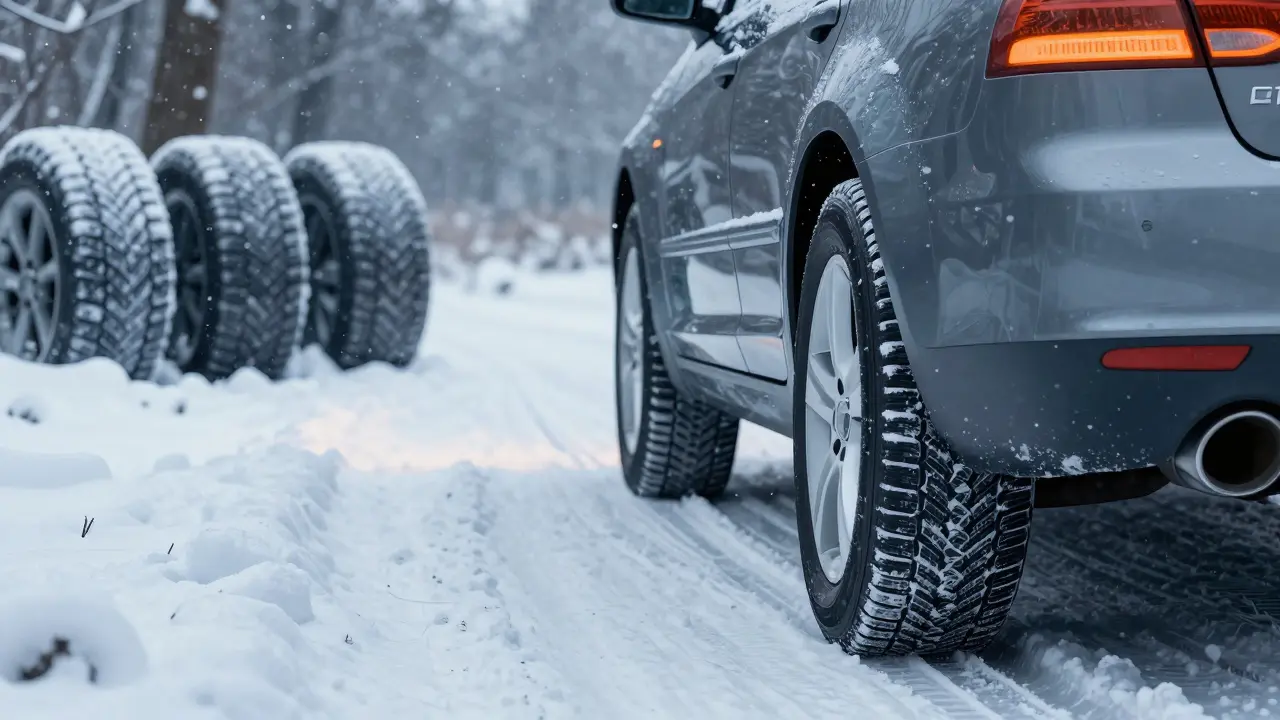
All-season tires aren’t made for ice and packed snow. They harden in cold weather, losing grip. Winter tires use softer rubber compounds and deeper treads with tiny grooves called sipes that bite into snow. Studies from the Canadian Automobile Association show winter tires reduce braking distances by up to 40% on icy roads compared to all-seasons. Don’t wait until the first snowstorm to install them. Put them on when temperatures consistently drop below 45°F. You’ll need four matching tires-never mix winter and all-season tires on the same vehicle. If you don’t want to buy a full set, consider buying used winter tires from a trusted shop. Just check the tread depth: you need at least 6/32 inch for safe winter driving.
Use the Right Engine Oil
Thick oil doesn’t flow well in freezing temps. If your owner’s manual says 5W-30, don’t switch to 10W-40 just because it’s "stronger." The "W" stands for winter, and the number before it tells you how well the oil flows in cold. Lower numbers mean better cold-weather performance. For most cars in freezing climates, 0W-20 or 5W-30 synthetic oil is ideal. Synthetic oils resist thickening better than conventional ones and protect engine parts during startup, when most wear happens. Check your oil level monthly-cold air can make oil contract, giving you a false low reading. Always check when the engine is cold and on level ground.
Top Off Antifreeze and Check the Cooling System
Antifreeze isn’t just about preventing freezing-it also stops corrosion and helps regulate engine temperature. A 50/50 mix of antifreeze and distilled water is standard. Test your coolant with a simple hydrometer, available for under $10 at auto stores. It tells you the freeze point. If your coolant freezes at -10°F but your winter lows hit -20°F, you’re at risk. Replace old coolant every 5 years or as recommended. Also, inspect hoses for cracks or soft spots. A burst hose in freezing weather can leave you with an overheated engine and no way to drive.
Inspect Wiper Blades and Fill Washer Fluid
Wiper blades crack and stiffen in cold weather. If they streak or chatter, replace them. Get winter blades-they have a rubber boot that prevents ice from building up on the frame. Don’t use regular washer fluid. It freezes on the windshield, leaving you blind. Use fluid rated for at least -20°F. Some go as low as -40°F. Keep a jug of it in your trunk. And never use hot water to defrost ice-it can crack your windshield. Use a plastic scraper and spray the fluid directly on the ice.
Check Your Heaters and Defrosters
A working heater isn’t just about comfort-it’s safety. If your defroster doesn’t clear fog or ice quickly, you’re driving blind. Test the front and rear defrosters before winter hits. If the rear one doesn’t work, the heating element may be broken. Check the cabin air filter too. A clogged filter reduces airflow and makes the heater less effective. Replace it every 12,000 to 15,000 miles. If your car has heated seats or steering wheel, test those as well. They help keep you alert and reduce the need to crank the heat to uncomfortable levels.
Keep an Emergency Kit in Your Car
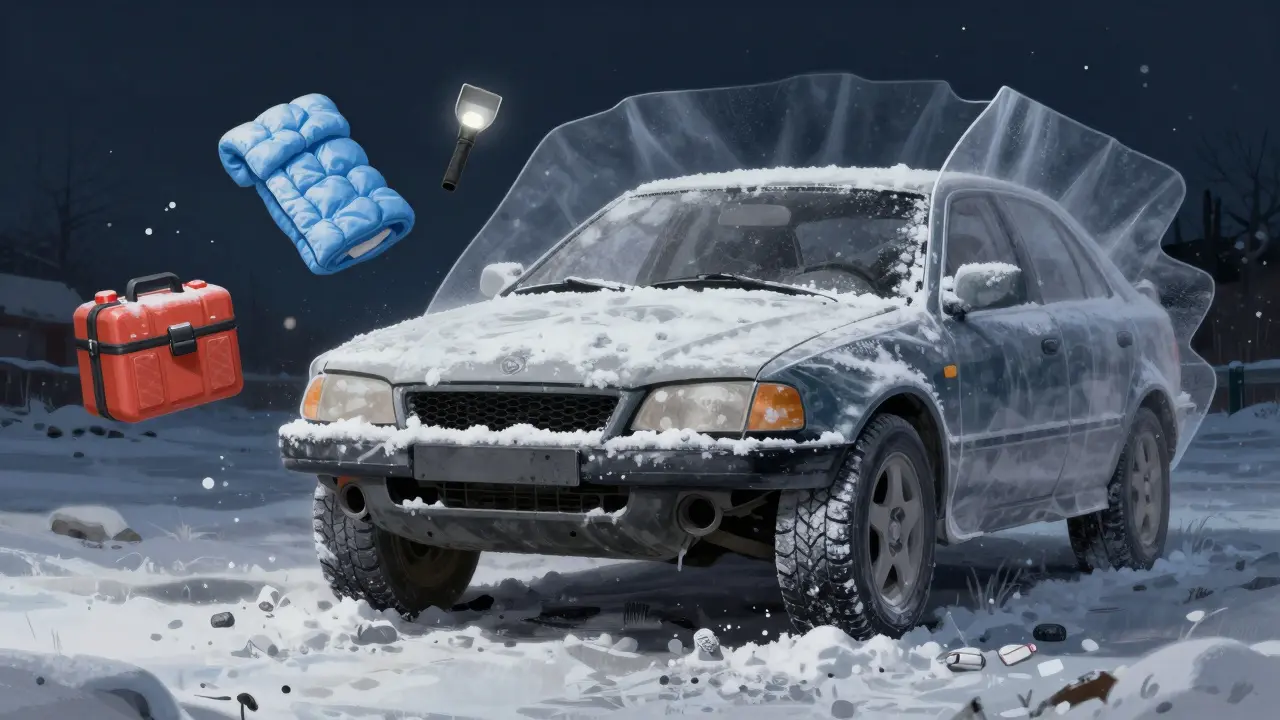
Even with perfect maintenance, things go wrong. Keep a kit in your trunk. It should include: a blanket, flashlight with extra batteries, ice scraper, small shovel, traction aids (like sand or cat litter), jumper cables, non-perishable snacks, water, and a phone charger. Add hand warmers if you live in extreme cold. Don’t rely on your phone’s battery-it drains fast in the cold. Keep a portable power bank in your coat pocket.
Don’t Ignore the Fuel System
Water in the fuel tank can freeze and block fuel lines. Modern cars have fuel filters that catch water, but older models are more vulnerable. Keep your tank at least half full. This reduces the space for condensation to form. Add a fuel additive designed for winter-like HEET-when temperatures drop below freezing. It absorbs moisture and prevents ice from forming in the fuel line. Don’t overdo it; one bottle per tank fill-up is enough.
Wash Your Car Regularly
Salt and road grime eat away at brake lines, suspension parts, and undercarriage. Wash your car every two weeks during winter, especially after snowstorms. Pay attention to the wheel wells and undercarriage. If you can’t get to a car wash, rinse the underside with a hose on a mild day. Don’t wash when it’s below freezing-you’ll just freeze mud onto the frame. Dry the door seals with a towel after washing to prevent them from freezing shut.
Test Your Lights
Shorter days and snowstorms mean you’re driving in low visibility. Check all lights: headlights, brake lights, turn signals, and fog lights. Replace bulbs in pairs-even if one is still working, the other is close to failing. Use LED bulbs if your car supports them-they’re brighter, use less power, and last longer. Clean the lenses with vinegar and water to remove haze. Dirty lenses cut light output by up to 30%.
What to Do If Your Car Won’t Start
If your car clicks but won’t turn over, the battery is likely dead. Try jumper cables with another car. If you have a portable jump starter, use that. Don’t keep cranking-it drains the battery faster. If the engine turns over but won’t start, check for fuel. Cold can cause fuel lines to freeze. Try adding fuel line antifreeze. If nothing works, call roadside assistance. Don’t sit in a running car in a garage to warm it up-carbon monoxide builds up fast.
When to Call a Mechanic
You can do most winter prep yourself. But if you notice: oil leaks, strange noises from the suspension, brake pedal sinking, or warning lights staying on, get it checked. A small issue now can become a big repair later. Don’t wait for a breakdown. Schedule a pre-winter inspection in October or early November. Most shops offer free winter safety checks.
Can I use summer tires in winter if I drive carefully?
No. Summer tires harden in cold weather and lose grip, even on dry roads below 45°F. On snow or ice, stopping distances increase dramatically. A study by the Tire Rack found that summer tires take nearly twice as long to stop on ice compared to winter tires. Driving carefully doesn’t fix physics.
How often should I check my tire pressure in winter?
Check it every two weeks. Tire pressure drops about 1 psi for every 10°F drop in temperature. Underinflated tires wear unevenly, reduce fuel economy, and increase the risk of blowouts. Always check when tires are cold-before driving.
Is synthetic oil worth the extra cost for winter?
Yes. Synthetic oil flows better in cold weather, protects the engine during startup, and lasts longer. The cost difference is usually $10-$20 per oil change. That’s less than the price of one tow truck call.
Can I drive with a cracked windshield in winter?
No. Cold temperatures make cracks spread faster. A small chip can turn into a full crack in a single freeze-thaw cycle. Even if it doesn’t impair vision, it weakens the glass and can fail during an accident. Get it repaired or replaced before winter hits.
Should I warm up my car before driving in winter?
Modern cars don’t need long warm-ups. Idle for 30 seconds, then drive gently for the first 5-10 minutes. Idling longer wastes fuel and increases emissions. The engine warms up faster while driving.
If you’ve done these five things-battery check, winter tires, proper oil, antifreeze, and washer fluid-you’ve covered 90% of winter car risks. The rest is about staying alert and being prepared. Your car won’t fail if you treat it right. And in winter, that’s not just convenience-it’s survival.
Comments
Tarun nahata
Winter car prep isn’t optional-it’s your lifeline when the snow hits. I’ve been stranded in -25°C with summer tires and let me tell you, physics doesn’t care how ‘careful’ you are. Switching to winter tires was the single best decision I ever made for my car. Not just for snow, but for that slick black ice that sneaks up on you like a ghost. And AGM batteries? Game changer. My old lead-acid would whimper at -15, now it starts like a rocket. Don’t wait for the first snowflake-do it now, while the sun’s still out.
January 11, 2026 at 23:20
Aryan Jain
They don’t want you to know this but winter tire sales are controlled by oil companies. Why? Because if you use winter tires, you don’t need to drive as slow, so you use less gas. And synthetic oil? That’s just a scam to make you pay more. Real men use 10W-40 even in Alaska. And battery tests? Free? Nah, they’re just trying to get you to buy their overpriced junk. I’ve been driving since ‘98 with no winter tires and zero problems. They just want your money.
January 13, 2026 at 18:14
Nalini Venugopal
Just a quick note-‘wiper blades’ is plural, so it should be ‘replace them’ not ‘replace it.’ Also, ‘you’ll need four matching tires’-perfect grammar, love it. And thank you for mentioning the 6/32 inch tread depth. So many people don’t know that. Also, ‘distilled water’ for antifreeze? Yes. Tap water has minerals that gunk up the system. You’re doing great. Keep this up.
January 15, 2026 at 15:51
Pramod Usdadiya
Hey i just wanted to say this guide is super helpful i live in delhi and never thought i'd need winter car tips but my cousin in shimla sent me this and wow i learned so much. i never knew about the sipes in winter tires or that oil contracts in cold. i always checked my battery but never knew about agm. thanks for writing this. i'm gonna take my car to the shop next week. also dont wash when its below freezing? good to know i almost did that last year and my door seal froze shut for three days. oops.
January 17, 2026 at 12:41
Aditya Singh Bisht
Look, I’m not a mechanic, but I’ve survived three winters in the Rockies with nothing but this list and a little grit. Battery check? Done. Winter tires? Installed by October 15. Synthetic oil? Always. Antifreeze? Tested with a $8 hydrometer from Walmart. Washer fluid? -40°F rated, jug in the trunk. That’s it. That’s the whole game. You don’t need to be an expert-you just need to be consistent. The difference between ‘I got to work’ and ‘I’m calling AAA’ is five minutes of your time in September. Do it. Your future self will high-five you.
January 18, 2026 at 05:13
Amit Umarani
‘Don’t use hot water to defrost ice’-correct. But you didn’t mention the danger of using metal scrapers. Plastic only. Also, ‘check your oil level monthly’-but you forgot to specify that you must check it cold, on level ground. You wrote that later in the oil section, but it’s buried. This is sloppy. And ‘replace bulbs in pairs’-yes, but why? Because the other bulb is near failure, not because ‘it’s safer.’ That’s not why. It’s because the lumen output degrades over time and mismatched brightness creates uneven illumination. Fix the reasoning.
January 19, 2026 at 13:34
Noel Dhiraj
Man this is gold. I used to think winter prep was just about scraping ice. Turns out it’s like giving your car a winter coat and a warm blanket. I’m gonna start doing the washer fluid thing-never thought about it freezing on the glass. And the emergency kit? I had jumper cables and a flashlight, but I never thought of sand or hand warmers. That’s smart. I’m printing this out and hanging it on my garage wall. Thanks for writing this like a real person who’s been there. You saved me from a bad winter.
January 20, 2026 at 10:23
vidhi patel
It is imperative to note that the assertion regarding the 40% reduction in braking distance on icy roads is derived from a study conducted by the Canadian Automobile Association, which, while reputable, is not peer-reviewed. Furthermore, the recommendation to use 0W-20 synthetic oil assumes that the manufacturer’s specifications are strictly adhered to, which is not always the case in older vehicles. One must exercise caution when applying generalized advice to mechanically diverse models. Additionally, the phrase ‘don’t wait until the first snowstorm’ is colloquial and lacks precision. A more accurate phrasing would be: ‘Install winter tires when ambient temperatures consistently remain below 7°C.’
January 22, 2026 at 09:06
Priti Yadav
They’re lying about the battery test being free. I went to AutoZone and they said ‘we’ll test it’ then handed me a $120 quote for a new one. Same with the ‘used winter tires’ advice-half of them are bald and sold by shady guys in parking lots. And that ‘don’t use hot water’ thing? I’ve been doing it for years. My windshield never cracked. You’re all scared of everything. I drive a 2004 Corolla with summer tires and it’s fine. You people turn everything into a crisis.
January 23, 2026 at 07:10