
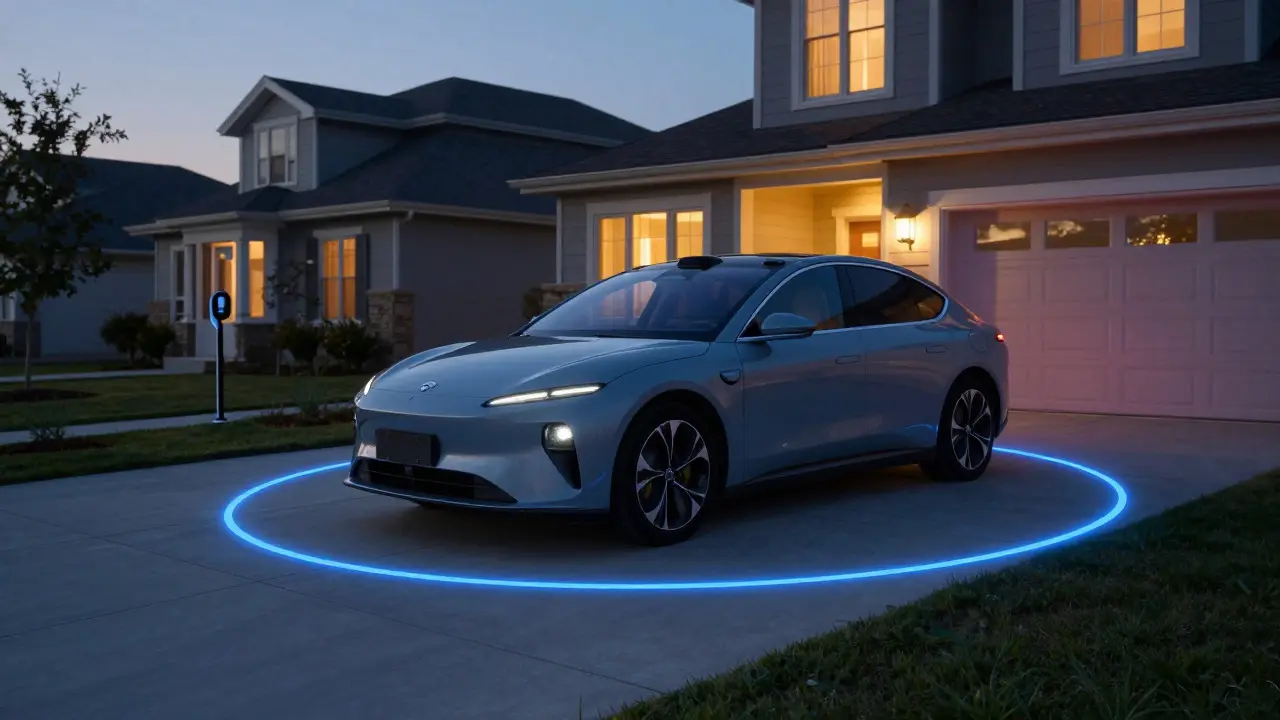
Imagine pulling into your driveway at night, parking your car in the usual spot, and walking inside. No cables to drag from the wall, no fumbling with connectors in the rain, and no need to remember if you plugged it in before bed. This is the promise of inductive charging, also known as wireless vehicle charging. It uses electromagnetic fields to transfer energy between a ground pad and the vehicle’s receiver coil without any physical contact. While plug-in chargers have been standard for over a decade, wireless systems are finally moving from laboratory experiments to real-world pilots across Europe and Asia.
The technology isn't magic; it's physics applied to power grids. But how efficient is it? Is it safe? And more importantly, will it actually replace the cable in your garage anytime soon? Let’s look at how these systems function, where they stand today, and what hurdles remain before they become mainstream.
How Inductive Charging Works Under the Hood
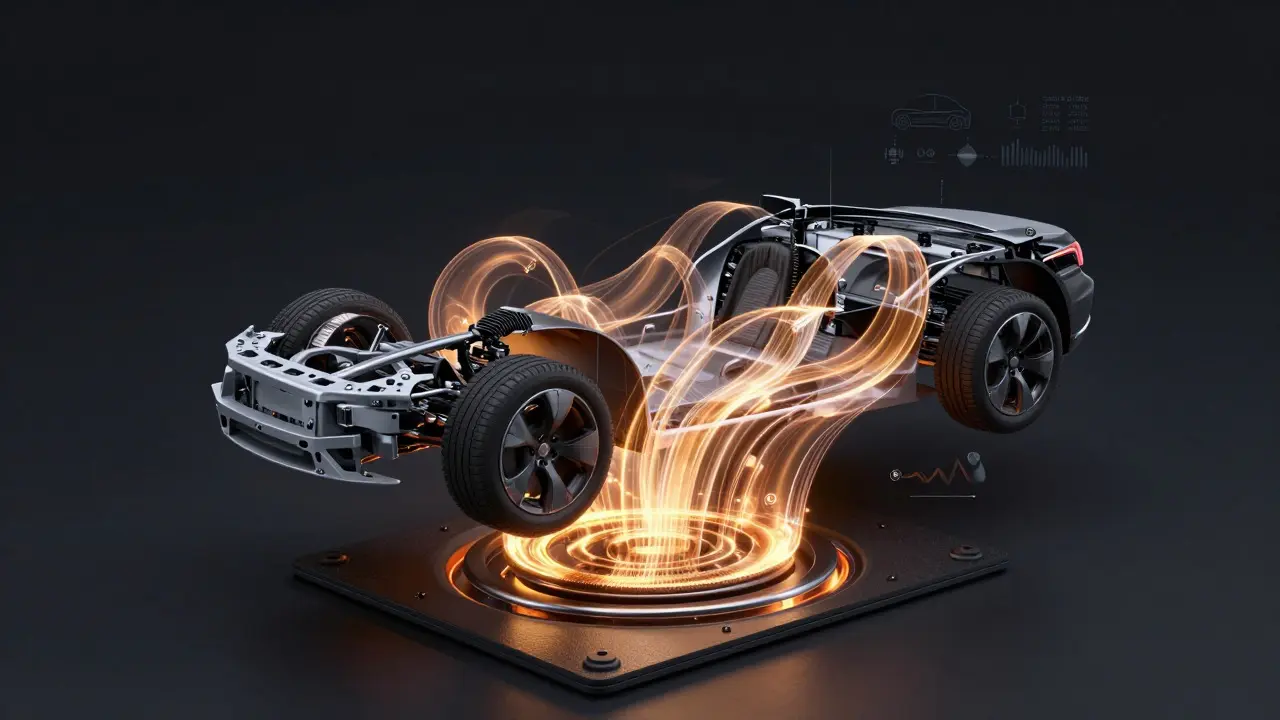
To understand why wireless charging feels like science fiction but works like reality, we need to break down the basic mechanism. At its core, magnetic induction relies on two coils of wire: one in the ground (the primary side) and one under your car (the secondary side). When alternating current flows through the ground coil, it creates a fluctuating magnetic field. This field passes through the air gap-usually 10 to 25 centimeters-and induces an electrical current in the vehicle’s coil. That AC current is then rectified into DC power to charge the battery.
This process sounds simple, but managing efficiency is tricky. Energy loss happens during conversion and transmission. Early prototypes lost significant power as heat. Modern systems use magnetic resonance coupling instead of simple induction to improve range and efficiency. By tuning both coils to the same resonant frequency, engineers can maintain high efficiency even if the alignment isn't perfect or the gap varies slightly. Think of it like pushing a child on a swing: if you push at the right rhythm (resonance), you transfer maximum energy with minimal effort. If you push randomly, most of the energy is wasted.
Here is a quick breakdown of the key components involved:
- Ground Pad (Primary Coil): Installed flush with the pavement. It contains the transmitter electronics and cooling systems.
- Vehicle Receiver (Secondary Coil): Mounted under the chassis. It includes the rectifier that converts AC to DC.
- Power Conversion System (PCS): Manages the communication between the grid, the pad, and the car to ensure safety and optimal charging rates.
| Attribute | Plug-In (Conductive) | Inductive (Wireless) |
|---|---|---|
| Efficiency | 95-98% | 90-95% (varies by alignment) |
| Installation Cost | Low ($500-$1,500) | High ($3,000-$6,000+) |
| User Convenience | Requires manual connection | Fully automatic |
| Durability | Cables degrade over time | No moving parts, weather-resistant |
| Charging Speed | Up to 350 kW (DC Fast) | Typically 7-22 kW (AC equivalent) |
Static vs. Dynamic Charging: Two Different Futures
When people talk about wireless charging, they usually mean static charging-parking your car over a pad at home or work. But there is another branch of this technology called dynamic wireless charging, which allows vehicles to charge while driving. These two approaches solve different problems and require vastly different infrastructure investments.
Static charging is the immediate goal for consumer adoption. It targets residential garages, office parking lots, and bus depots. The advantage here is simplicity. You park, the system detects the car, and charging begins automatically. For older adults or those with mobility issues who struggle with heavy charging handles, static wireless pads offer genuine independence. In Bristol, where I live, many older homes lack dedicated off-street parking. Installing a wireless pad in a narrow street bay could be far less intrusive than running thick cables up walls.
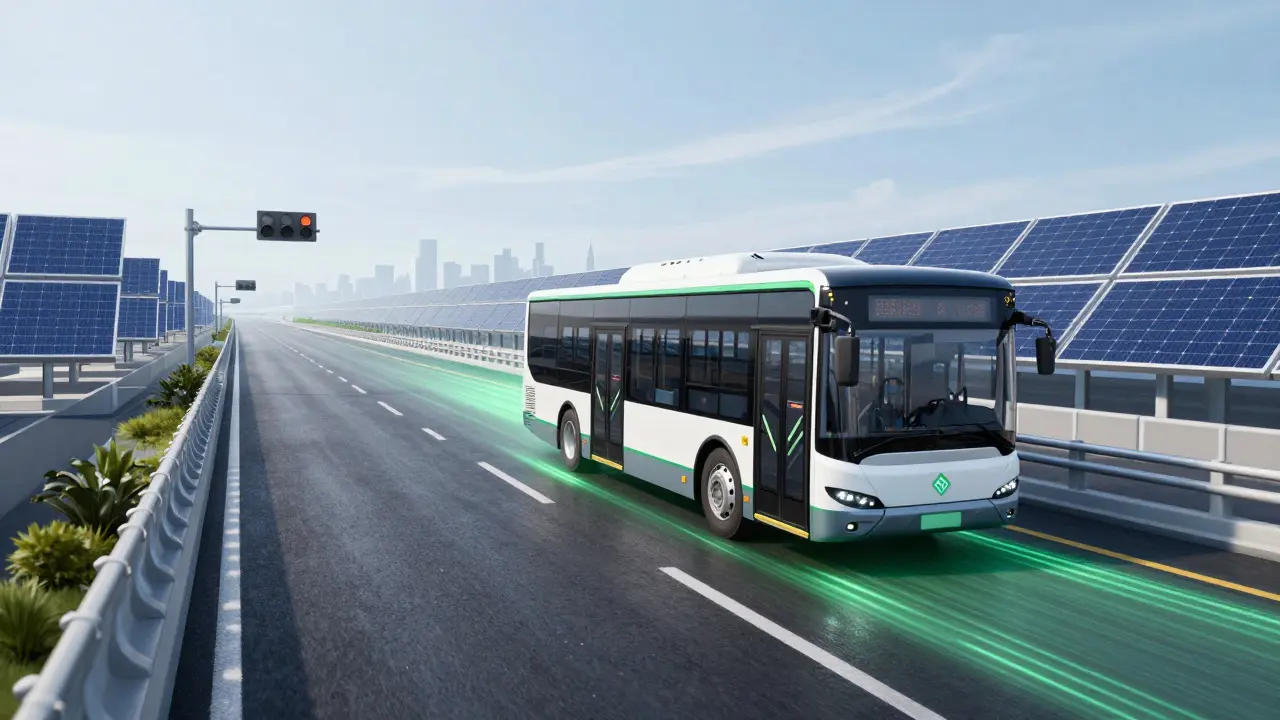
Dynamic charging, however, is the long-term game-changer. Imagine highways embedded with charging lanes. Electric buses or trucks drive over these lanes, receiving power continuously. This reduces the need for massive batteries, lowering vehicle weight and cost. Pilot projects in Sweden and South Korea have already tested this on public roads. The challenge? Infrastructure cost. Embedding coils in asphalt requires specialized materials that withstand traffic wear and tear while maintaining electromagnetic efficiency. Plus, the road surface must handle extreme temperatures without cracking the delicate electronics underneath.
Safety Standards and Electromagnetic Fields
A common concern among early adopters is health safety. "Is sitting on top of a giant electromagnet bad for me?" is a question I hear often. The short answer is no, provided the system meets international standards.
Wireless charging systems operate within strict limits defined by organizations like the International Electrotechnical Commission (IEC). Specifically, the IEC 61980-1 standard sets guidelines for wireless power transfer. These standards limit the strength of the electromagnetic fields (EMF) emitted by the pads. The fields used are non-ionizing, meaning they don’t have enough energy to damage DNA or cells, unlike X-rays or UV light. They are similar in nature to the fields generated by your Wi-Fi router or microwave oven, just stronger and more focused.
Furthermore, modern systems include multiple safety layers:
- Foreign Object Detection (FOD): Sensors detect metal objects (like coins or tools) left on the pad. If detected, the system shuts down immediately to prevent overheating.
- Living Object Detection (LOD): Cameras or radar sensors check for pets or small children near the active zone.
- Thermal Management: Temperature sensors monitor the coils. If they get too hot, power output drops automatically.
In practice, the EMF exposure from a properly installed wireless charger is often lower than standing next to a running internal combustion engine, which generates stray magnetic fields from its alternator and ignition system.
Efficiency Losses: Where Does the Energy Go?
If plug-in chargers are 95% efficient and wireless ones are around 90-93%, does that 5% difference matter? Yes, especially at scale. That lost energy turns into heat. In a single household, losing 5% might mean paying £1 extra per month on electricity bills. Not catastrophic, but noticeable.
The biggest factor affecting efficiency is alignment. If your car parks perfectly centered over the pad, efficiency peaks. If you’re off-center by even 5 centimeters, the magnetic field weakens, and losses increase. To combat this, manufacturers are developing multi-coil systems. Instead of one large coil, the ground pad has several smaller ones. The system activates only the coils directly beneath the vehicle’s receiver. This adaptive approach maintains high efficiency regardless of minor parking errors.
Another factor is the air gap. Thicker carpets, uneven driveways, or raised suspension on SUVs increase the distance between coils. Since magnetic field strength drops rapidly with distance, larger gaps reduce efficiency. Most current systems are optimized for sedans and compact cars. As electric SUVs become dominant, engineers are designing taller receivers and more powerful transmitters to compensate.
Cost Barriers and Market Adoption
Why isn’t every new electric car coming with wireless charging yet? Cost. Currently, a residential wireless charging kit costs three to five times more than a comparable plug-in unit. The hardware involves complex power electronics, shielding materials, and precision sensors. Mass production hasn’t kicked in yet to drive prices down.
However, the total cost of ownership tells a different story. Consider commercial fleets. A delivery company using plug-in vans spends hours each day plugging and unplugging vehicles. Drivers miss breaks, maintenance crews deal with worn-out ports, and downtime accumulates. Switching to wireless pads eliminates port wear, reduces labor time, and allows for automated charging schedules. For fleet operators, the higher upfront cost is offset by operational savings within two to three years.
Consumer adoption faces a chicken-and-egg problem. Car makers hesitate to install receivers because few homes have pads. Homeowners hesitate to buy pads because few cars have receivers. Breakthroughs may come from retrofits. Companies like WiTricity and ChargePoint are offering aftermarket kits that can be installed under existing EVs. This allows owners to test the convenience without buying a new car.
The Role of Smart Grid Integration
Wireless charging isn’t just about convenience; it’s a potential tool for grid stability. Because the connection is digital and bidirectional, wireless systems can communicate seamlessly with smart grids. This enables Vehicle-to-Grid (V2G) technology.
In a V2G setup, your car doesn’t just take power from the grid; it gives it back during peak demand hours. With plug-in systems, this requires robust physical connections that can handle reverse current flow without degrading. Wireless systems, being inherently sealed and dry, are less prone to corrosion and contact resistance issues. This makes them ideal candidates for frequent, automated V2G transactions. Imagine your car selling excess solar energy stored in its battery back to the neighborhood grid every afternoon, all without you touching a button.
Future Outlook: What to Expect by 2030
We are likely looking at a hybrid future. Plug-in chargers won’t disappear. They remain cheaper and faster for urgent top-ups. However, wireless charging will dominate specific niches:
- Residential Garages: For daily home charging, convenience wins.
- Public Parking: Airports, malls, and offices will install pads to attract EV drivers without worrying about vandalism or cable theft.
- Heavy Transport: Buses and trucks will use dynamic charging lanes to extend range without carrying heavy batteries.
By 2030, expect to see standardized protocols across brands. Today, some proprietary systems exist, but the industry is converging on SAE J2954 standards. This ensures that any compatible EV can charge on any certified pad, much like USB-C unified our devices. As manufacturing scales, prices should drop below $1,500 for residential units, making them accessible to average homeowners.
Can I install wireless charging in my apartment?
Yes, but it depends on your building's electrical capacity. Unlike plug-in chargers, wireless pads don't require exposed cables, making them safer for shared spaces. However, installation requires drilling into concrete for the ground pad. Check with your landlord or HOA first, as modifications to common areas may need approval.
Does wireless charging work in the rain or snow?
Absolutely. One of the biggest advantages of inductive charging is its weather resistance. The ground pad is sealed against water and debris. Snow accumulation might slightly reduce efficiency if it increases the air gap, but most systems adjust power output to compensate. You don't need to shovel snow off the pad to charge.
Will wireless charging slow down my EV battery life?
No. Battery degradation is primarily caused by high heat and deep discharge cycles. Wireless chargers typically deliver slower, steady AC power (similar to Level 2 plug-in chargers), which is gentle on batteries. In fact, by eliminating physical connector wear, you avoid potential voltage spikes that can sometimes occur with damaged plugs.
Are there any pets or wildlife risks?
Modern systems include Living Object Detection (LOD). If a cat or dog lies on the pad, sensors detect the movement and shut off the magnetic field instantly. Without LOD, prolonged exposure could cause mild heating, but current standards make this risk negligible for responsible users.
How much does a home wireless charger cost in 2026?
Prices vary by brand and power output. Basic 7kW systems start around £2,500 including installation. Higher-end 22kW models with advanced alignment features can cost up to £4,500. Compare this to plug-in chargers that cost £500-£1,000. The premium pays for convenience and durability.