
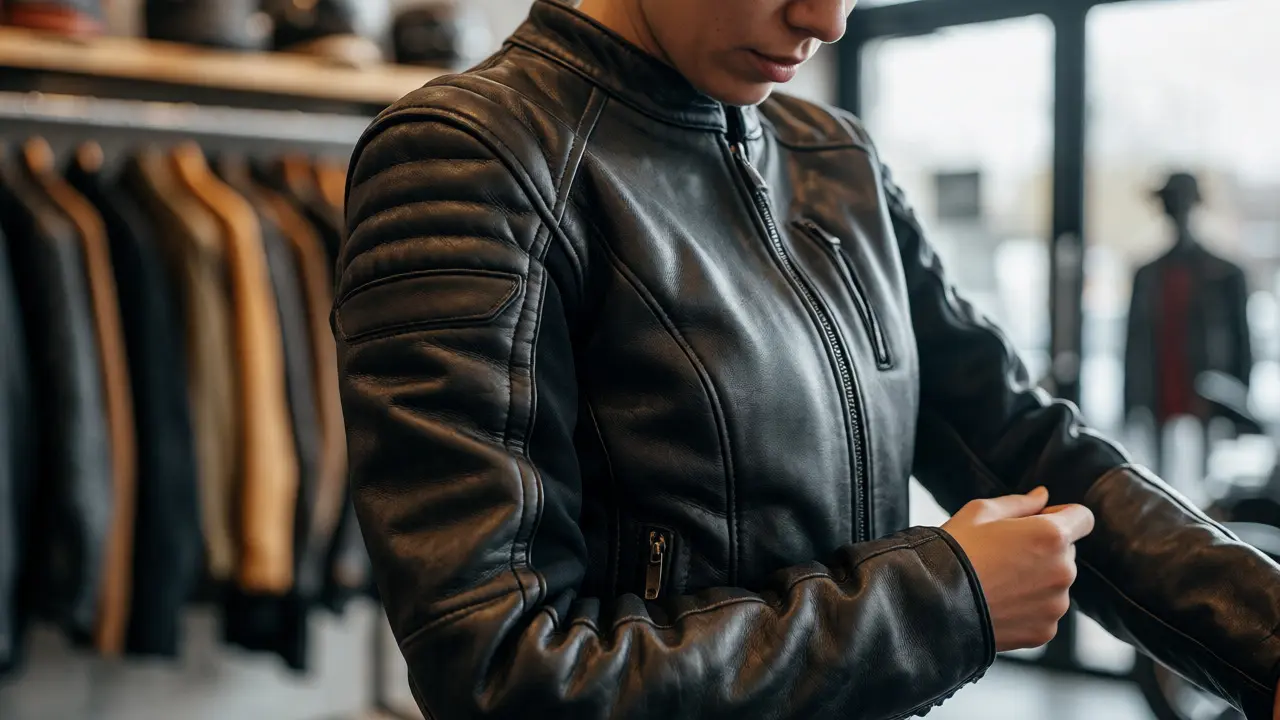
Ever tried on a men's motorcycle jacket and felt like you were wearing a tent? The shoulders droop, the waist is too wide, and the sleeves swallow your hands. It’s not just an annoyance; it’s a safety hazard. Women's motorcycle gear is protective clothing specifically engineered to match the female body’s proportions, ensuring armor stays in place during a crash. Unlike unisex options that are often just "shrunk down" men's cuts, true women-specific gear accounts for narrower shoulders, shorter torsos, and wider hips. If your gear shifts when you move, it won’t protect you when you slide.
Why Unisex Gear Fails Female Riders
Most manufacturers design their base patterns around the average male physique. When they create a "women's version," they often simply scale down the size chart. This approach ignores fundamental anatomical differences. A man’s center of gravity sits higher in the chest, while a woman’s is lower in the hips. This difference dictates how protective padding needs to be positioned.
Consider the elbow armor. On a men’s jacket, the armor is placed assuming longer arms relative to torso length. If you have a shorter arm-to-torso ratio, that armor ends up sitting above or below your elbow joint. In a crash, sliding friction generates intense heat. If the armor isn't directly over the bone, the fabric burns through, and your skin takes the hit. Proper motorcycle safety gear must align with your specific skeletal structure, not just your height.
The Critical Fit Areas: Jacket, Pants, and Armor
Getting the fit right isn't about vanity; it's about physics. Here is what you need to check before buying anything.
Jacket Proportions
A well-fitted women's jacket should contour to your natural curves without restricting blood flow. Look for these specific features:
- Narrower Shoulders: Women generally have less deltoid mass than men. If the shoulder seam hangs off your actual shoulder, the armor will shift inward toward your neck during impact.
- Chest Accommodation: Many brands now offer cut variations for different bust sizes. Some use stretch panels under the arms to allow room without adding bulk to the waist. Others use tailored darts to shape the fabric around the chest.
- Shorter Torso Length: Standard men's jackets are long to cover the back when leaning forward. For many women, this results in excess fabric bunching at the waist. A proper women's cut is shorter in the body but may have extended tails to cover the lower back when tucked in.
Pants and Hip Protection
Hips are the widest part of the female pelvis. Men’s pants often gap at the waist because they assume a straighter hip-to-waist ratio. This causes two problems: the pants fall down, and the knee armor slides out of position.
Look for pants with adjustable waist tabs or elasticated sides. These allow you to secure the fit without compromising the hip coverage. Knee armor placement is critical here. If the pants are too loose, the knee sliders or armor will drift toward the calf. You want the armor centered squarely on the kneecap. Some high-end brands offer separate knee armor pockets that can be adjusted vertically, which is a game-changer if standard sizing doesn't quite hit the mark.
Material Choices: Leather vs. Textile
You don't have to choose between looking good and staying safe. Both materials have evolved significantly, but they serve different purposes.
| Feature | Leather | Textile (Cordura/Nylon) |
|---|---|---|
| Protection Level | Superior abrasion resistance; slides rather than digs into pavement. | Good abrasion resistance if reinforced with Kevlar/Aramid threads. |
| Weather Versatility | Poor in rain unless treated; hot in summer, cold in winter without liners. | Excellent breathability; often comes with removable waterproof liners. |
| Maintenance | Requires conditioning; sensitive to UV damage and salt water. | Machine washable (check label); durable against everyday wear. |
| Fit Flexibility | Stretches slightly over time to mold to body; less forgiving initially. | More rigid structure; relies on adjusters for fit. |
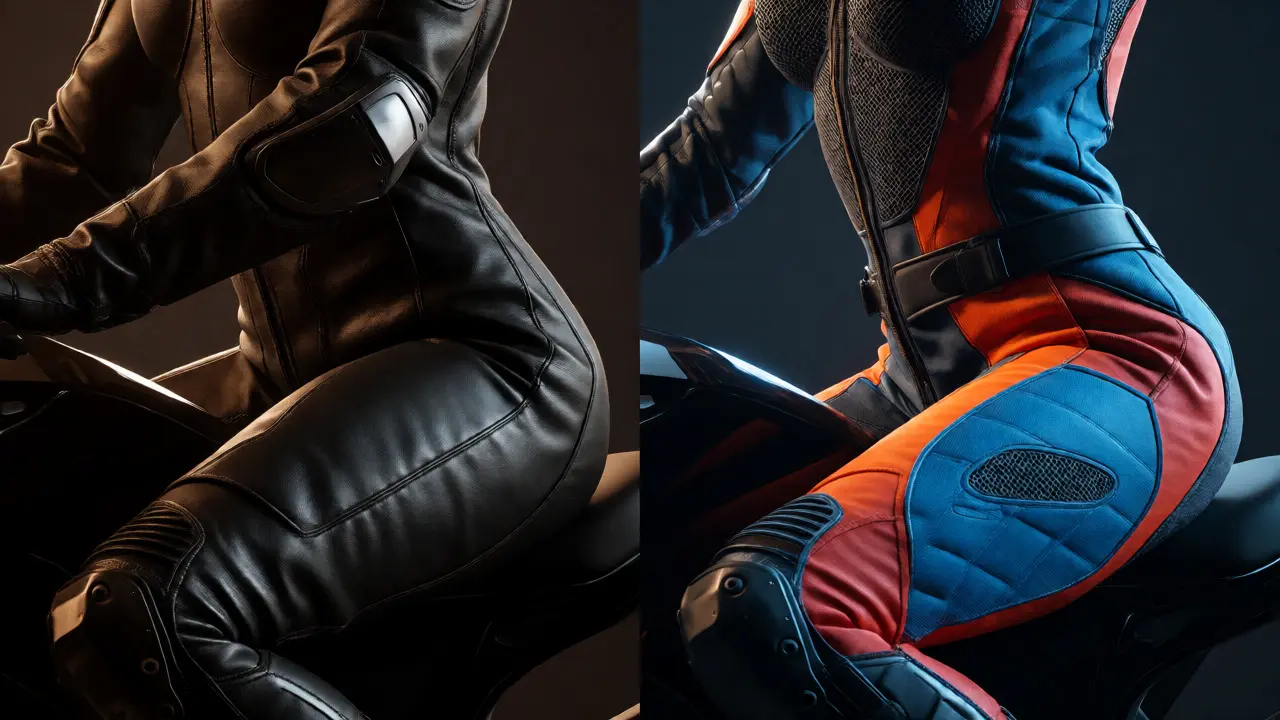
If you ride primarily in dry, warm conditions and prioritize maximum slide protection, leather remains the gold standard. However, for UK riders dealing with unpredictable weather, a high-quality textile suit with CE-rated armor and a breathable membrane is often more practical. Brands like Alpinestars and Dainese now produce textile suits with laser-cut perforations that rival leather in comfort while offering better thermal regulation.
Gloves and Boots: The Extremities Matter Most
Your hands and feet are the first points of contact in a low-speed drop. Women’s hands are typically smaller and have shorter fingers than men’s. Wearing gloves that are too big reduces grip sensitivity and control over clutch and brake levers.
Test the pinch test. Grab the tip of your index finger with your thumb. If there is excess material bunching up, the glove is too big. You want a snug fit that allows full range of motion without pinching. Look for gloves with pre-curved fingers, which mimic the natural resting position of your hand on the handlebars, reducing fatigue on long rides.
Boots present another challenge. Women’s feet are often narrower in the heel and wider in the forefoot. Standard men’s boots can cause blisters due to heel slippage. Seek out brands that offer specific women’s lasts (the mold used to shape the boot). Features like side zippers and adjustable calf widths are also common in women’s designs, accommodating different leg shapes more easily than rigid men’s touring boots.
Back Protectors: Don't Skip the Spine
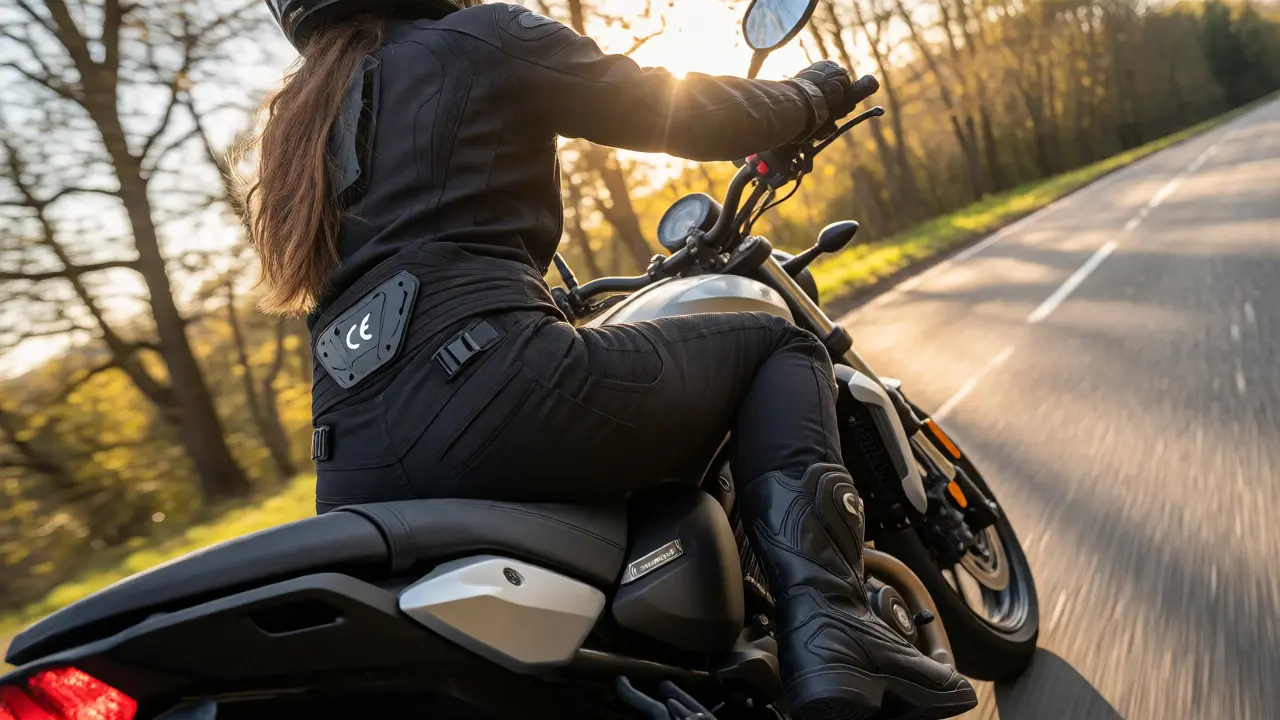
A lot of riders ignore back protection until they’ve had a scare. But the spine is vulnerable. While some jackets come with integrated foam pads, these offer minimal impact protection. For serious safety, invest in a standalone CE-certified back protector.
There are two main types: hard-shell plastic and soft-body armor. Hard shells deflect impact but can feel bulky. Soft-body armor, made from viscoelastic foam, hardens upon sudden impact but remains flexible during normal movement. For female riders, ensure the protector fits the curvature of your spine. Some universal protectors sit awkwardly on smaller frames, pushing the rider forward. Try it on with your jacket closed. If it creates a humpback posture, it’s too large or incorrectly shaped.
Buying Tips for Online Shoppers
Shopping for motorcycle gear online is risky because fit is so personal. Follow these rules to minimize returns:
- Measure Yourself: Don’t rely on your street clothes size. Measure your chest, waist, hips, inseam, and arm length. Compare these numbers to the brand’s specific size chart, not the generic S/M/L labels.
- Read Reviews for Fit Notes: Look for comments from other women. Phrases like "runs small in the shoulders" or "generous in the hips" are invaluable data points.
- Check Return Policies: Ensure the retailer accepts returns for worn items if the fit is wrong. You cannot assess comfort until you've sat on a bike or walked around for ten minutes.
- Layering Matters: Consider what you’ll wear underneath. If you plan to ride in winter with a thermal base layer, buy a size up. If you ride in summer with nothing but a t-shirt, stick to true size.
Common Pitfalls to Avoid
One major mistake is buying gear that feels tight when new. Motorcycle gear is meant to feel restrictive when standing still. When you get into a riding position-arms bent, knees tucked-the fabric stretches and the joints articulate. If it’s comfortable while standing in your living room, it will likely be too baggy on the bike, allowing armor to shift.
Another pitfall is ignoring ventilation. Overheating leads to dehydration and fatigue, which slows reaction times. In 2026, smart fabrics and mesh panels are standard in high-end women's gear. Use them. A jacket that cooks you alive is a jacket you’ll leave at home, leaving you unprotected.
Can I wear men's motorcycle gear if I am tall?
Yes, but with caution. If you are tall with a straight figure, men's gear might fit in length. However, you must check the shoulder width and waist taper. Often, tall women find that men's gear is too broad in the shoulders and too boxy in the waist, leading to poor armor alignment. Always try it on before committing.
Is CE certification necessary for all parts of the gear?
CE certification indicates that the armor has been tested for impact absorption and penetration resistance. While not legally required in all jurisdictions, it is the only reliable metric for safety. Prioritize CE Level 2 armor for elbows, knees, and back. Level 1 is acceptable for casual commuting, but Level 2 offers significantly better protection in high-impact scenarios.
How do I care for women's leather motorcycle gear?
Leather requires regular maintenance to remain supple and protective. Clean it with a dedicated leather cleaner after every few rides, especially if exposed to rain or road grime. Condition it every 3-6 months to prevent drying and cracking. Store it hanging, not folded, to maintain its shape and avoid creases where tears can start.
What is the best way to break in new motorcycle boots?
Wear them around the house for short periods. Walk up stairs, squat, and flex your ankles. Do not wear them on a long ride immediately. Breaking them in gradually prevents severe blisters. Using a leather conditioner on stiff areas can speed up the process. If they feel painful after 30 minutes of walking, they are likely the wrong size or shape for your foot.
Are airbag vests worth the investment for female riders?
Absolutely. Airbag vests provide critical protection for the chest, back, and neck-areas often left vulnerable by traditional armor. They deploy in milliseconds upon detecting a fall. For female riders, look for vests designed with shorter torso lengths to ensure the sensors trigger correctly and the inflation covers the vital organs without pushing the chin up uncomfortably.
Comments
Marisa Marroquin
I have spent more hours than I care to admit staring at the void of a poorly fitted jacket sleeve, wondering if my arms were actually shrinking or if the manufacturer simply decided that female riders possess skeletal structures akin to a newborn giraffe. It is genuinely distressing how many brands treat women's sizing as an afterthought, merely taking a men's pattern and engaging in what I can only describe as aggressive shrink-ray technology without any regard for the actual biomechanics of the human form. When you are sliding across asphalt at sixty miles per hour, the last thing you need is your elbow armor migrating three inches north because the cut was designed for someone with a torso length comparable to a giraffe's neck.
The sheer audacity of 'unisex' gear that fits no one properly is something that keeps me up at night, not just because of the safety implications, but because it feels like a personal insult to our existence on two wheels. We deserve gear that acknowledges our curves rather than fighting them, and until every major brand realizes that a narrower shoulder does not equal a smaller person, we will continue to be dressed in ill-fitting tents that offer protection only in theory.
October 24, 2026 at 03:38
Kathy Mccoy
It’s totally valid to feel frustrated by this! The industry has been slow to catch up, but knowing exactly where to look makes a huge difference. Don’t let bad fits discourage you from riding safely. There are brands out there doing great work with adjustable features specifically for us. Keep advocating for better options!
October 25, 2026 at 09:48
Ejike Ugwu
They don't want you to know this but the reason unisex gear fails is because they want you to buy two jackets one for summer one for winter so they can double their profit margins while you freeze or sweat through your expensive leather. It is all about control over the consumer wallet. They hide the real fit issues behind marketing buzzwords like ergonomic design when really they just want to sell you junk that falls apart in six months. You think they care about your safety? No they care about your subscription to their lifestyle brand which forces you into obsolescence before you even crash. It is a conspiracy of comfortlessness designed to keep you buying.
October 25, 2026 at 13:45
jyotshna Senapati
Honestly seeing people complain about fit when they haven't even measured themselves properly is exhausting. If you buy off the rack without trying it on you deserve the tent effect. Most women refuse to spend the extra twenty dollars for tailoring or adjusters and then cry about safety hazards. It is a lack of discipline not a lack of product. Just measure once and buy right instead of whining about the industry failing you when you failed to prepare.
October 27, 2026 at 07:52
Sundaraiah Kollipara
this is such a deep topic because it touches on how society views the body vs function. we often assume one size fits all but nature disagrees. i wonder if the focus should shift from gendered cuts to modular armor systems that adapt to individual anatomy regardless of sex. maybe the future isn't he or she but it is me and my specific bone structure. would love to hear thoughts on whether tech can solve this better than fashion trends
October 28, 2026 at 14:51
Charles Reah
To add to the discussion on fit, it is crucial to understand that motorcycle gear is engineered for the riding position, not the standing position. Many riders make the mistake of evaluating comfort while standing still. When you sit on the bike, your arms extend forward and your back rounds slightly. A jacket that feels tight across the shoulders when standing may provide perfect range of motion when seated. Conversely, a jacket that is loose while standing may bunch up and restrict movement when you lean into a turn. Always simulate the riding posture when testing gear, ideally by sitting on your motorcycle or a similar bench setup.
October 30, 2026 at 08:36
Sean Eagen
Stop buying cheap stuff. Buy CE Level 2. End of story. Safety first always.
October 31, 2026 at 07:21
Kieran Mitchell
Look, I've seen too many accidents caused by improper gear placement!! It is absolutely critical that the armor stays put!! If you are wearing generic unisex gear you are gambling with your life!! The manufacturers know this and they charge a premium for proper fit because they know you value your skin!! Do not skimp on the details!! Every millimeter counts when you are sliding down the highway at high speeds!!! Get the right fit or get hurt!!! Simple as that!!!
November 2, 2026 at 02:25
Darlene Hopkins
As someone who rides with a mixed group, I see this struggle constantly. It breaks my heart to see friends hesitate to ride because they can't find gear that makes them feel secure and comfortable. Validation of those feelings is important. We need to support brands that listen.
November 4, 2026 at 02:18
Sherri Jones
Great post! 🚗💨 One tip I’d add: check the zipper quality. Women’s gear often has different stress points due to bust accommodation, and weak zippers fail faster. Look for YKK #8 or higher. Also, don’t forget the drop tail feature for rain protection! 🌧️👍
November 5, 2026 at 09:48
Bryce Imbriale
Get out there and test everything. Your body is unique and so is your bike. Ride safe and stay visible. Let’s go!
November 6, 2026 at 14:42