
Most women who ride motorcycles know the feeling: you pick out the perfect jacket, gloves, and boots, then reach for the helmet-and it just doesn’t fit right. The cheeks squeeze too hard. The back of your head feels unsupported. The chin strap digs into your throat. If you’ve been there, you’re not alone. Many women end up wearing helmets designed for men because options for smaller, narrower head shapes are still underrepresented. But a helmet that doesn’t fit isn’t just uncomfortable-it’s dangerous.
Why Women’s Helmets Are Different
Women’s heads aren’t just smaller versions of men’s heads. They tend to have shorter foreheads, narrower jawlines, and rounder skull shapes. Most standard helmets are built on a male head form, which means they’re too long front-to-back and too wide side-to-side. That mismatch creates pressure points, poor visibility, and even neck strain during long rides. A helmet that doesn’t sit right can shift during impact, reducing protection exactly when you need it most.Brands like Shoei, a Japanese helmet manufacturer known for precision fit and high-quality materials, first introduced women-specific models in the early 2010s, and since then, companies like Arai, a premium helmet brand that uses hand-laid fiberglass shells and custom internal padding, HJC, a Korean brand offering affordable, high-safety helmets with multiple shell sizes, and LS2, a Spanish brand that designs compact shell shapes for smaller heads have followed suit. These aren’t just “pink versions” of men’s helmets-they’re engineered from the ground up for female head shapes.
How to Measure Your Head Correctly
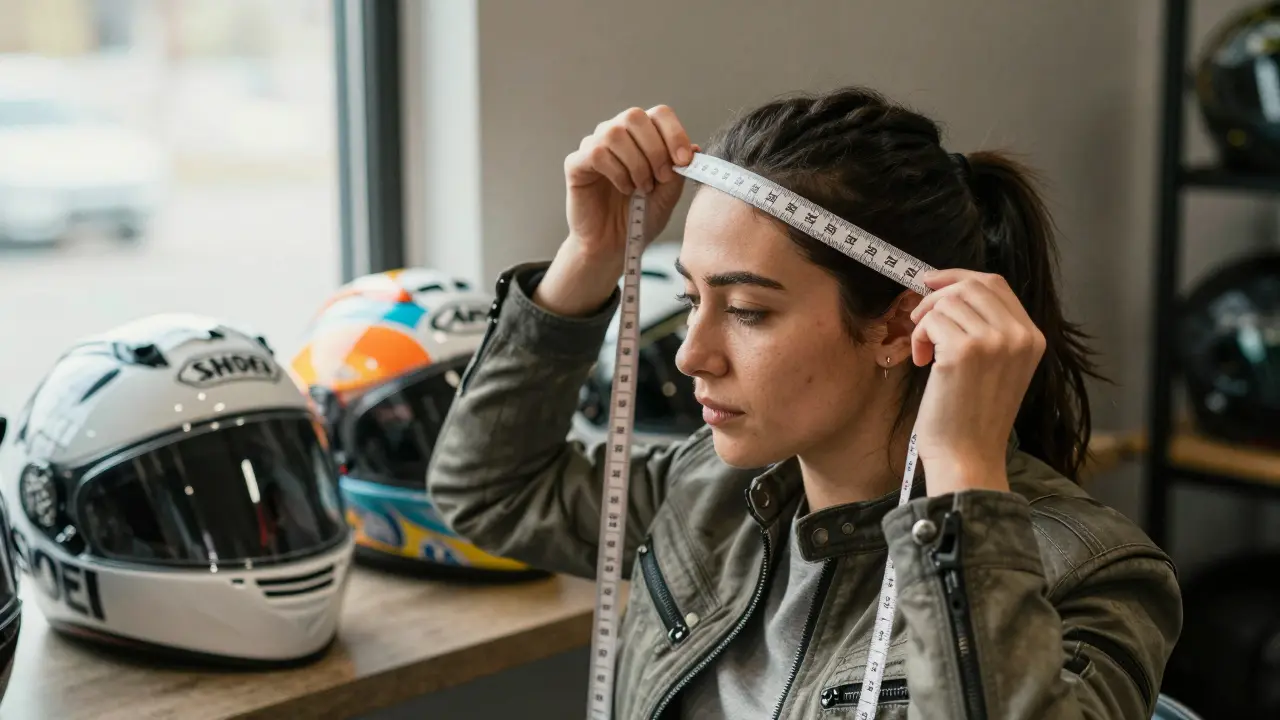
You can’t guess your helmet size. Even if you’ve worn a medium in the past, that doesn’t mean it’s right now. Helmet sizing varies wildly between brands. Here’s how to get it right:- Use a soft tape measure. Wrap it around your head just above your eyebrows and ears-the widest part of your skull.
- Take the measurement in centimeters. Most helmet brands use metric sizing.
- Repeat three times and use the largest number. Your head expands slightly when you move.
- Compare your number to the brand’s size chart. Don’t rely on S/M/L labels-they’re not standardized.
For example, a head measuring 54 cm might fit a small in Shoei but a medium in HJC. Always check the specific chart. Many riders make the mistake of sizing up for comfort, but a loose helmet moves around during a crash. A snug fit is safer.
Key Features to Look For
Not all helmets are built the same. Here’s what matters most for safety and comfort:- Multi-density EPS foam: This is the inner lining that absorbs impact. Better helmets use different densities of foam in different zones-softer at the temples, firmer at the crown-to manage energy more effectively.
- Adjustable cheek pads: Many women’s helmets now come with removable or interchangeable cheek pads. This lets you fine-tune the fit without buying a new helmet.
- Extended rear skull coverage: Women often have shorter necks. Helmets with a deeper rear shell reduce pressure on the occipital bone and prevent the helmet from riding up.
- Lightweight shells: Helmets made with fiberglass, carbon fiber, or advanced composites weigh less than polycarbonate. A lighter helmet reduces neck fatigue on long rides.
- Anti-fog and pinlock-ready visors: Moisture buildup is a real issue. Look for helmets with built-in anti-fog coatings or the ability to install a Pinlock insert.
- Integrated sun visors: No need to carry extra tinted shields. Many modern women’s helmets include a flip-down sun visor that works with the main shield.
Don’t be fooled by flashy graphics or Bluetooth speakers. Those are nice extras, but they don’t save your life. Focus on the core safety features first.

Safety Certifications That Actually Matter
Not all safety labels are created equal. In the UK and EU, the ECE 22.06, the latest European safety standard for motorcycle helmets, introduced stricter impact testing and improved retention system requirements is the gold standard. It replaced ECE 22.05 in 2023 and is now mandatory for all new helmets sold in the UK.Look for the ECE 22.06 sticker on the back of the helmet. It’s a small, round label with a letter “E” followed by a number. That number tells you which country certified it. The sticker also includes the helmet’s model, size, and production date.
American riders should check for DOT, the U.S. Department of Transportation’s minimum safety standard, which requires impact absorption and chin strap strength tests, but it’s the bare minimum. Some riders also look for SNELL M2020, a voluntary standard that tests helmets at higher impact speeds and stricter thresholds than DOT or ECE. SNELL-certified helmets are often used in racing and offer an extra layer of protection.
Never buy a helmet without one of these certifications. A helmet without a label is not safe.
Fit Testing: The Real Way to Know It’s Right
Reading specs isn’t enough. You need to try it on. Here’s how to test a helmet properly:- Put it on. Don’t force it. If it takes more than a few seconds to slide on, it’s too tight.
- Check the cheek pads. They should press gently but not pinch. If your cheeks hurt after 10 minutes, it won’t get better.
- Move your head side to side. The helmet should move with your head, not slide around.
- Try to roll the helmet off your head with your hands. If it moves more than an inch, it’s too loose.
- Wear it for 15 minutes. Does your forehead feel pressure? Do your ears get squeezed? Any discomfort now will get worse on a 2-hour ride.
Never buy a helmet online without a return policy. Even if the size matches the chart, the shape might not. One rider in Bristol told me she went through four helmets before finding one that didn’t give her a headache after 30 minutes. That’s not rare.
Top 3 Helmets for Women in 2026
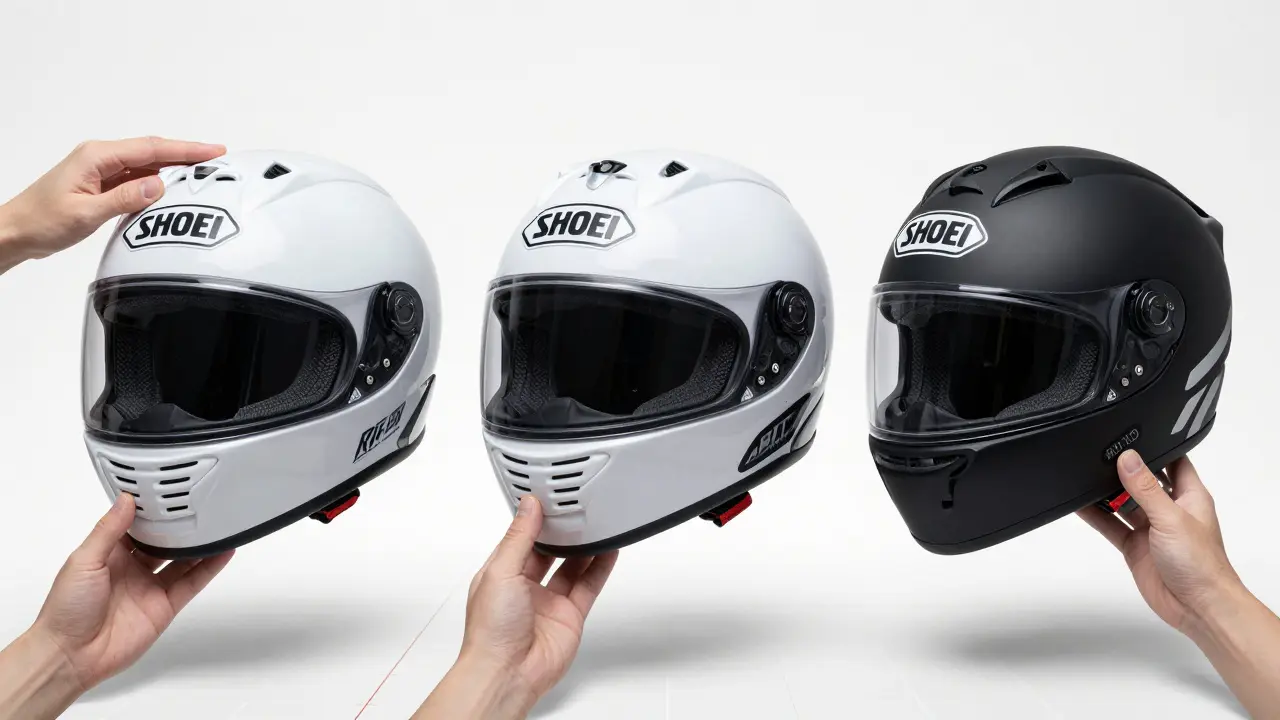
Based on fit, safety ratings, and rider feedback from UK riders, here are three top picks:| Helmets | Weight | Shell Size Range | Key Feature | Safety Rating |
|---|---|---|---|---|
| Shoei RF-1200 | 1,350g | 50-62 cm | Multi-shell sizes with custom cheek pads | ECE 22.06, SNELL M2020 |
| Arai Signet-X | 1,400g | 50-61 cm | Rounder shell shape for smaller heads | ECE 22.06, SNELL M2020 |
| HJC IS-17 | 1,280g | 50-60 cm | Lightweight, affordable, Pinlock-ready | ECE 22.06 |
The Shoei RF-1200 is the most expensive but offers the best fit for narrow, round heads. The Arai Signet-X is the most comfortable for long rides, with superior ventilation. The HJC IS-17 is the best value-under £300 and still meets the latest safety standards.
What to Avoid
Avoid these common mistakes:- Buying a helmet based on color or style alone
- Assuming your old helmet size still fits
- Ignoring the ECE 22.06 sticker
- Wearing a helmet that’s been dropped or in a crash
- Using a helmet past its 5-year expiration date
Helmets degrade over time. The foam compresses, the glue weakens, and the visor mechanism wears out. Even if it looks fine, a helmet from 2019 isn’t as safe as one from 2025. Replace yours every five years, no exceptions.
Final Thoughts
A helmet isn’t just gear. It’s your last line of defense. For women, finding the right one takes time, patience, and a little extra research. But once you find a helmet that fits like it was made for you-light, snug, quiet, and secure-you’ll wonder why you ever settled for anything else.Don’t rush it. Try on at least three models. Ask for help from a reputable dealer. And never, ever compromise on safety for looks or price.
Are women’s motorcycle helmets really different from men’s?
Yes. Women’s helmets are engineered for different head shapes-typically shorter foreheads, narrower jawlines, and rounder skulls. Standard helmets designed for men often leave pressure points on the cheeks and temples, and don’t support the back of the head properly. Women-specific models use custom internal padding and shell shapes to match these anatomical differences.
Can I use a men’s helmet if it fits?
If a men’s helmet fits your head shape perfectly-no pressure points, no movement, no discomfort-it’s safe to use. But many women find men’s helmets too long front-to-back or too wide side-to-side, which reduces protection. A helmet that fits well is safer than one that’s just the right size on paper.
What’s the best safety standard for helmets in the UK?
ECE 22.06 is the current mandatory safety standard in the UK and across the EU. It replaced ECE 22.05 in 2023 and includes stricter impact testing, better retention system requirements, and more realistic testing angles. Always look for the ECE 22.06 label on the back of the helmet.
How often should I replace my helmet?
Replace your helmet every five years, even if it looks fine. The foam inside degrades over time due to sweat, UV exposure, and temperature changes. After a crash, replace it immediately-even if there’s no visible damage. The internal structure may be compromised.
Do I need a Pinlock insert?
If you ride in cool, damp weather-common in the UK-a Pinlock insert is highly recommended. It’s a double-layer visor system that prevents fogging better than anti-fog sprays. Many women’s helmets come with Pinlock-ready visors, meaning you can easily add the insert later.
Is a lighter helmet always better?
Generally, yes. Lighter helmets reduce neck strain on long rides and improve control. Helmets made with fiberglass, carbon fiber, or advanced composites are lighter than polycarbonate. But weight alone doesn’t mean better safety. Always prioritize certified impact protection over weight.
Comments
Gina Grub
Why do we still pretend this is a new issue? I’ve been riding for 12 years and every helmet I bought before 2018 felt like my skull was in a vice. They don’t make women’s helmets because they don’t care about women-they make them because lawsuits are coming.
And yes, I’ve worn men’s helmets. They’re not ‘just bigger.’ They’re *wrong*. The weight distribution is off, the chin strap sits on my Adam’s apple, and the rear shell leaves my occipital bone exposed. No, I don’t want pink. I want engineering that doesn’t treat my head like an afterthought.
January 17, 2026 at 06:06
Nathan Jimerson
This is exactly the kind of practical guide every rider needs. I’ve seen too many people buy helmets based on looks and end up with headaches or worse. The ECE 22.06 point is critical-don’t skip checking the label. And replacing every five years? Non-negotiable. Safety isn’t optional.
January 18, 2026 at 05:18
Sandy Pan
It’s funny how we treat helmets like fashion accessories until the moment we need them to save our lives.
Women’s heads aren’t just ‘smaller men’s heads’-they’re a different architecture. We’ve been designing machines for centuries that fit male bodies, and now we’re finally acknowledging that biology isn’t a one-size-fits-all template.
But here’s the deeper question: why does it take a market of women demanding safety to force manufacturers to stop treating us like afterthoughts? Why is inclusion always a revenue stream, never a moral imperative?
And yet… here we are. Progress isn’t loud. It’s someone finally getting a helmet that doesn’t make them feel like their skull is being crushed by corporate indifference.
That’s worth celebrating-even if it’s long overdue.
January 19, 2026 at 19:06
Eric Etienne
Ugh. Another ‘women’s helmet’ article. Just buy a men’s one that fits. Stop treating women like they need special snowflake gear.
Also, SNELL? That’s for race car drivers who think their $800 helmet makes them faster. ECE 22.06 is enough. And no, I don’t care if your cheeks hurt. Suck it up.
January 20, 2026 at 17:20
Dylan Rodriquez
I’ve been riding since I was 19, and I still remember the first time I found a helmet that didn’t make me feel like I was wearing a brick. It wasn’t the brand. It wasn’t the color. It was the fact that the internal padding didn’t press into my temples like a vice.
What this article gets right is that fit isn’t about size-it’s about shape. And shape isn’t a marketing gimmick. It’s biomechanics.
But here’s what’s missing: access. Not every woman lives near a shop that stocks women-specific helmets. Online buying is risky. And if you’re on a budget, the ‘affordable’ options still cost more than your monthly rent.
So yes, the helmets are better. But the system that makes them hard to get? Still broken.
January 21, 2026 at 00:19
Amanda Ablan
Just wanted to add-when trying on helmets, don’t just check the fit while standing. Sit on your bike. Tilt your head forward like you’re looking at the road. That’s when you’ll feel if the chin bar’s too high or if the rear shell digs into your neck.
I had one that felt fine standing up, but on the bike? It lifted off my head every time I leaned forward. Took three tries to find the right one.
And yes, replace it every five years. I kept mine for seven. It looked fine. Until the day I crashed. The foam was basically dust inside. Scary stuff.
January 22, 2026 at 20:01
Meredith Howard
It is imperative to emphasize that the ECE 22.06 certification is not optional and must be verified by physical inspection of the label on the rear of the helmet
Additionally the five year replacement cycle is grounded in material science and should not be extended under any circumstances even if the helmet appears undamaged
Many riders underestimate the degradation of EPS foam due to environmental exposure and sweat absorption which compromises impact absorption capacity
It is also important to note that manufacturers do not universally apply the same internal padding configurations across all models even within the same brand
Therefore size charts must be consulted individually for each helmet model and not assumed to be consistent
Finally the use of Pinlock inserts is strongly recommended for riders in humid or temperate climates as it provides superior fog resistance compared to chemical anti-fog treatments
These are not suggestions they are requirements for safe operation
January 24, 2026 at 04:28
Yashwanth Gouravajjula
In India, most women ride with men’s helmets. No choice. But the fit? Terrible. My sister got migraines. Now she uses a HJC-small size, but the shape works. Not perfect, but better. We need more options here too.
January 24, 2026 at 17:49
Kevin Hagerty
Wow what a sob story. You’re telling me women can’t just wear a helmet like normal people? Next you’ll say we need gender-specific brake pedals.
Also ECE 22.06? Who cares. I’ve been riding for 20 years with a DOT helmet and I’m still breathing. SNELL? That’s for rich guys who think their helmet makes them a hero.
And replace it every 5 years? LOL. I’ve got one from 2012. Still looks brand new. Probably safer than your feelings.
January 26, 2026 at 01:38
Janiss McCamish
Try on at least three. That’s the only rule that matters. I went through five before I found one that didn’t give me a headache. No brand, no price, no color-it’s all about the shape. And if it hurts after 10 minutes? Walk away. It’s not going to get better.
January 26, 2026 at 14:29