
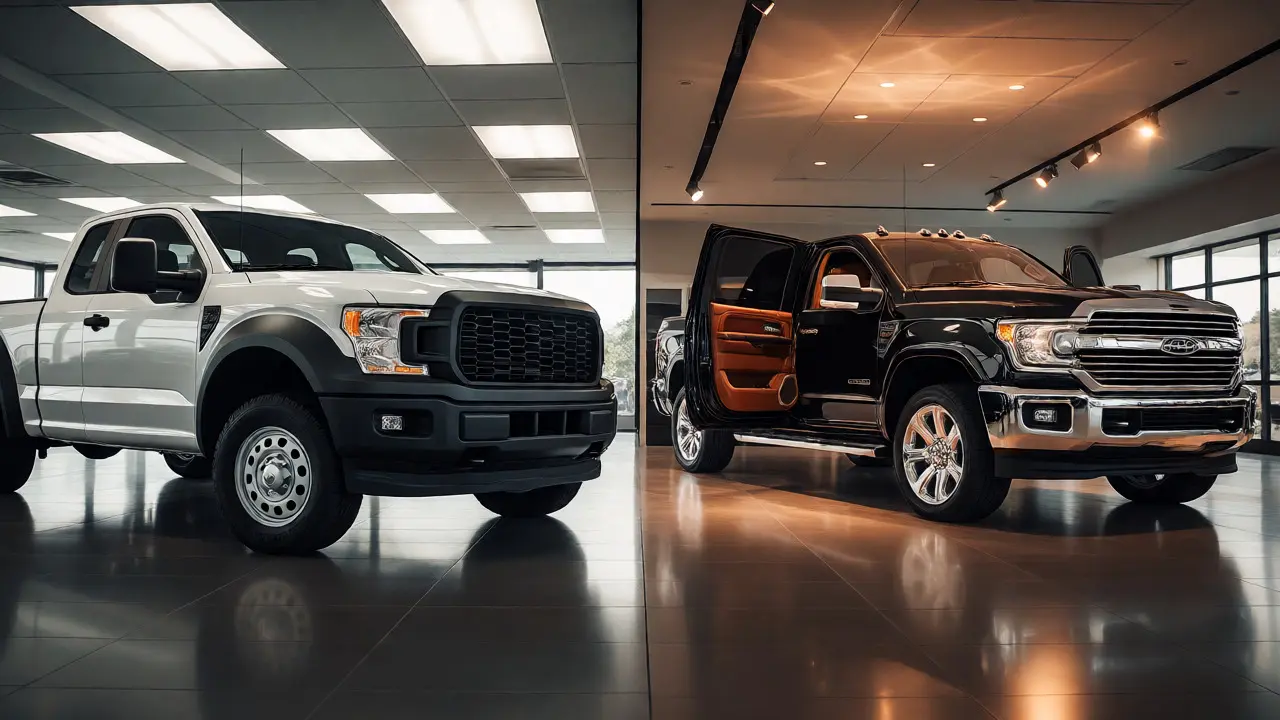
Imagine you need a new pickup. You walk into a dealership and see two trucks that look similar from the outside. One has plastic bumpers, steel wheels, and a basic radio. The other has leather seats, a massive touchscreen, and chrome everywhere. The price difference? It could be $30,000. Why pay double for the same engine block? Is it just branding, or does that extra cash buy you something real?
This is the classic dilemma for anyone buying a pickup truck. For decades, these vehicles were simple tools for hauling lumber or towing boats. Today, they are status symbols and family haulers. But choosing between a no-nonsense work truck and a high-end luxury model isn't just about ego. It’s about matching the tool to the job and your wallet.
Defining the Divide: What Makes a Work Truck Different?
A work truck is built for abuse. Think of the base-model Ford F-150 XL or the Ram 1500 Tradesman. These aren't trying to impress your neighbors at a barbecue. They are designed to survive job sites, muddy fields, and daily commutes without breaking a sweat.
The defining features are practical, not pretty:
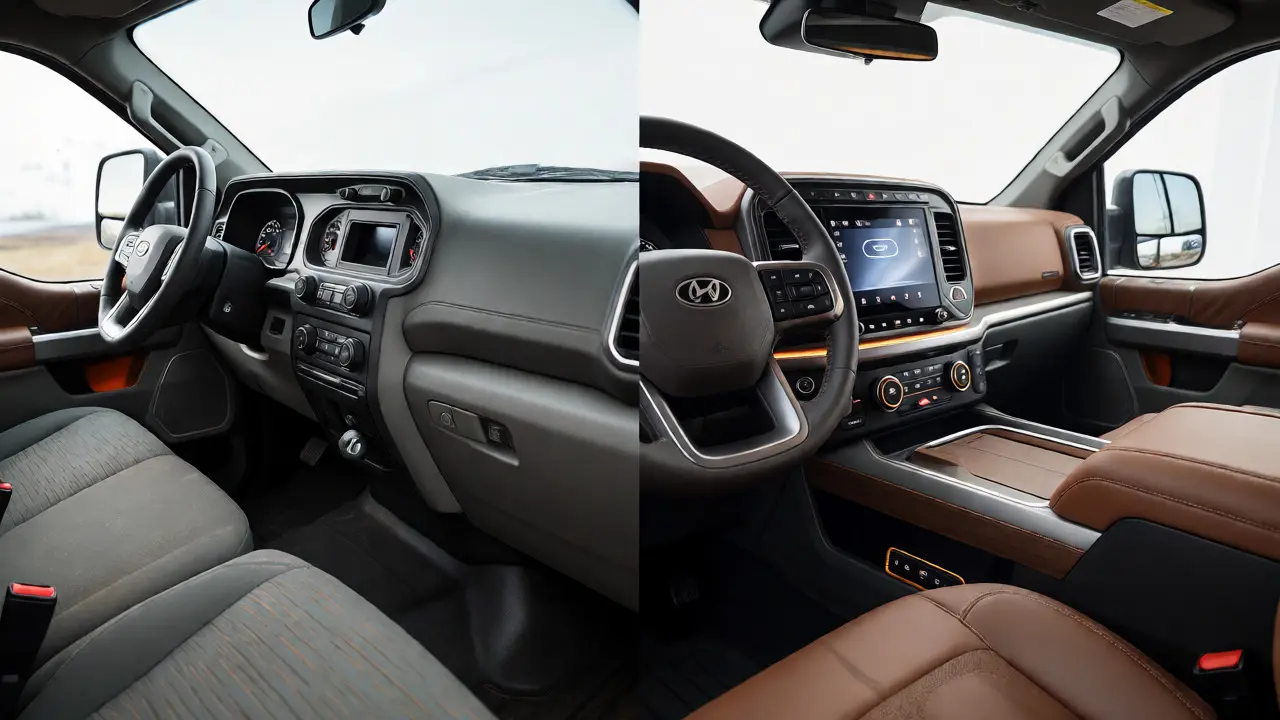
- Durable Materials: Instead of soft-touch plastics that scratch easily, you get hard, textured surfaces that can take a beating. Seats are often vinyl or heavy-duty cloth, easy to hose down if you track in mud.
- Utility-Focused Tech: You might find a backup camera, but you won’t find a 14-inch infotainment screen. The dashboard is analog or simple digital gauges because screens break when you drop a wrench on them.
- Suspension Tuning: The springs are stiffer. This reduces body roll when carrying heavy loads, even if it means a rougher ride on empty roads.
- Wheels and Tires: Steel wheels with hubcaps are standard. They are cheaper to replace than alloy rims and don’t crack when you hit a pothole or a curb.
When you buy a work truck, you’re paying for reliability and low maintenance costs. If you damage a bumper on a work truck, replacing it costs $300. On a luxury truck with sensors and painted finishes, that same repair might cost $1,500.
The Allure of Luxury: Comfort as a Standard
On the flip side, we have the luxury segment. Models like the Chevrolet Silverado High Country, GMC Sierra Denali, or the top-tier Ford F-150 Limited blur the line between a truck and a limousine. These vehicles prioritize driver comfort above all else.
Here is what that extra money actually buys you:
- Premium Interior: Real leather, wood trim, and heated/ventilated seats are standard. Noise insulation is significantly better, making highway driving quiet enough to hold a conversation at normal volume.
- Advanced Driver Assistance: Features like adaptive cruise control, lane-keeping assist, and automatic emergency braking are common. Some models offer hands-free driving capabilities on specific highways.
- Tech Integration: Large touchscreens, wireless charging, premium audio systems (like Bose or JBL), and over-the-air software updates keep the vehicle feeling modern.
- Ride Quality: Air suspension options allow the truck to lower itself for easier entry or raise up for off-road clearance. The ride is smoother, absorbing bumps that would rattle your teeth in a base model.
Luxury trucks are for people who spend hours in their vehicle. If you commute an hour each way, the difference in fatigue levels between a vinyl seat and a massaging leather seat is not trivial-it’s life-changing.
Price Breakdown: Where Does the Money Go?
Let’s look at the numbers. Prices fluctuate based on market conditions, but the gap remains consistent. As of 2026, here is a realistic comparison using popular full-size pickups.
| Feature Category | Base Work Trim (e.g., XL/Tradesman) | Mid-Level Trim (e.g., XLT/Laramie) | Luxury Trim (e.g., Limited/Denali) |
|---|---|---|---|
| Starting Price (USD) | $38,000 - $42,000 | $48,000 - $55,000 | $75,000 - $90,000+ |
| Engine Options | V6 Standard, V8 Optional | V6/V8 Choice, EcoBoost/Turbo | High-Output V8, Hybrid, or Diesel |
| Interior Material | Vinyl/Cloth | Cloth/Premium Cloth | Nappa Leather/Wood/Metal |
| Infotainment Screen | Small Display + Buttons | 8-12 inch Touchscreen | 12-15 inch Touchscreen + Digital Cluster |
| Resale Value Retention | High (if well-maintained) | Moderate | Lower Percentage (High Depreciation) |
Notice the jump. Moving from a mid-level trim to a luxury trim can add $25,000 to the sticker price. That is a lot of money for nicer seats and bigger screens. Does it make sense? Only if you value those specific attributes highly.
Performance and Capability: Myth vs. Reality
Many buyers assume a luxury truck is faster or stronger. Often, this is false. In fact, work trucks frequently outperform luxury models in pure utility metrics.
Towing Capacity: Base models often have higher payload ratings because they weigh less. Luxury trims add heavy soundproofing, larger wheels, and complex electronics, which eats into payload capacity. If you need to tow a 10,000-pound trailer regularly, a properly equipped work truck might actually be more capable than a heavily optioned luxury version.
Off-Road Ability: Don’t confuse "luxury" with "off-road." A Toyota Tacoma TRD Pro or a Ford Raptor is expensive, but it’s not a luxury truck in the traditional sense-it’s an adventure truck. True luxury trucks often have low-profile tires that pop easily on rocks. If you plan to go off-pavement, check the tire specs before assuming the most expensive trim is the best choice.
Fuel Economy: Luxury trucks rarely save gas. Larger engines, heavier weight, and aerodynamic drag from chrome accessories often mean worse MPG. However, some luxury hybrids, like the F-150 PowerBoost or Silverado Max, do offer efficiency gains, but usually only in city driving.
Total Cost of Ownership: The Hidden Factors
The sticker price is just the beginning. Insurance, repairs, and depreciation tell the real story.
Insurance Costs: Insuring a $85,000 Denali will cost significantly more than insuring a $40,000 Tradesman. Why? Because parts are more expensive. Replacing a headlight assembly on a luxury truck with LED matrix technology can cost $1,200. On a base model, it’s $150. Your premiums reflect this risk.
Depreciation: Here is the harsh truth: Luxury trucks lose value faster. A base work truck holds its value well because contractors always need cheap, reliable tools. A luxury truck competes with SUVs and sedans. When a new model comes out, the old luxury truck becomes outdated tech quickly. Over five years, you might lose 60% of a luxury truck's value, compared to 40% for a work truck.
Maintenance: Complex air suspensions and advanced driver-assist cameras require specialized calibration after accidents or alignments. A simple wheel alignment on a base truck might cost $100. On a luxury truck with sensors, it could be $300 because the cameras need recalibration.
Who Should Buy Which?
So, how do you decide? Ask yourself these three questions.
1. How many miles do you drive per year?
If you drive under 10,000 miles annually, the comfort benefits of a luxury truck are minimal. You won’t notice the noise cancellation or the massage seats if you’re barely in the car. Save the money. Get the work truck. If you drive 20,000+ miles, especially on highways, the luxury interior pays dividends in reduced stress and fatigue.
2. Do you carry passengers regularly?
A work truck cab is fine for solo drivers or occasional co-workers. But if you shuttle kids, clients, or family members weekly, the rear-seat legroom, climate controls, and entertainment screens in luxury trims matter. Guests judge the ride quality, not the bed liner.
3. Is this your primary vehicle?
If this truck replaces your sedan or SUV, you likely need the refinement of a luxury model. Daily driving involves stop-and-go traffic, grocery runs, and school drop-offs. A bouncy, loud work truck can feel punishing in urban environments. If you have another comfortable car for daily use and the truck is strictly for weekend projects or towing, stick with the work trim.
Related Concepts and Connected Topics
Understanding the work vs. luxury divide helps clarify other automotive choices. For instance, the rise of electric trucks like the Rivian R1T and Tesla Cybertruck complicates this binary. These EVs start at high prices, blurring the lines further. Are they luxury? Yes. Can they work? Rivian says yes, but the price tag suggests otherwise.
Also consider the midsize truck segment. Vehicles like the Honda Ridgeline or Hyundai Santa Cruz offer a middle ground. They provide unibody construction (like an SUV) for better handling while retaining truck utility. For many suburban users, a midsize truck offers the comfort of a luxury car without the full-size price tag.
Finally, think about aftermarket modifications. You can turn a base work truck into a comfortable cruiser by adding seat covers, upgrading the stereo, and installing a tonneau cover. This approach lets you pay for features you actually want, rather than bundling in unwanted tech. Conversely, you cannot easily downgrade a luxury truck to make it more rugged without voiding warranties or spending a fortune.
Is a luxury truck worth the extra cost for daily commuting?
Yes, if you spend significant time in the vehicle. The improved sound insulation, smoother ride, and advanced safety features reduce driver fatigue during long commutes. However, if your commute is short and mostly local, the cost may not justify the benefit.
Do luxury trucks tow more than work trucks?
Not necessarily. Work trucks often have higher payload capacities because they lack the heavy luxury equipment (leather, large screens, soundproofing). Always check the specific GVWR (Gross Vehicle Weight Rating) and towing package specifications rather than assuming the highest trim level equals maximum capability.
Which type of truck holds its resale value better?
Base work trucks generally retain a higher percentage of their value because demand from commercial buyers remains steady. Luxury trucks depreciate faster due to rapid changes in technology and style preferences among private buyers.
Can I use a luxury truck for actual work?
Absolutely. Many professionals prefer luxury trucks because they serve dual purposes: a client-facing vehicle during the day and a utility vehicle on weekends. Just be mindful that scratches and dents on expensive paint and chrome are costly to repair.
Are fuel costs higher for luxury trucks?
Typically, yes. Luxury trims are heavier and often come with larger engines or wider tires, which increases rolling resistance. While hybrid options exist, the average luxury truck gets slightly worse mileage than a comparable base model with a smaller engine.
Comments
Tamara Miller
Oh, please. Stop pretending this is a hard decision.
You know exactly what you're buying when you pick the luxury trim: it's a status symbol wrapped in leather, nothing more. The base model does the same job for half the price, and frankly, if you can't afford the maintenance costs without crying, maybe stick to public transit? It’s sad really.
September 13, 2026 at 21:50
john randall
Good breakdown of the resale value differences which people often overlook
September 14, 2026 at 23:56
Jacob Baby Official
Actually that analysis is fundamentally flawed because you are ignoring the psychological depreciation of the driver themselves. When you buy a work truck you are admitting defeat in the social hierarchy whereas the luxury buyer is asserting dominance over their peers through sheer financial waste. It isn't about utility it is about signaling and anyone who thinks otherwise is living in a fantasy world where logic still applies to human behavior.
September 15, 2026 at 23:28
Kyle Ware
The point about payload capacity being higher on base models is crucial here. Many buyers assume the top trim is always the most capable but the added weight from sound deadening and chrome actually reduces how much you can tow or haul effectively. If your primary use case is heavy towing check the GVWR on the specific trim level rather than just looking at the engine specs because that extra $20k might actually cost you capability.
September 16, 2026 at 13:19
Jeff Falcon
I completely agree with the sentiment regarding daily commuting and I think its important to note that while the sticker price difference is massive the monthly payment difference might be manageable for some families especially if they finance over a longer term like 72 or 84 months which unfortunately is becoming more common these days due to interest rates and inflation making new vehicles less accessible for average buyers who still want modern safety features like automatic emergency braking and lane keep assist which are standard on higher trims but optional or absent on base models so its not purely about luxury but also about mandatory safety tech integration that manufacturers bundle together.
September 17, 2026 at 02:53
Anthony Miller
It is absolutely pathetic that we have reached a stage in automotive history where a pickup truck requires the refinement of a limousine just to be considered acceptable by the masses. You people have lost all sense of proportion and practicality choosing comfort over function solely to impress neighbors who do not even care about your vehicle choices. This trend is destroying the very essence of what a truck was meant to be and it shows a deep societal decay in values that prioritizes superficial appearance over genuine utility and durability.
September 18, 2026 at 18:25
Chris Neal
Most people don't realize that the 'work truck' market has shifted too. Even base models now come with screens and backup cameras because regulations and consumer expectations changed. The real gap isn't just materials it's the software ecosystem. Luxury trucks get OTA updates that improve performance; base trucks stay static. That's the hidden feature set.
September 19, 2026 at 15:52
Alyson Karson
OMG yes!! The massage seats thing is no joke!! If u drive an hr each way u will literally feel like a diff person when u get home lol. Worth every penny imo dont listen to haters!!!
September 20, 2026 at 14:42
Susan Cole
I appreciate the balanced view on resale value. It is helpful to see the numbers side by side without too much bias toward one lifestyle choice over another.
September 21, 2026 at 21:24
michelle veluz
Wait... did anyone else notice the timing of this article?? Just as gas prices are spiking again?? Coincidence?? I think NOT. They want us to buy the hybrid luxury trucks so they can charge us double for insurance and repairs later. It’s all part of the plan to drain our wallets slowly while we sit in traffic feeling comfortable. Wake up people!!
September 22, 2026 at 11:40
Vishnu Vardhan Reddy M S
Classic American dilemma right there. In India we just take the auto-rickshaw and save the money for gold. But seriously nice comparison table though the depreciation stats look scary for the luxury owners. Good luck with those repair bills!
September 22, 2026 at 19:38
Savara Gunn
It sounds like you have thought this through carefully. Remember that your needs may change in five years so choose the option that gives you flexibility. Both paths are valid depending on your current life stage.
September 24, 2026 at 17:20
Iva Grekova
This is such a helpful guide for first-time truck buyers. I was torn between the two for months and seeing the total cost of ownership breakdown really helped me make peace with my choice. Thanks for sharing!
September 25, 2026 at 01:02