
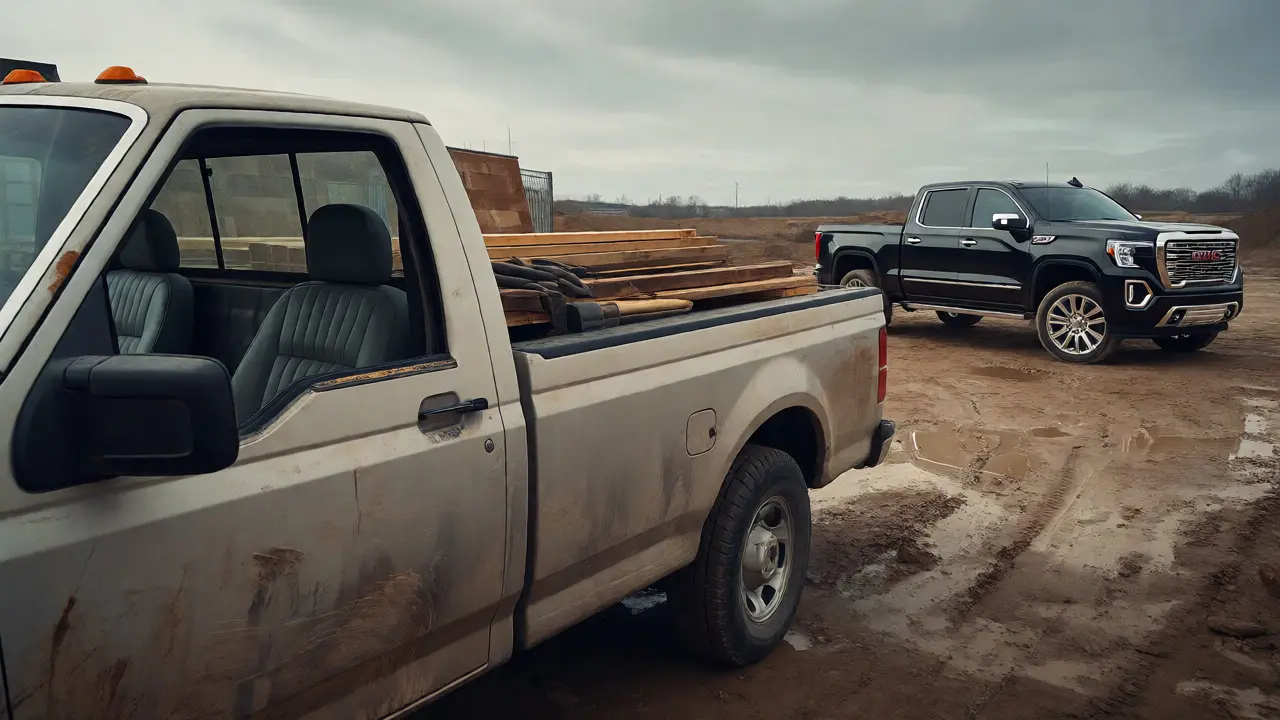
You’re standing in the dealership lot, keys in hand, torn between two trucks that look similar from a distance but feel worlds apart up close. One is built to haul lumber and survive job sites; the other is designed to impress at country clubs while still towing your boat. The gap between these two categories-work trucks and luxury pickups-has never been wider or more confusing. With prices spanning from $35,000 to over $100,000, choosing wrong means either paying for comfort you don’t need or suffering through a rough ride when you could have had leather seats.
This isn’t just about badges. It’s about what happens under the hood, inside the cab, and on your bank statement every month. We’ll break down exactly where the money goes, which features actually matter for your daily life, and how to decide if that extra $40,000 buys you value or just vanity.
The Core Difference: Utility Versus Comfort
At its heart, a work truck prioritizes durability and cost-efficiency, while a luxury truck prioritizes refinement and technology. A standard Ford F-150 XL or Chevrolet Silverado WT is engineered to take a beating. You expect plastic interiors that wipe clean easily, basic infotainment systems that do the bare minimum, and tires designed for mud rather than silence.
In contrast, a Ram Limited or GMC Denali treats the driver like a passenger in a high-end SUV. These vehicles feature heated and ventilated seats, premium audio systems, advanced driver-assistance suites, and sound insulation that rivals a sedan. The suspension is tuned for highway cruising, not for navigating potholes in a gravel yard. If you spend eight hours a day driving on uneven terrain, the luxury suspension might actually feel too soft, whereas the stiff springs of a work truck keep you stable when the bed is empty.
Engine and Performance: Power Needs vs. Efficiency
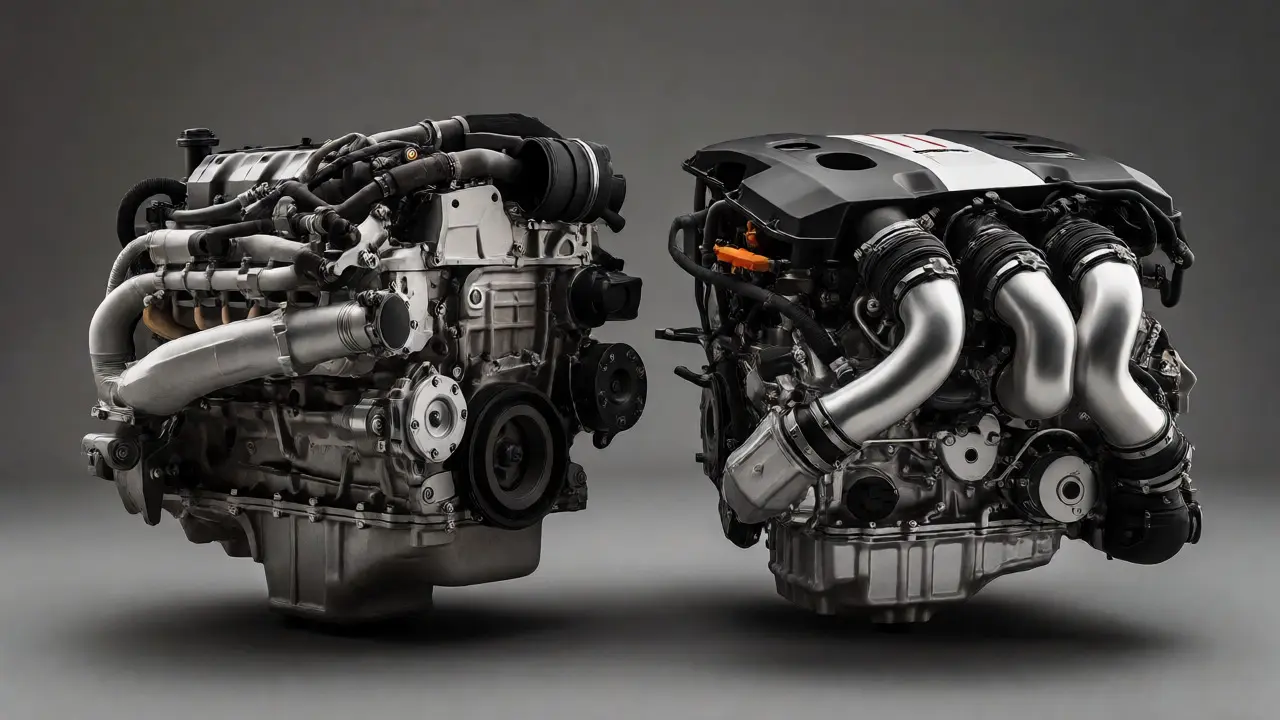
Don’t assume luxury trucks always have bigger engines. Often, they share the same powertrains as their work counterparts but tune them differently. For example, both the base model and the top-tier trim of the Toyota Tundra may use the same twin-turbo V6. However, the luxury version often comes with adaptive air suspension and active noise cancellation, making the engine feel quieter and smoother.
Work trucks frequently offer diesel options because torque matters more than horsepower for towing heavy loads. A Cummins diesel in a Ram Chassis Cab can tow 30,000 pounds, something most gas-powered luxury trims struggle to match without expensive upgrades. Conversely, luxury buyers rarely need 30,000-pound capacity. They want smooth acceleration and quiet operation, so manufacturers prioritize transmission tuning and aerodynamic tweaks over raw pulling power.
- Towing Capacity: Work trucks often max out higher due to reinforced frames and specialized axles.
- Fuel Economy: Luxury trims are heavier, reducing MPG by 1-3 miles per gallon compared to base models.
- Off-Road Capability: Specialized off-road packages (like Ford Tremor) bridge the gap, offering ruggedness with some luxury amenities.
Interior Materials and Technology Features
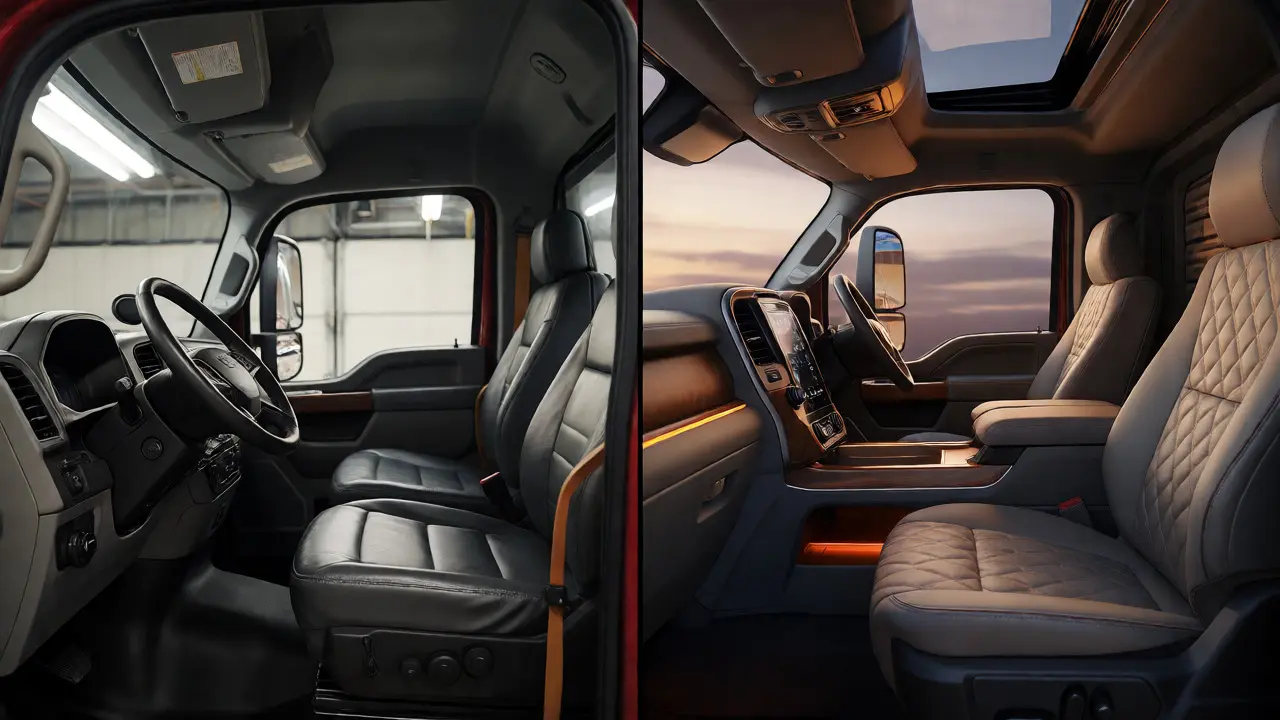
This is where the price tag becomes obvious. Step into a work truck, and you’ll see hard plastics, vinyl floors, and manual controls. These materials are chosen for resilience. Spill coffee on a vinyl seat? Wipe it up. Scuff the dashboard with muddy boots? No problem. The tech is usually limited to a small screen with Apple CarPlay and Android Auto. That’s fine if you’re using the truck as a tool.
Luxury cabins are different animals. Think genuine wood trim, real leather stitching, ambient lighting, and massive vertical touchscreens running complex operating systems. The Chevrolet Super Cruise hands-free driving system or BlueCruise in Ford trucks are typically reserved for higher trims. These systems allow hands-free driving on compatible highways, a feature that transforms long commutes from stressful to relaxing. If you drive more than an hour a day, this tech alone might justify the upgrade.
| Feature | Work Truck (e.g., XL, WT) | Luxury Truck (e.g., Lariat, Denali) |
|---|---|---|
| Seat Material | Vinyl or Cloth | Premium Leather |
| Infotainment Screen | 8-inch Basic | 12-inch+ Touchscreen |
| Suspension Type | Standard Coil Leaf | Air Ride or Adaptive Dampers |
| Driver Assist | Basic Backup Camera | Hands-Free Highway Pilot |
| Audio System | 6-Speaker Standard | Bose/Bang & Olufsen Premium |
Pricing Breakdown: Where Does the Money Go?
A base-model Ford F-150 XL starts around $37,000 in 2026. Add essential safety packages and a few upgrades, and you’re looking at $45,000. Now look at the F-150 King Ranch. It starts near $75,000. That’s a $30,000 difference for essentially the same chassis and engine.
Where does that cash go? Roughly 40% covers interior materials and seating comfort. Another 30% pays for advanced technology and driver assistance features. The remaining 30% accounts for exterior styling cues, larger wheels, and brand prestige. When you buy used, depreciation hits luxury trucks harder. A three-year-old luxury truck might lose 40% of its value, while a work truck loses only 25%. This means buying a slightly used luxury truck can be a smart financial move, letting you avoid the steepest depreciation curve.
Resale Value and Long-Term Ownership Costs
Work trucks hold their value remarkably well because demand remains steady among contractors and fleet buyers. A five-year-old work truck with high mileage still sells quickly because it’s viewed as a depreciating asset that has done its job. Luxury trucks, however, suffer from faster depreciation. High-mileage luxury trucks are less desirable because buyers worry about expensive repairs for complex electronics and air suspensions.
Maintenance costs also diverge. Replacing a set of all-terrain tires on a work truck might cost $800. Putting new tires on a luxury truck with 22-inch rims can easily exceed $1,500. Repairing a broken sensor in a luxury truck’s parking assist system might cost $500, whereas a work truck’s simple backup camera repair is closer to $150. If you plan to keep the vehicle for ten years, factor in these rising maintenance bills for luxury models.
Making the Right Choice for Your Lifestyle
If you use your truck primarily for hauling tools, transporting equipment, or occasional weekend camping, stick with a mid-trim work truck. You save thousands upfront and avoid paying for features you’ll ignore. But if your truck doubles as your daily commuter, family hauler, and status symbol, the luxury package pays dividends in comfort and convenience.
Consider a hybrid approach. Many manufacturers now offer "premium work" trims that include better seats and tech but skip the chrome bumpers and leather steering wheels. These middle-ground options often provide 80% of the luxury experience for 60% of the price increase. Test drive both types back-to-back. Notice how your body feels after twenty minutes in each cabin. Fatigue sets in faster in rougher rides, and that comfort is worth real money if you drive extensively.
Is a luxury truck worth the extra cost for daily commuting?
Yes, if you drive more than 30 minutes each way. The superior sound insulation, adaptive cruise control, and comfortable seating significantly reduce driver fatigue, making the commute less stressful and more enjoyable.
Do luxury trucks tow as well as work trucks?
Generally, no. While they can tow substantial weight, work trucks often have higher maximum towing capacities due to lighter weights, simpler setups, and available diesel engines. Luxury trims add weight and complexity that can reduce peak towing numbers.
Which holds value better, a work truck or a luxury truck?
Work trucks typically hold their resale value better. Their utility ensures consistent demand from commercial buyers, whereas luxury trucks depreciate faster due to higher initial prices and concerns about costly electronic repairs.
Can I add luxury features to a work truck later?
You can add accessories like floor liners and bed covers, but core features like leather seats, upgraded infotainment screens, and air suspension are difficult and expensive to retrofit. Buying the right trim initially is usually more cost-effective.
Are maintenance costs significantly higher for luxury trucks?
Yes, especially for parts involving electronics and suspension. Air bags, sensors, and premium audio components cost more to replace than the basic mechanical parts found in work trucks. Budget 20-30% more for annual maintenance on a luxury trim.