
When your engine trouble, a sudden loss of power, strange noises, or warning lights that won’t go away. Also known as engine failure, it’s not always a sign your car is done for—often it’s a small issue that got ignored. Most people panic when the check engine light comes on, but the truth is, 80% of engine trouble starts with something simple: a loose gas cap, a dirty air filter, or a worn spark plug.
Engine trouble rarely happens out of nowhere. It’s usually the result of skipped maintenance or ignoring early warnings. A knocking sound? That’s often low oil or bad fuel. A rough idle? Could be a clogged fuel injector. Overheating? Maybe a broken thermostat or a leaky hose. These aren’t mysteries—they’re common problems with clear fixes. And if you know what to look for, you can catch them before they turn into a $2,000 repair. Engine diagnosis, the process of identifying the root cause of engine problems using tools, symptoms, and experience doesn’t need a dealership. Many car owners now use affordable OBD2 scanners to read codes themselves. A P0300 code? That’s a misfire. P0171? Lean fuel mixture. Knowing what those numbers mean puts you in control.
Fixing engine trouble isn’t always about replacing parts. Sometimes it’s about cleaning. Carbon buildup on valves? A fuel system cleaner can help. Old oil turning thick? A simple oil change might be all it takes. And if you’re seeing smoke—blue, white, or black—that’s your engine telling you exactly what’s wrong. Blue smoke? Burning oil. White smoke? Coolant leak. Black smoke? Too much fuel. These aren’t just random symptoms—they’re signals. Car repair, the process of restoring a vehicle’s engine or systems to proper function doesn’t always mean a new engine. It often means catching the problem early.
What you’ll find below isn’t a list of generic tips. These are real fixes from people who’ve been there: the guy who saved $1,200 by replacing his own PCV valve, the woman who avoided a head gasket failure by checking her coolant level every week, the mechanic who fixed a stalling issue with a $5 sensor. You’ll see what actually works—not what the ads promise. Whether you’re trying to diagnose a strange noise, understand why your car won’t start, or just want to know if that warning light is an emergency, the posts here give you the straight facts. No fluff. No upsells. Just what you need to know to keep your engine running, and keep your wallet full.
Posted by
Liana Harrow
14 Comments
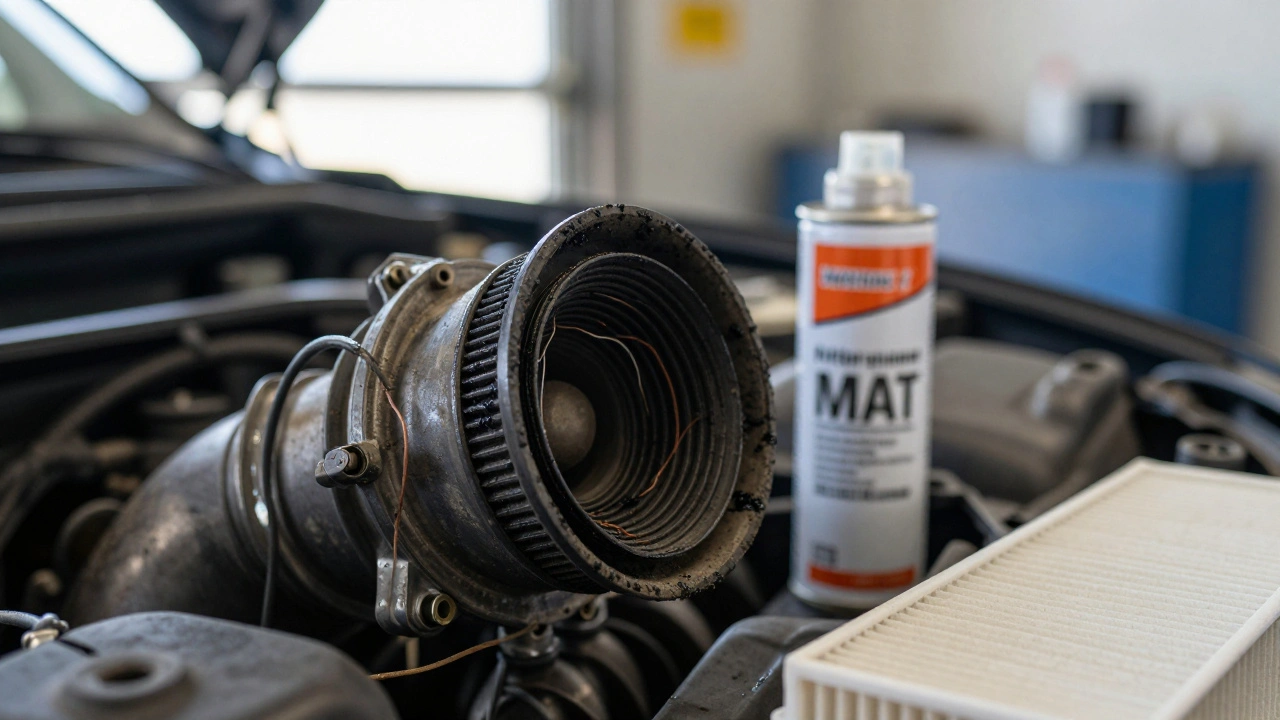
Learn how to tell the difference between a failing mass airflow sensor and a bad O2 sensor. Diagnose engine problems accurately and avoid costly mistakes with this step-by-step guide.
read more