
When your car sputters, stalls, or loses power out of nowhere, the culprit isn’t always the fuel pump or spark plugs. More often than not, it’s the mass airflow sensor, a small device that measures how much air enters your engine so the computer can mix the right amount of fuel. Also known as a MAF sensor, it’s one of the most overlooked parts in modern cars—and one of the most critical. Without it, your engine runs lean or rich, burns more fuel, and triggers the check engine light for no obvious reason.
The mass airflow sensor, a small device that measures how much air enters your engine so the computer can mix the right amount of fuel. Also known as MAF sensor, it’s one of the most overlooked parts in modern cars—and one of the most critical. The air intake system, the path air takes from the outside into your engine, including the filter, ducts, and sensor housing has to be clean for the MAF to work right. Dust, oil, or even a loose clamp can throw off its readings. And if you’ve ever used a dirty air filter or sprayed cleaner into the intake, you’ve probably damaged it. Many people replace the MAF sensor thinking it’s broken, but the real issue is a clogged filter or a vacuum leak nearby. The engine trouble, symptoms like rough idling, poor acceleration, or stalling that often point to fuel-air mixture problems you’re seeing? They’re the car’s way of saying the MAF isn’t getting clean, accurate data.
Fixing this isn’t always about buying a new part. A lot of times, cleaning the sensor with the right MAF cleaner (not brake cleaner!) fixes the problem for years. But if the wires inside are fried or the housing is cracked, no amount of cleaning helps. You’ll need a replacement—and knowing which brands actually last (like Bosch or Denso) saves you from repeat failures. Most of the posts below cover real cases: people who thought they needed a new fuel injector, only to find a dirty MAF. Others who ignored the check engine light for months and ended up with a clogged catalytic converter because the sensor was sending wrong data. There’s also advice on how to test it with a multimeter, what codes to look for (P0100 to P0104), and why some aftermarket sensors fail faster than OEM ones.
Don’t assume your car’s performance issues are expensive. The mass airflow sensor is cheap to check and often the root cause. If you’ve been told you need a full engine tune-up, take a step back. Look at the air intake first. Clean the sensor. Check the hoses. You might save yourself hundreds—and avoid a trip to the mechanic entirely.
Posted by
Liana Harrow
14 Comments
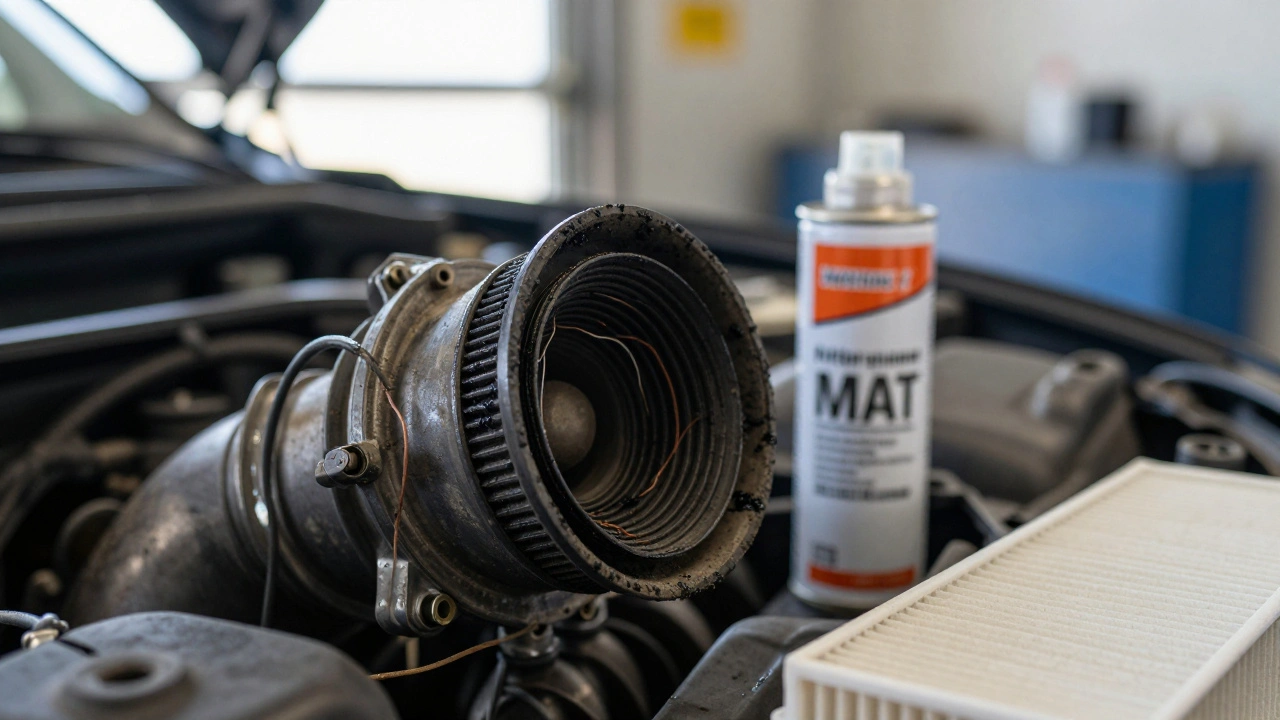
Learn how to tell the difference between a failing mass airflow sensor and a bad O2 sensor. Diagnose engine problems accurately and avoid costly mistakes with this step-by-step guide.
read more