
When your car’s O2 sensor, a device that measures oxygen levels in exhaust gases to help the engine adjust fuel mix. Also known as an oxygen sensor, it’s one of the smallest but most critical parts in your 2018 vehicle’s emissions system. If it fails, your engine runs rich or lean, your gas mileage drops, and your check engine light turns on—not because you’re driving badly, but because the car can’t tell how much fuel to burn anymore.
This sensor doesn’t just help the environment—it directly affects how your engine performs. A dirty or failing O2 sensor can make your car hesitate, stall, or even fail emissions tests. It works hand-in-hand with the fuel injection system, the system that delivers precise amounts of fuel to the engine based on sensor input, and it’s tied to the engine control unit, the car’s main computer that uses sensor data to adjust timing and fuel. Most 2018 models have at least two O2 sensors: one before the catalytic converter to fine-tune fuel mix, and one after to monitor how well the converter is cleaning exhaust. If either one goes bad, your car doesn’t just waste fuel—it starts polluting more than it should.
You won’t always feel a problem right away. Some drivers notice a drop in fuel economy—maybe 10 to 20%—before the check engine light comes on. Others only find out during a routine emissions test. But here’s the thing: replacing a bad O2 sensor is one of the cheapest fixes you can do. It’s not a major repair like a transmission job. Most DIYers can swap one out in under an hour with basic tools. And unlike some parts that need professional calibration, the car’s computer automatically adapts once the new sensor is in place.
The posts below cover everything from diagnosing a faulty O2 sensor to understanding how it connects to other systems like fuel octane ratings, emissions standards, and even how aftermarket parts can affect its performance. You’ll find real-world examples of how a failing sensor impacts your wallet, how to tell if you’re being overcharged for a replacement, and why some cheap sensors fail faster than others. Whether you’re trying to pass a state inspection, improve your gas mileage, or just understand why your car’s acting up, this collection gives you the facts without the fluff.
Posted by
Liana Harrow
14 Comments
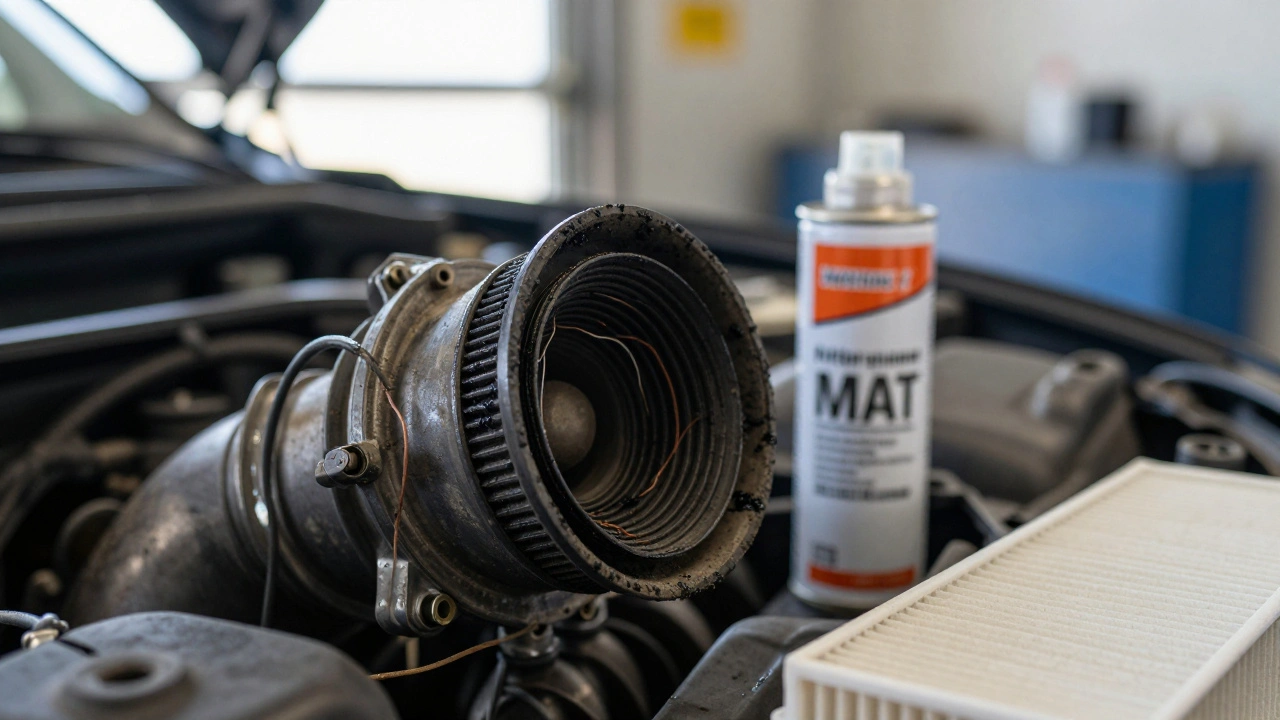
Learn how to tell the difference between a failing mass airflow sensor and a bad O2 sensor. Diagnose engine problems accurately and avoid costly mistakes with this step-by-step guide.
read more