
When you're buying a work van, a commercial vehicle designed for transporting goods or tools, often with a boxy body and rear access. Also known as delivery van, it's not just a bigger car—it's a mobile workshop that needs to handle heavy loads, long hours, and rough roads. The right work van specs can mean the difference between finishing a job on time and losing money on breakdowns or missed deliveries.
Not all work vans are built the same. The payload capacity, the maximum weight the van can safely carry, including passengers, tools, and cargo is critical. A van rated for 1,200 kg might seem fine, but if you haul metal pipes, scaffolding, or industrial equipment, you’ll need 1,500 kg or more. Then there’s cargo space, the usable volume inside the van’s box, measured in cubic feet or meters. A 10-cubic-meter van fits more pallets than an 8-cubic-meter one, but it’s also harder to park in tight city streets. And don’t forget the wheelbase, the distance between the front and rear axles, which affects turning radius and ride stability. Short wheelbase vans are nimble; long ones ride smoother with heavy loads.
Engine choice matters too. Diesel engines still dominate work vans for torque and fuel economy, but electric models are catching up fast—especially for urban deliveries where zero emissions and quiet operation count. Look for engine torque, the pulling power that helps with acceleration and climbing hills under load. A van with 300 Nm of torque will haul a full load better than one with 200 Nm, even if the horsepower numbers look similar. Transmission type is another hidden factor. A manual gives you more control on steep ramps; an automatic reduces driver fatigue on long routes.
Interior features like sliding doors, rear barn doors, tie-down points, and roof rails aren’t just nice-to-haves—they’re job-savers. A van with side sliders lets you load tools without blocking traffic. A reinforced floor keeps your gear from denting the metal underneath. And don’t overlook the cabin. Comfortable seats, good visibility, and a clear dashboard reduce fatigue on 12-hour days. Some vans even offer factory-installed power outlets or USB ports for charging tools and phones.
What you’ll find below is a collection of real-world guides on upgrading, maintaining, and understanding the systems that keep your work van running. From brake upgrades that improve safety under heavy loads to inventory tips for fleet operators, these posts cut through the noise. You won’t find fluff here—just what actually works for people who rely on their vans every day.
Posted by
Liana Harrow
11 Comments
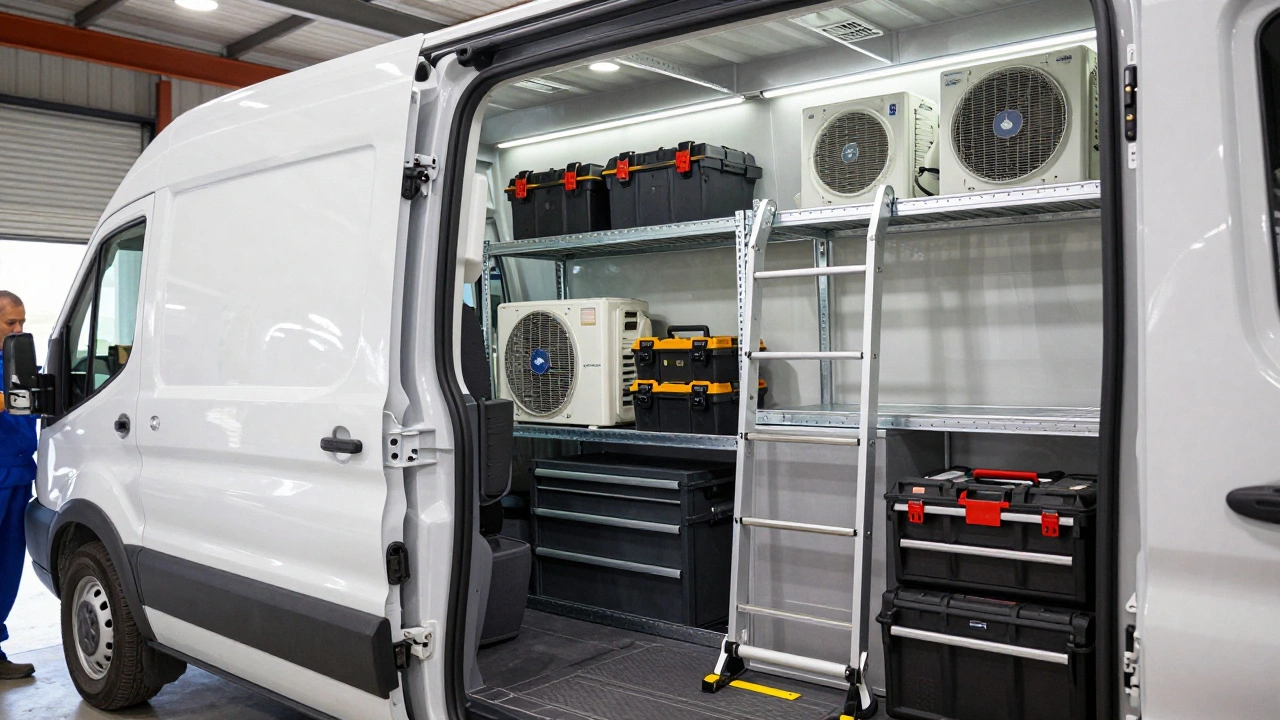
Learn how to choose the right commercial van by understanding cargo capacity, payload limits, and upfitting options. Avoid costly mistakes and pick a van that fits your business needs today-and tomorrow.
read more